

 EU
EUMetals are not always ideal for use in their natural state, which is why heat treatment remains a standard way to change their physical and mechanical properties for manufacturing. Annealing is a heat treatment process that improves a metal’s workability by controlled heating and cooling, often to soften the material and relieve internal stress.
Among heat treatment methods such as normalizing, quenching, and hardening, annealing is one of the most widely used for parts that need better ductility, toughness, machinability, and dimensional stability. For engineers, product designers, OEMs, and procurement managers evaluating materials for machining, prototyping, or production, understanding annealing helps prevent defects and improve part performance. This guide focuses on the main stages of the annealing process, common types of annealing, annealing temperatures, typical applications, and the key advantages and disadvantages of using it.
What is Annealing?

Annealing is a heat treatment process that engineers use to enhance the workability of a metal. The process changes the physical and mechanical properties of the material. It could also alter the chemical properties of the metal in some instances. The goal of the annealing processes is to make the material more workable.
Some people refer to annealing as stress relief annealing heat treatment process. Annealing is general, meaning that there are different categories of the process. For instance, this classification applies to steel: Subcritical annealing, intermediate annealing, and full annealing. This classification is based on temperature range.
Understand the Annealing Process
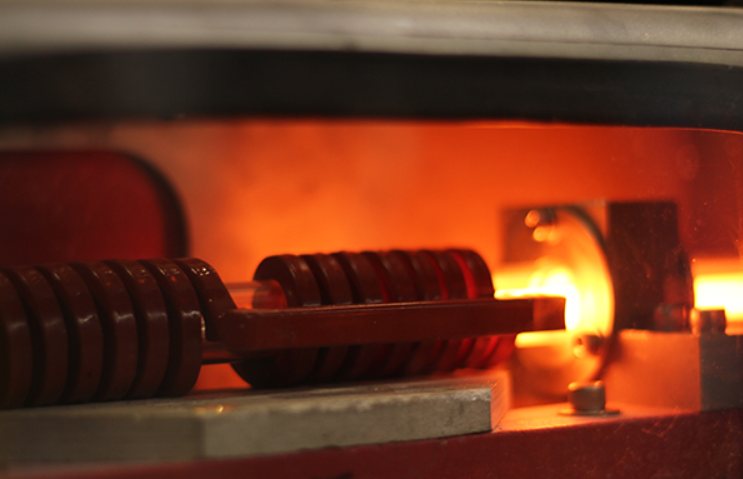
The annealing process typically occurs in three stages: recovery, recrystallization, and grain growth. The process is influenced by temperature, holding time, and material composition. Each stage drives microstructural changes in metals and alloys and plays an important role in the properties of the final product.
Below is a coverage of each of these stages in detail:
1. Recovery Stage
This is the first step of the annealing process, and annealing involves heating the metal to a specific temperature before the recovery effects begin. The goal at this stage is to ensure the relief of the internal stresses of the material. During the recovery stage, the internal energy of the material starts to dissipate as controlled heat initiates atom movement that helps defects redistribute. Dislocations occur, a situation that is characterized by the minimization of internal defects in the material and the lowering of residual mechanical stresses.
Due to the annihilation concept of the recovery stage, the material softens. The mechanical properties also change during this phase. One of the mechanical properties that reduces is the strength of the material. That’s because the internal stresses of the material are now lower.
Another property that changes is the hardness of the material. The hardness of a material depends on dislocation density. Since this element reduces during the recovery stage of the annealing process, the material softens.
2. Recrystallization Stage
This is the second stage of the annealing process. It further transforms the microstructure of the material. The transition to this stage is preceded by the formation of high dislocation density. New grain growth stage takes place as the recovery stage ends.
This brings in the concept of the recrystallization temperature. It is the temperature at which annealing works by heating the material above this point and then cooling it in a controlled way so recrystallization and related microstructural changes can occur, with sufficient kinetic energy in the atoms for recrystallization to occur and the heating rate influencing how quickly these changes develop. You can estimate the recrystallization temperature range from the melting point. Engineers also use a phase diagram to relate heat-treatment temperature to phases and microstructure.
Observation shows that this temperature is between 0.4 and 0,5 of the material’s melting point. Of course, the reliability of this comparison to the melting temperature depends on the extent of initial deformation of the material.
Below is a list of common materials with their recrystallization temperature ranges:
| Metal | Recrystallization Temperature (°C) | Recrystallization Temperature (°F) |
|---|---|---|
| Aluminum | 150-250 | 302-482 |
| Copper | 200-300 | 70-110℃ |
| lron | 450-700 | 842-1292 |
| Nickel | 600-800 | 1112-1472 |
| Titanium | 500-650 | 932-1202 |
| Zinc | 150-200 ℃ | 302-392 |
| Low-Carbon Steel | 450-600 | 842-1112 |
| High-Carbon Steel | 600-700 | 1112-1292 |
| Cast lron | 550-700 | 1022-1292 |
Recrystallization has notable effects on material properties. Specifically, it affects the ductility and hardness of a material. Due to the lower dislocation density, the hardness of the material reduces. The same applies to the tensile strength. After recrystallization, the material can experience plastic deformation.
Recrystallization has far-reaching effects that extend beyond the mechanical properties of the material. For instance, it can alter the corrosion resistance of the metal. It is for all these improvements that the recrystallization stage of the annealing process is so crucial.
3. Grain Growth Stage
The annealing process proceeds to the grain growth stage, the final one. Here, the material enters a cooling process at a controlled rate. Once you complete annealing at this stage, the material becomes more workable.
Grain growth refers to the enlargement of crystallites or grains under high temperature. It is mostly applicable for polycrystalline materials. This is because these materials have arbitrarily arranged grains. If the metal is held at high temperatures too long after recrystallization, grain growth can become excessive.
In metals, the grain growth stage entails nucleation, growth, and grain boundary movement. At the nucleation instance, small new grains form at certain points of the material. These points are full of energy.
Growth takes place after nucleation. The new small grains increase in size. This growth itself moves the grain boundaries. As the grain boundaries move, they reduce in length and energy. The cooling rate must be controlled to refine microstructure, and it also affects the microstructure after annealing.
Types of Annealing
Metals can undergo a variety of types of annealing. The type you use depends on different factors, mainly the envisaged use of the metal and the metal properties. Each annealing process type has distinct properties and uses.
Below is a coverage of the main types of annealing processes:
Stress Relief Annealing
The definition of stress relief is the heating of a metal to alter its internal structure and reduce stresses created during prior operations, followed by cooling slowly. The material cools and attains a more stable structure. With the reduced internal stresses, the material becomes stronger and harder.
In stress relief annealing process, you are looking to reduce internal stresses slowly. It is a very effective process in relieving intrinsic stresses from the material. That takes us to the definition of stress relief annealing. It is the process of heating a metal or material to a particular temperature, keeping it there for some time, then allowing it to cool slowly.
One of the things to remember is that stress relief annealing does not normally remove 100% of the internal stresses. For complete removal of the stresses, heating the material to a higher temperature is necessary. Unfortunately, that would mean reduced performance of the material due to drastic changes to internal microstructure.
We must also reiterate the danger of internal stresses in a material. If a finished part retains these stresses, it could break unexpectedly when you apply an external load. Stress relief is therefore necessary for finished parts – cut, cast, welded components, where stresses can form as welds solidify, and so on. So, if your parts are always breaking during use, consider annealing them as part of the manufacturing process.
Isothermal Annealing
There are times when the annealing process must be completed faster than in full annealing . That’s where isothermal annealing comes in. Industrial applications would prefer this type of annealing considering the cost and time aspects.
Isothermal annealing process comprises five steps namely austenization, critical cooling, isothermal alteration, managed cooling, and natural cooling.
The goal of this type of annealing is to remove internal tensions emanating from plastic processing. The process significantly reduces material hardness and makes the structure homogeneous.
Isothermal annealing process is popular for austenitic steel, which is very stable. First, you heat the steel to the upper temperature limit. The steel will quickly attain the austenite structure. You then cool the material to about 600 degrees centigrade through force cooling.
Preserve this temperature for a specific time for the material to become homogeneous. Once the transformation is done and the desired properties are achieved, you then cool the material.
Isothermal annealing is ideal for improving the machinability of a material and attaining an excellent surface finish.
However, isothermal annealing process may not work for large materials. It is challenging to maintain the isothermal temperature throughout such materials, though it is often selected to prepare parts for further processing when faster turnaround is needed.
Diffusion Annealing
The diffusion annealing process is also referred to as uniform annealing. Some people will also call it homogenizing, and in some contexts it is also known as solution annealing. That’s because the goal of diffusion annealing process is to remove inhomogeneities from the material, reduce microsegregation in alloys, and improve their mechanical properties.
Specifically, diffusion annealing process seeks to achieve the following:
- Remove dendritic segregation
- Remove regional segregation
- Homogenize the material properties and composition
Diffusion annealing processes take place at extremely high temperatures and over a long time. For instance, for steel, the process is at up to 1300 degrees centigrade and for up to 20 hours. It is necessary to take such a long time to give the material ample time to diffuse. For ferrous materials, this treatment typically uses about 950 °C to 1,200 °C. Rapid gas cooling is also commonly used after this treatment.
Eventually, you have a part that is stronger and easier to machine. Some materials will even have increased corrosion resistance, and austenitic steels are commonly treated this way in the chemical industry.
Incomplete Annealing
Annealing is the incomplete version if the heat does not exceed the critical temperature for transformation of the material. A popular material for incomplete annealing is carbon steel. For this type of annealing, the heat treatment process is such that the material softens moderately.
Incomplete annealing results in minimal change to the material properties and structure. Since the process makes the material more workable, some materials and applications are more suitable for this heat treatment method. For instance, users who do a lot of cold working may want to do incomplete annealing processes.
Complete Annealing
The opposite of the above type is complete annealing, the most rigorous process, which involves heating steel above the critical point and cooling slowly. You subject the material under the heat treatment process to high temperature. That is, a temperature that exceeds the critical transformation point.
You keep the material at this temperature for some time. When the temperature within the material is uniformly distributed, the material now has attained a new microstructure. When slowly cooled in a furnace, the result is annealed steel with increased softness and ductility. Complete annealing is also used to improve ductility and machinability in steel after this heat treatment cycle.
Spherification Annealing
As the name suggests, the aim of spherification annealing is to spheroid structures within the material. In high-carbon steels, this annealing method forms carbide spheroids. The benefits of spherification annealing include enhanced machinability and cold forming capability.
The most commonly annealed metals using this process are steels in the hypereutectoid and eutectoid categories. Examples are alloy tool steels and carbon tool steels.
Recrystallization Annealing
Then there is recrystallization annealing, which is the perfect heat treatment method in manufacturing processes for cold-worked metals that need restored formability and is often used to reverse work hardening. Like the other heat treatment processes, this method seeks to alter the material properties. It is the perfect process for materials that have undergone deformation. Recrystallization annealing seeks to restore ductility after the initial microstructure is deformed, helping metals be shaped into complex parts after cold work.
In practice, process annealing restores ductility in cold-worked metals by heating just below critical temperatures.
When you subject a material to forming forces, it experiences changes to material properties. The specific reaction of different materials differs. For instance, rolled sheet metal experiences rolling texture, also called elongated crystal lattice, and similar behavior appears in other metals. While the strength increases, the deformability of the material reduces.
You don’t want to process the material further in this condition. It could easily crack, and the repercussions can be dire. Recrystallization annealing will therefore strive to restore the original shape of the microstructure. This would significantly increase the capability to deform for the material.
Advantages of Annealing:
Improved Ductility and Malleability:
Annealing increases the ductility and malleability of the material, making it easier to shape and form, which is useful in processes like forging, rolling, and machining.
Stress Relief:
The annealing process helps relieve internal stresses that may have developed during processes such as welding, cold working, or casting, thus preventing material distortion or cracking.
Enhanced Workability:
It enhances the workability of materials, allowing for more efficient machining, welding, and forming operations.
Increased Toughness:
Annealing can make materials tougher by allowing them to absorb more energy before fracturing. This is especially important in manufacturing parts that will undergo impact loading.
Refined Microstructure:
Annealing can refine the grain structure of a material, leading to more uniform and consistent properties throughout the material.
Improved Electrical Conductivity:
For metals like copper, annealing can increase electrical conductivity, making it useful in electrical applications.
Disadvantages of Annealing:
Time-Consuming:
The annealing process can be time-consuming because it involves heating the material to a specific temperature, holding it there for a defined period, and then cooling it slowly. This can increase production costs.
Energy-Intensive:
Annealing requires significant energy input, especially for high temperatures, which can contribute to higher operational costs.
Potential for Over-Softening:
If the annealing process is not carefully controlled, it can result in over-softening of the material, leading to loss of strength and hardness. Poor control can reduce hardness more than intended, causing excessive softening and loss of strength, which is especially problematic for materials that need to retain certain hardness properties.
Possible Oxidation:
High-temperature annealing can lead to oxidation or scaling of the material’s surface, which may degrade its quality, especially in metals. Protective coatings or controlled atmospheres are often needed to prevent this.
Cost of Equipment:
The specialized furnaces and temperature control equipment required for annealing can be expensive, especially for large-scale operations that rely on large ovens for oversized workpieces. Examples include car bottom furnaces for easier loading and unloading of large parts and gas fired conveyor furnaces for high-volume continuous processing. These systems are often chosen for large steel or aluminum alloys parts.
