

 EU
Casting and machining both turn raw materials into finished metal components, but they work in opposite ways. Casting pours molten metal into a mold. Machining cuts material away from solid stock. Each production method affects cost, lead time, tolerance, and strength. This guide compares the two and shows how to choose the right one for your part.
What Is Casting?
Casting is a manufacturing process that forms metal parts by pouring molten metal into a mold cavity. The metal cools, solidifies, and takes the shape of the cavity. Casting is one of the oldest metalworking methods and is well suited to parts that are complex, large, or needed in volume.
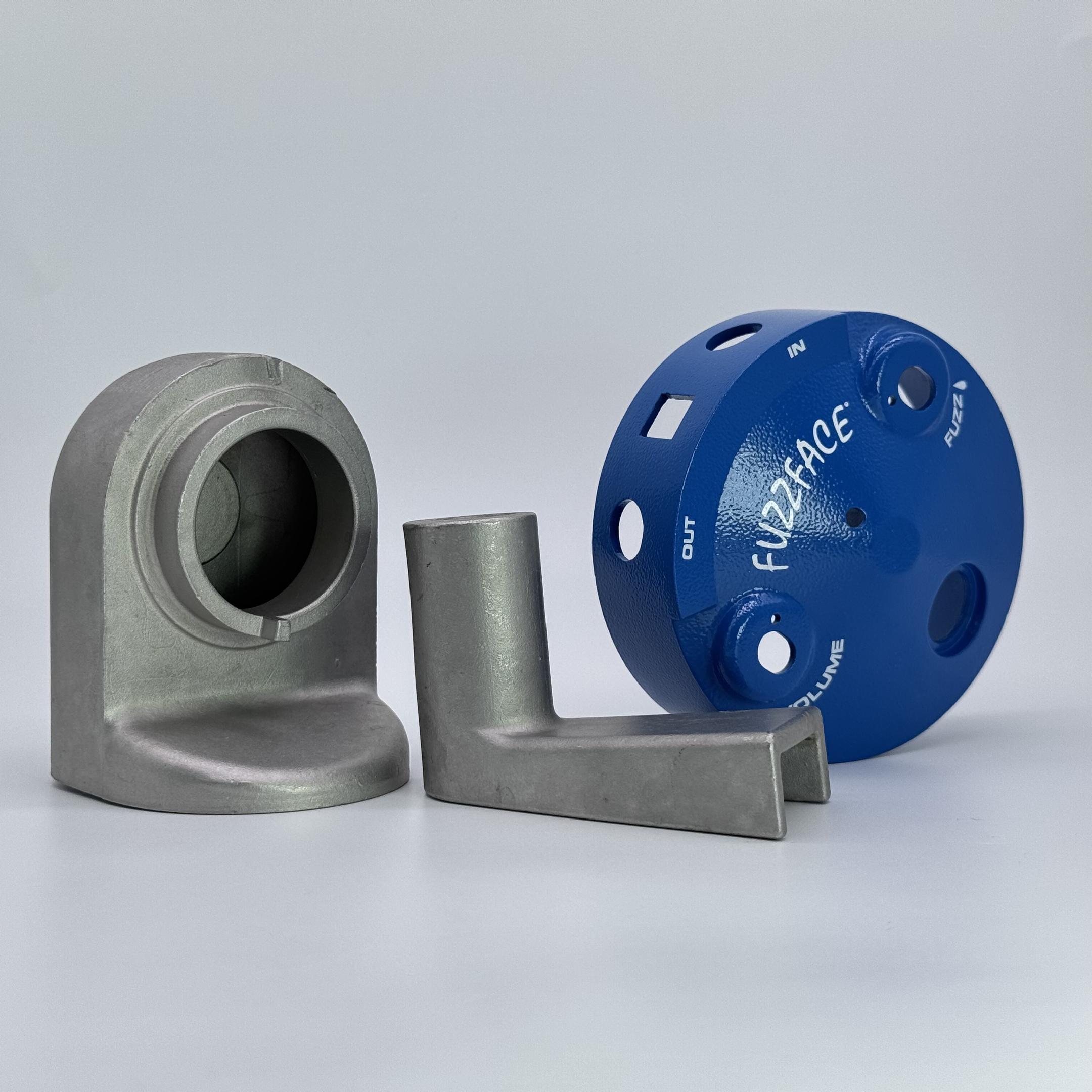
How Casting Works
A pattern, or a die in die casting, defines the part shape. The main casting processes differ in the mold they use. Sand casting packs the mold from sand. Investment casting builds a ceramic shell around a wax pattern. Die casting uses a reusable steel die. In every case, runners and gates guide the molten metal into the cavity.
The alloy is melted, then poured or injected into the mold. It solidifies and shrinks slightly as it cools. The part is released by breaking the mold or opening a reusable one. Gates, risers, and flash are trimmed away. Many castings then go through heat treatment, and critical surfaces are finished by machining.
Advantages of Casting
Complex Shapes
Casting can form inner cavities, curved walls, undercuts, and hollow sections in one step. Cores create cavities that are hard to cut from solid stock. Ribs, bosses, and thin walls can be built in directly. A feature set that would need multi-axis machining, or several different components assembled, can often be cast as one piece.
Size and Weight Flexibility
Casting covers a very wide size range, from small fittings to pump housings and large machine bases. Heavy parts that would need huge blocks of stock to machine are often practical only as castings.
Cost-Effectiveness
Casting produces near-net-shape parts, so little material is removed afterward. This cuts material use and machining time. Once tooling exists, the cost per part falls as volume rises. For mass production and other high volume production, this usually beats machining each part from solid stock.
Material Versatility
Aluminum, iron, steel, bronze, brass, zinc, and magnesium alloys can all be cast. Gray and ductile iron are made mainly by casting. Some hard-to-machine alloys can also be cast close to final shape.
Sustainability
Gates, risers, trimmings, and rejected parts usually go back into the furnace, and many foundries reclaim their sand. Near-net-shape production also keeps the use of raw materials low compared with cutting from solid stock.
Disadvantages of Casting
Porosity and Internal Defects
Trapped gas and shrinkage during cooling can leave voids, micro-porosity, and inclusions inside the part. These flaws reduce pressure tightness and strength. They may stay hidden until machining exposes them. X-ray and ultrasonic inspection can find them, but add cost.
Limited Dimensional Accuracy
Metal shrinks as it solidifies, and molds can shift or wear. As-cast dimensions therefore vary more than machined ones. Some casting methods hold tighter dimensions than others, with die casting and investment casting ahead of sand casting. To achieve tight tolerances, critical features usually require machining.
Rough Surface Finish
Sand casting leaves a grainy surface that copies the mold texture. Surface defects such as cold shuts, flash, and sand inclusions can also appear. Smoother processes exist, but sealing faces, bearing seats, and visible areas often still need grinding or machining.
Lower Mechanical Strength
Cast parts usually have a coarser grain structure and may contain internal voids. Their mechanical properties, including strength, ductility, and fatigue resistance, are typically lower than those of forged or wrought parts. This matters in high-stress or safety-critical use.
High Tooling Costs in Die Casting
Sand casting tooling is relatively cheap. Die casting needs hardened steel dies, which are expensive and slow to build. The cost is justified only at high volumes, and design changes after the die is cut are costly.
What Is Machining?
Machining is a subtractive manufacturing process. In the machining process, cutting tools remove material from a solid block, bar, or plate until only the finished part remains. Most machining today runs on computer numerical control (CNC) machines that follow programmed instructions from a 3D model. Precision CNC machining combines high accuracy with little variation between parts.
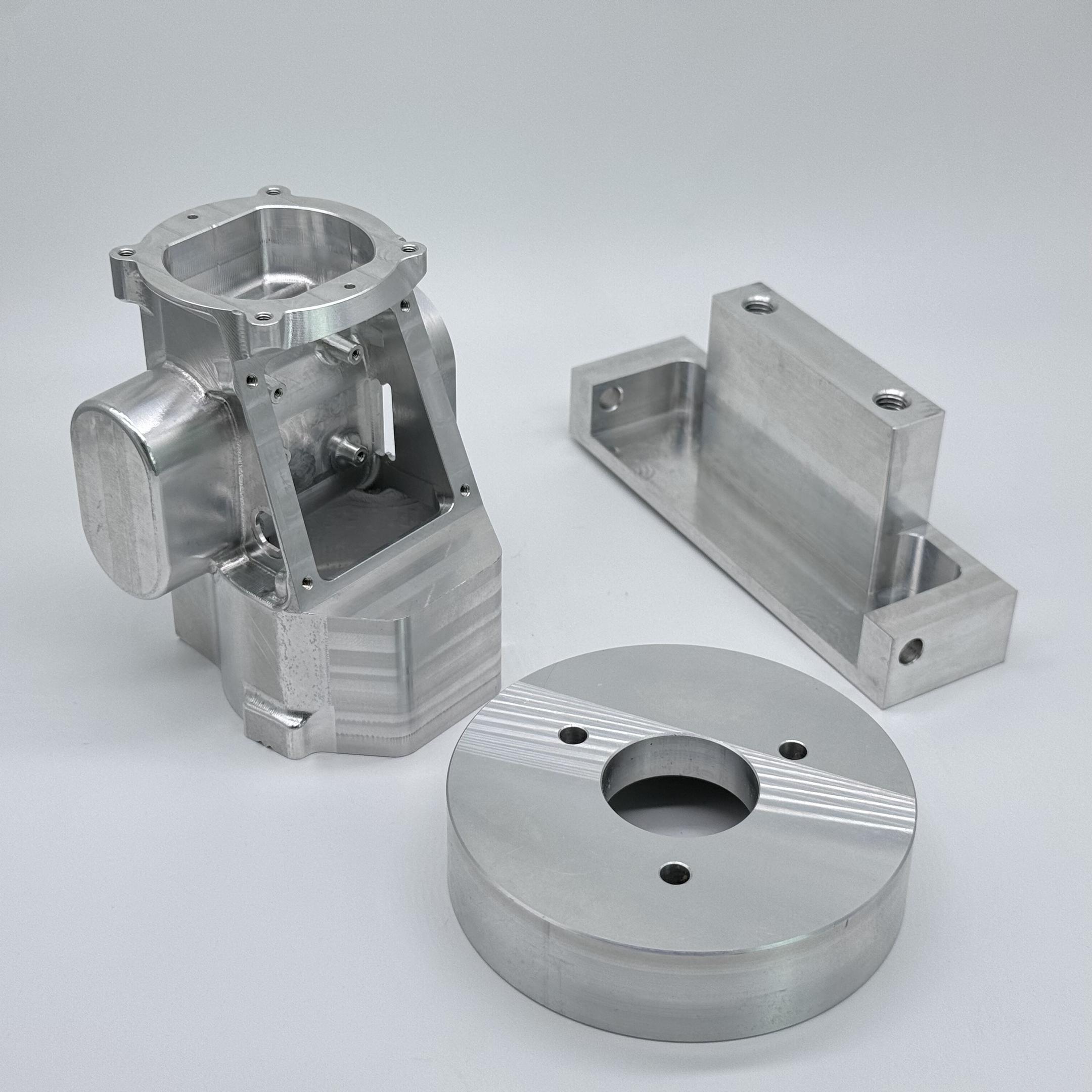
How CNC Machining Works
The CNC machining process starts with a 3D CAD model. CAM software generates the G-code that sets toolpaths, spindle speeds, and feed rates. The operator secures the stock in a vise, chuck, or custom fixture and loads the cutting tools. Firm clamping keeps the part from moving under cutting forces.
In milling, a rotating cutter removes material from a fixed workpiece. In turning, the workpiece spins against a stationary tool. Coolant reduces heat, lubricates the cut, and clears chips. Four-axis and five-axis machines approach the part from several angles, which reduces setups.
Parts are cut in stages. Roughing removes bulk material quickly, and finishing passes bring the part to final dimensions. The part is then deburred and checked with gauges or a coordinate measuring machine (CMM).
Advantages of Machining
High Precision and Accuracy
CNC machines hold tight tolerances consistently. Bores, threads, press-fit surfaces, bearing seats, and sealing faces can be cut directly to size. Achievable tolerance depends on the machine, material, and geometry, so confirm it for each design.
Superior Surface Finish
Machined surfaces come off the machine clean. Light finishing passes give a smooth surface finish suited to sealing, sliding, and visible faces. Many parts need no grinding or polishing afterward.
Material Versatility
Machining works on aluminum, steel, stainless steel, titanium, brass, copper, and other alloys, plus plastics and composites. Harder materials may need different tooling. No melting or mold is involved, so the stock keeps its material properties, and the choice does not depend on how well a metal flows or solidifies.
Complex Geometries
Multi-axis machines reach several faces in one setup. Angled holes, contoured surfaces, and detailed pockets become practical. Precise threads, keyways, and fine details can be cut accurately, which is hard to hold as cast.
Consistent Quality and Repeatability
Once a program is proven, the machine runs the same toolpath on every part and produces identical parts across a batch and across repeat orders. Tool wear can be tracked and offset on the machine, which keeps dimensions stable. Stable, documented programs also make quality management easier.
Disadvantages of Machining
High Material Waste
Machining turns material into chips. On heavily pocketed parts, a large share of the starting block can become scrap. Chips are usually recycled, but the material and cutting time are already paid for. This material wastage matters most with expensive alloys.
Tool Wear and Breakage
Cutting edges wear faster on hard or abrasive materials and under heavy cuts. A worn tool affects dimensions and surface finish, so tools need monitoring and replacement. A broken tool can scrap a part and stop the machine. Tooling is a real part of the cost per part.
Slow Production Rates for Complex Jobs
Removing material takes time, and complex parts take more of it. Multiple setups, tool changes, and finishing passes add to machining time. Machine time drives cost, so cost per part falls less with volume than in casting, and machining can become a bottleneck at high volumes.
Operator Skill and Labor Dependency
Results depend on people. Programmers choose toolpaths, fixtures, and cutting parameters, and machinists set up jobs and adjust for tool wear. Poor programming or fixturing causes scrap, vibration, and poor surface finish. Skilled labor adds cost.
Deep Pockets and Geometry Limits
A tool must reach the surface it cuts. Deep, narrow pockets need long, slim tools that deflect and vibrate. Thin-walled parts vibrate under cutting forces too. Feature size also sets limits, because small internal features need small, fragile tools. Internal corners take the radius of the cutter, so sharp internal corners are not possible with standard milling. Fully enclosed internal cavities cannot be machined at all. Some of these features can be made by EDM, or by splitting the part into pieces.
Key Differences of Casting and Machining
Material Compatibility
Casting needs a metal that melts, flows well, and solidifies without serious defects. Gray iron, ductile iron, aluminum foundry alloys such as A356, brass, bronze, zinc, and some carbon steels are common. Very high-melting-point or reactive alloys can be difficult or costly to cast.
Machining offers far more material options, including steels, stainless steel, titanium, nickel alloys such as Inconel, aluminum grades such as 6061 and 7075, and plastics. Harder materials need better tooling, but material alone rarely rules machining out.
Process and Design Considerations
Casting design must work with the mold. Parts need draft angles to release cleanly and fairly even wall thickness to limit shrinkage and porosity. Generous radii help metal flow, and sharp internal corners can cause hot tearing. Hollow sections need cores, and parting line and gate locations affect the final part.
Machined designs must work with the tool. Every surface must be reachable, and internal corner radii should match standard end mill sizes. Design changes also differ. A machined part often needs only a program edit. A cast part may need a new pattern or die.
Production Volume and Cost Effectiveness
Casting carries upfront tooling costs. After that, cycle times are short and unit cost falls as volume rises. Machining needs little beyond fixtures, but every part carries its own machine time and material cost. That makes machining the usual choice for prototypes and small batches, and casting the usual choice for larger batch sizes.
The break-even point depends on part size, material, complexity, and casting method. Sand casting tooling costs far less than die casting tooling, so it pays off at lower volumes.
Lead Time
Machining can start as soon as the program and stock are ready, and first parts are often finished within days. Casting must wait for the pattern, mold, or die to be built and approved, and die tooling can take a long time. After that, parts come out fast, though many castings still need secondary machining.
Precision & Tolerances
Machining holds tighter tolerances because the cutting tool controls final dimensions directly. Casting varies more due to shrinkage, mold wear, and mold alignment. When tolerance requirements are strict, critical features on cast parts, such as bores, mounting faces, and sealing surfaces, are finished by machining.
Material Waste
Casting is near-net-shape, and gates, risers, and scrap can be remelted, though defective castings still waste some metal. Machining can turn a large share of the stock into chips on heavily pocketed parts. The material cost and cutting time are already spent.
Strength
Parts machined from wrought bar or billet have a dense structure with no casting voids. They generally offer higher strength, ductility, and fatigue resistance. Castings tend to have more uniform properties in all directions, but they may contain porosity, shrinkage voids, or inclusions that lower performance under cyclic or impact loads. For high-stress or fatigue-critical parts, machined parts are usually the safer choice.
Scalability
Casting scales well once tooling exists. A mold can produce large quantities, and multi-cavity tooling makes several parts per cycle. Machining scales in smaller steps by adding machines, fixtures, and operators, and automated pallet changers or robotic loading can raise output. Machine time per part stays fairly constant, so machining stays flexible for one-off parts, small batches, and designs that may still change.
When to Choose Which
Neither process is better in every case. The right choice depends on volume, geometry, tolerance, strength, and schedule.
Choose Casting When
Casting is well suited to medium and high volumes, where tooling cost is spread across many parts. It also suits complex shapes with inner passages, hollow sections, or undercuts that cutting tools struggle to reach. Large housings, machine bases, and frames are a good match, since cutting them from solid stock wastes material and machining time. The design should be stable, because changes after tooling are costly. Tolerances should be loose enough for as-cast surfaces, or limited to a few features that machining can finish.
Choose CNC Machining When
Machining suits prototypes and low volumes. There is no tooling to build, and design changes are cheap. It is also the better choice for tight tolerances, a smooth finish on most faces, or fast delivery. High-stress and fatigue-loaded metal parts benefit from the dense structure of wrought bar or billet, and alloys that cast poorly can still be machined.
The Hybrid Approach
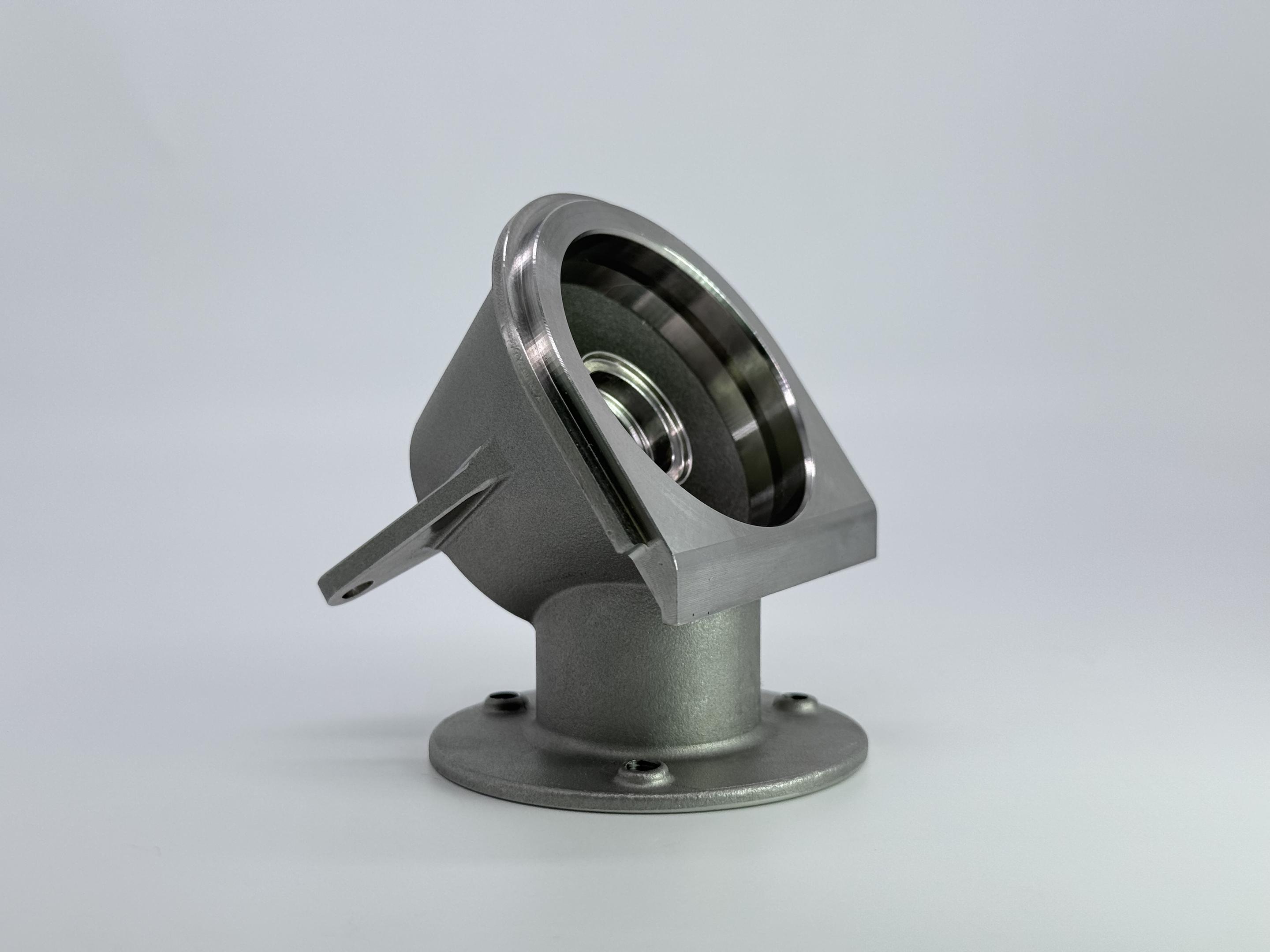
Many parts combine machining and casting. The part is cast close to final shape, then machined only where it matters, such as bearing seats, threaded holes, sealing flanges, and O-ring grooves. Casting supplies the form at low cost, machining supplies accuracy, and the other surfaces stay as cast.
Plan for both from the start. Leave machining allowances so enough material remains on surfaces to be machined. Provide datum features that are easy to locate and clamp, and allow for porosity that machining may expose below the surface. An expert team can review the design for both processes before tooling is cut.
| Factor | Casting | CNC Machining |
|---|---|---|
| Best volume | Medium to high | Prototype to low |
| Tooling cost | High upfront (patterns, molds, dies) | Low (fixtures only) |
| Lead time to first part | Longer, waits for tooling | Shorter, no tooling |
| Cost per part as volume grows | Falls | Stays fairly steady |
| Geometry | Complex shapes, internal cavities | Surfaces must be reachable by the tool |
| Tolerance | Looser, often needs secondary machining | Tighter |
| Surface finish | Rougher, varies by method | Smooth |
| Strength | Lower, porosity risk | Higher, from wrought stock |
| Material waste | Low | Higher, cut away as chips |
| Design changes | Costly after tooling | Easy, often a program edit |
| Typical parts | Housings, engine blocks, valve bodies, frames | Shafts, fittings, fixtures, prototypes |
The right choice depends on your drawing, material, quantity, and tolerance requirements. Reviewing these four points early often settles the question before any tooling is made.
Send your 2D drawings or 3D CAD files to Aria Manufacturing through madearia.com. Include the material, expected quantity, and critical tolerances. You will get a process recommendation and a quote for casting, CNC machining, or a hybrid route.
