

 EU
EUTitanium CNC machining turns titanium bar, plate, and forgings into precision parts that are strong, light, corrosion resistant, and suited to demanding service in aerospace, medical implants, marine hardware, and chemical equipment. For engineers, product designers, OEMs, and procurement managers sourcing custom titanium parts for prototyping or production, the main challenge is that titanium is hard on tools and sensitive to heat, so alloy selection and process planning largely determine cost, lead time, tolerances, and part quality.
This guide focuses on the practical decisions behind titanium machining: the benefits of the material, common titanium grades, key machining challenges, process selection across milling, turning, drilling, and wire EDM, surface finish options, best machining practices, and how to choose the right alloy for the job.
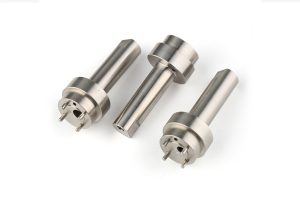
Key Benefits of Titanium CNC Machining
High strength at low weight
Ti-6Al-4V (Grade 5) has a lightweight density of about 4.43 g/cm³. Most steels sit near 7.8 to 8.0. Annealed Grade 5, known for its balance of strength and weight, still reaches a tensile strength of roughly 900 MPa or more. That lets a designer remove mass from a bracket, a fitting or a handheld instrument without losing load capacity. Aluminum is lighter, but it needs thicker sections to carry the same load. In a tight envelope, that can cancel the weight savings.
Corrosion resistance
Titanium protects itself with a thin oxide film. If a scratch breaks the film, it reforms wherever oxygen is present. Seawater, chlorides and many process chemicals that pit stainless steel leave titanium largely alone, making some alloys suitable for corrosive duty. Grade 2 is a titanium grade with excellent corrosion resistance and excellent weldability. It is a popular choice when high corrosion resistance is required without added alloy complexity. Grade 7 adds palladium to handle reducing acids for more specific needs. Grade 12 adds molybdenum and nickel for hot, aggressive service.
High-temperature capability
Aluminum loses strength quickly as service temperature climbs. Ti-6Al-4V keeps useful strength up to around 400°C, which is why it shows up in engine and exhaust components and other parts that must handle extreme temperatures. Titanium also expands less than steel or aluminum when heated. Fits and clearances hold up better as parts keep their form across large temperature swings.
Biocompatibility, ideal for medical
Body tissue tolerates titanium well, and bone can bond directly to its surface. This process is called osseointegration. It makes titanium the default metal for bone screws, spinal hardware, joint components and dental implants. Grade 23 is the usual choice for implants. Titanium is also non-magnetic, which helps in MRI settings and in housings for sensitive electronics.
Durability and fatigue performance
Titanium handles repeated loading well and does not rust. Well-made titanium parts can last longer than alternatives, which can lower replacement cost over time. The catch is that fatigue life depends heavily on surface condition. Tool marks, burrs and smeared surface layers can all start cracks. For titanium, part of the benefit is the surface quality achieved on machined titanium parts.
Challenges of Titanium CNC Machining
Titanium is not hard in the way tool steel is. The trouble comes from how it handles heat and how it reacts under the cutting edge.
Poor Heat Conduction
Steel carries a good share of cutting heat out with the chip. Titanium keeps most of it at the tool edge. Temperature builds in the cutting zone, so coatings and carbide wear out fast.
Chemical Reactivity and Galling
At cutting temperatures, titanium reacts with tool materials and welds to the edge. When the buildup breaks away, it pulls pieces of the coating with it. Tools can fail with little warning.
Difficult Chips
Titanium chips are long and stringy. They wrap around the tool and get recut if they are not cleared. Recutting hurts surface finish and shortens tool life.
Low Stiffness
The elastic modulus of titanium is roughly half that of steel. Thin walls and slender features push away from the cutter and spring back. The result is chatter, taper and out-of-tolerance dimensions.
Work Hardening
When a tool rubs instead of cutting, it hardens the surface layer. The next pass then has to cut through harder material, which wears the tool faster.
Slow Cutting and High Tool Cost
Heat limits cutting speed, so titanium runs far slower than steel or aluminum. Cycle times grow, tool consumption rises, and short tool life also reduces efficiency in production. Scrap also costs more because the raw material is expensive.
Traceability and Sourcing
Aerospace and medical work requires certified stock with traceable heat numbers and mill test reports. Sourcing and paperwork add lead time. A shop that treats titanium like stainless steel will quote it low and deliver it late.
The Most Common Titanium Grades
Grades 1 to 4 are commercially pure titanium. They differ mainly in oxygen and iron content, and strength rises from Grade 1 to Grade 4. The alloyed grades add elements such as aluminum, vanadium, tin, palladium, molybdenum and nickel to gain strength, heat resistance or corrosion performance. The table below compares nine grades that come up regularly in machined parts across a range of titanium options.
| Grade | Description | Hardness | Machinability | Weldability | Corrosion Resistance | Applications |
|---|---|---|---|---|---|---|
| Grade 1 | Commercially pure, lowest oxygen, softest and most ductile | Lowest | Good | Excellent | Excellent | Chemical processing, heat exchangers, formed parts |
| Grade 2 | Commercially pure, standard oxygen, the general-purpose grade | Low | Good | Excellent | Excellent | Marine hardware, chemical equipment, airframe parts, medical |
| Grade 3 | Commercially pure, medium oxygen | Medium | Fair to good | Good | Excellent | Aerospace, marine, medical |
| Grade 4 | Commercially pure, highest strength of the pure grades | Medium to high | Fair | Good | Excellent | Cryogenic vessels, heat exchangers, airframes, surgical hardware |
| Grade 5 | Ti-6Al-4V, the most widely used alloy | High | Fair to poor | Good (inert gas shielding required) | Very good | Aerospace structures, engine parts, medical devices, marine, power generation |
| Grade 6 | Ti-5Al-2.5Sn, stable at elevated temperature | Medium to high | Fair to poor | Good | Good | Jet engine and airframe parts, space vehicles, rocket propellant tanks |
| Grade 7 | Ti-0.15Pd, pure titanium with palladium | Low | Good | Excellent | Superior | Chemical processing equipment, parts exposed to acids |
| Grade 12 | Ti-0.3Mo-0.8Ni, strong at moderate temperature | Medium | Fair | Excellent | Very good | Heat exchangers, hydrometallurgical and marine equipment, aircraft parts |
| Grade 23 | Ti-6Al-4V ELI, extra-low interstitial version of Grade 5 | High, slightly below Grade 5 | Fair to poor | Good | Very good | Orthopedic implants, bone screws and pins, dental and surgical devices |
Ratings are relative within the titanium family. Together, these grades offer versatility across a range of applications in the engineering world and are commonly used across the machining industry, but they do not compare titanium against steel or aluminum.
How to Pick the Right Titanium Alloy
Start with what the part has to survive, then narrow the choice by regulation, machinability and availability.
Corrosive Environments: Start with Grade 2
A commercially pure grade is usually enough. Grade 2 machines and welds well and is widely stocked. Move to Grade 7 only when the media are reducing acids that attack Grade 2. Consider Grade 12 for hot, crevice-prone service.
Load-Bearing Parts: Start with Grade 5
Most designers specify it, and most shops already have tooling and cutting data for it. Grade 4 is the stronger pure option when corrosion resistance matters more than peak strength. Grade 6 fits when elevated temperature and weldability both matter.
Medical Parts: Follow the Standard
Implants and surgical hardware typically call for Grade 23 or Grade 2, built to a standard such as ASTM F136. Grade 23 costs more than Grade 5. Specify it when the medical standard or the fracture toughness requires it, not by habit.
Machinability Tradeoff
A grade that cuts more easily shortens cycle time and saves tools. Moving from Grade 5 to Grade 2 can pay off, but only if the part still meets its strength target.
Availability and Material Condition
Grades 2 and 5 are usually the easiest to source in bar and plate. Less common grades can mean longer lead times and minimum order sizes. Annealed stock also cuts more easily than solution-treated and aged stock.
Drawing Callouts
Name the grade and the specification on the drawing, such as ASTM B348 for bar. Ask for mill test reports with the order.
Machining Processes of Titanium Parts
CNC Milling
Milling is the main process for titanium parts. The goal is to keep the cutter moving, keep radial engagement low and use climb milling. Climb milling starts the chip thick and ends it thin, so the chip carries heat away instead of the part. Enter the cut on an arc rather than plunging into the wall, and add a chamfer or radius where the tool exits. Trochoidal and dynamic toolpaths hold engagement constant, which improves the ability to maintain stable cutting performance by keeping load and heat steady. A rigid machine with good torque at low spindle speed matters more than top rpm. Five-axis machines help on complex shapes, and reducing setups on difficult geometry can be a game changer. They finish more features in one setup, which cuts re-clamping error and the risk of distorting thin walls, so many manufacturers rely on five-axis milling for that reason.
CNC Turning
Titanium turns well for shafts, pins, fittings and implant bodies. Use sharp, positive-rake carbide inserts with a coating made for titanium. Keep the feed steady and never let the tool dwell at the end of a cut or in a groove. Interrupted cuts and heavy tool pressure shorten insert life. Aim high-pressure coolant at the edge, and choose chip breakers that produce short chips. Long chips will wrap around the part and the tool. Small medical screws and pins are often made on Swiss-type lathes, which support the work close to the cut and limit deflection.
Drilling
Drilling is where titanium is least forgiving, and it often requires specialized techniques to manage trapped heat and chips inside the hole. Use sharp carbide drills, preferably with coolant through the tool, and use peck cycles on deep holes. Do not let the drill rub at the bottom of the hole. For internal threads, thread milling is safer than tapping. A broken tap in a finished titanium part is hard to remove and often scraps the part. Ask the shop where its reliable depth-to-diameter limit sits before you design deep holes.
Wire EDM
Wire EDM cuts with electrical sparks and applies almost no cutting force. That makes it useful for thin walls, sharp internal corners and profiles that would deflect under a cutter. Tool wear is not a factor. The tradeoffs are speed and geometry, since it is slower than milling and limited to through-cuts. The sparks also leave a thin recast layer on the cut surface. On fatigue-critical parts, that layer is usually reduced with skim passes or removed in a finishing step.
The Best Surface Finish Options for Titanium Alloys
Choose the finish by function first. Fatigue life, wear, appearance and implant cleanliness each point to a different answer.
Deburring and polishing
Burrs on titanium are tough and sharp, and they act as crack starters. Edges can be broken by hand, tumbled or brushed. Electrochemical deburring reaches internal features that tools cannot. Polishing then brings the surface to a smooth, reflective finish. It lowers friction and makes medical parts easier to clean. Polishing is done in steps, from coarse abrasives to fine compounds.
Bead blasting
Bead blasting gives a uniform matte surface and hides tool marks. The peening action also adds compressive stress at the surface. Media selection matters. Embedded particles can cause staining or corrosion spots later, so the media must be clean and suited to titanium.
Anodizing
Titanium anodizing grows a thin oxide film. The color comes from film thickness and light interference, not from dye, so voltage sets the shade. It is common for color-coding instruments and implants and for consumer products. Color is sensitive to the starting surface, so the pre-finish has to be consistent from part to part.
Passivation
Nitric or citric acid passivation removes free iron and other contamination left by tooling and handling. It restores a clean oxide layer. It is routine on medical and aerospace parts.
PVD coating
PVD coatings such as titanium nitride add surface hardness and reduce galling on sliding parts. Coating chamber size and cost limit this option, so confirm part size and quantity with the coater early.
The Best Practices for Titanium Machining
Build the Setup for Rigidity
Use a heavy machine with good low-speed torque, short tool stick-out and fixtures that support thin sections without clamping them out of shape. Most titanium problems get worse when the setup moves. Rigid setups help tackle titanium’s unique challenges before they show up as chatter, deflection, or scrap.
Use Sharp, Coated Carbide Tools
Choose one of the leading options for titanium machining: a coated carbide tool with a coating made for titanium, such as TiAlN. A dull edge generates more heat, which dulls it faster. Change tools on a schedule built from real wear data, not after a failure has damaged the part.
Run Conservative Parameters
Use low surface speed and a moderate to high feed per tooth. Never let the tool dwell. Start from the tool maker’s data for the specific grade. Then adjust using measured tool wear on the actual part.
Aim High-Pressure Coolant at the Edge
Through-tool delivery is better where the tool allows it, especially when paired with the right technologies for through-tool or directed high-pressure application. It lowers temperature and clears chips. Keep coolant clean and filtered so chips do not get recut.
Control Stress on Thin or Tight-Tolerance Parts
Rough the part with stock left on. Let it relax or stress relieve it, then finish with light cuts and a sharp tool. Cut features in a balanced order so the part does not bend toward one side.
Respect the Fire Risk
Fine titanium chips and dust are more hazardous than those from many other metals because they can ignite, and a dull tool cutting dry makes it more likely. Keep coolant flowing, clear chips often and keep Class D extinguishing media within reach. Water is not the right tool for a burning titanium chip pile.
Design for the Process
Use generous internal radii, uniform wall thickness and open tool access. Avoid deep, narrow pockets. Call out tight tolerances and fine finishes only where the function needs them, since each one adds time on a material that already cuts slowly.
Verify on Critical Parts
Ask for a first article inspection and mill certificates to verify critical parts before volume production, reducing rework and downtime.
