

 EU
EUCast iron and steel originate from the same base elements, primarily iron ore, but their manufacturing processes and properties differ significantly. Both are alloys of iron and carbon, yet the critical distinction in cast iron vs steel lies in the carbon content: cast iron typically contains 2% to 4% carbon, while steel contains less than 2%, usually between 0.1% and 1.5%. This difference makes cast iron more brittle but ideal for casting and handling compressive loads, while steel offers higher tensile strength, greater flexibility, and better weldability.
Cast iron’s structure, formed in a sand mold after melting pig iron in a blast furnace, gives it excellent vibration damping and wear resistance. Steel, a versatile ferrous metal, is produced with more energy and labor, often resulting in lighter, tougher parts with superior impact resistance and decorative appeal. These distinctions influence not only the casting and machining process but also the cost, durability, and application suitability of each metal in manufacturing.
What’s Cast Iron?
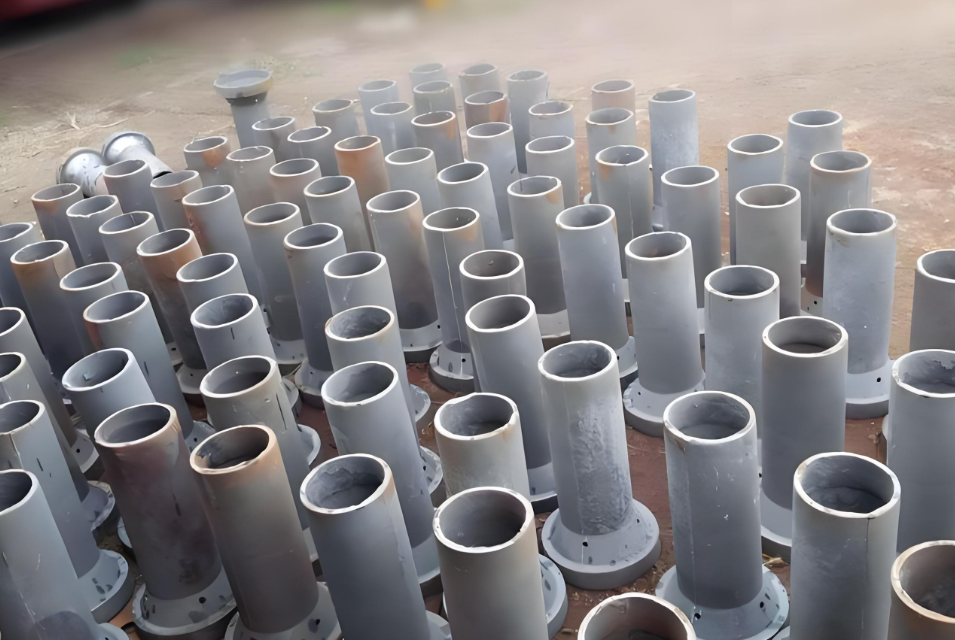
Cast iron is produced by melting iron together with carbon and pouring the molten metal into a mould, rather than working it with a hammer or press. The high carbon content, together with 1% to 3% silicon and small amounts of manganese, gives molten cast iron excellent flow. It fills complex mould cavities before it has a chance to cool and seize up, which is why cast iron has been the material of choice for machine bases and engine blocks for well over a century.
That same carbon content brings a trade-off. Once cast iron solidifies, its carbon separates out into graphite structures within the metal. Depending on how that graphite forms, and how the casting cools, you get a family of materials with quite different personalities.
The different types of cast iron include:
- Gray cast iron, the most common of the main cast iron types, is an iron alloy produced from pig iron made from iron ore in a blast furnace; its graphite flakes are among the key characteristics that give good machinability and strong vibration damping, and the liquid iron is poured into moulds during the casting process so it can fill complex cavities
- White cast iron, hard and wear resistant because the carbon forms cementite instead of graphite, but very brittle and difficult to machine
- Malleable iron, produced by heat treating white iron so the graphite forms rounded nodules, which improves ductility
- Ductile cast iron, also called nodular iron, with graphite nodules that improve mechanical properties such as tensile strength, toughness, and impact resistance over grey iron
- Compacted graphite iron, a newer variant that sits between grey and ductile iron for strength and damping capacity
What’s Steel?
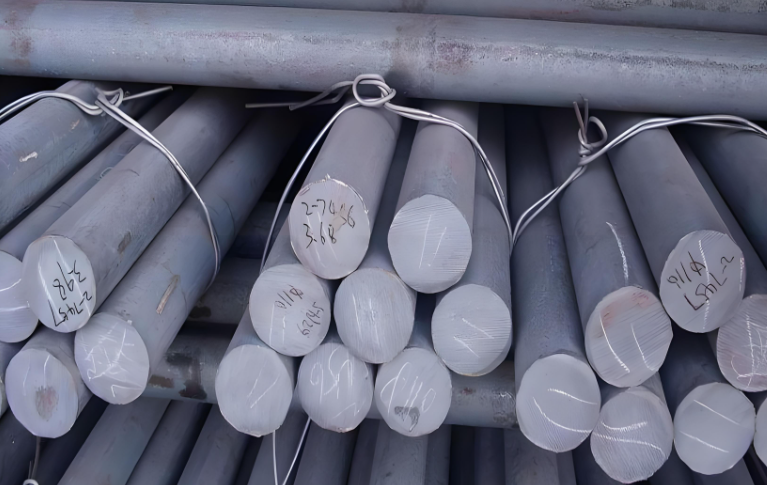
Steel is also an iron alloy of iron and carbon, but its carbon content stays below 2%. Most commercial grades sit well under 1%, while high carbon steel sits at the upper end of the range. Rather than separating into graphite, carbon in steel stays dissolved within the iron matrix. That difference in microstructure gives steel its ductility and tensile strength.
Producers add other alloying elements to fine tune steel’s properties for desired properties. Chromium improves corrosion resistance, which is what makes stainless steel possible. Manganese and molybdenum add hardenability. Nickel improves toughness at low temperatures. Together, these additions build a material family broad enough to cover everything from soft, weldable sheet metal to hardened tool steel, unlike pure iron or wrought iron, and that range is one reason raw steel supports so many manufacturing uses.
There are different types of steel. These include:
- Carbon steel, split into mild (up to roughly 0.3% carbon), medium and high carbon steel grades; the main difference from cast iron is lower carbon content, and its key characteristics shift toward greater toughness as carbon content changes
- Alloy steel, a specific iron alloy enhanced with alloying elements such as chromium, nickel or molybdenum to deliver desired properties and specific mechanical properties, including corrosion resistance
- Stainless steel, containing at least 10.5% chromium for strong corrosion resistance
- Tool steel, alloyed with tungsten, vanadium or cobalt to hold an edge and resist heat during cutting; unlike pure iron and wrought iron, steel is engineered for broader performance needs, and raw steel is generally costlier to buy than cast iron
Cast Iron Vs Steel: What Are Their Differences
Once you get past the shared iron-carbon base, cast iron and steel diverge on almost every measurable property. The table below gives a quick view before the detail underneath.
| Property | Cast Iron | Steel |
|---|---|---|
| Carbon content | 2% to 4% | Below 2% |
| Melting point | Roughly 1150-1300°C (2100-2370°F) | Roughly 1370-1540°C (2500-2800°F) |
| Strength type | High compressive strength | High tensile strength |
| Castability | Excellent, low shrinkage | Moderate, more shrinkage |
| Rust resistance | Moderate, needs coating | Moderate to high, depends on grade |
| Hardness and wear | Good wear resistance, natural lubrication from graphite | Varies by grade, improves with heat treatment |
| Impact resistance | Low, brittle under shock | High, absorbs impact through deformation |
| Manufacturing | Cast into moulds | Forged, rolled, stamped or machined |
| Weldability | Difficult, prone to cracking | Good, especially low carbon grades |
| Vibration damping | Excellent | Moderate |
| Typical uses | Engine blocks, machine bases, pipes, cookware | Structural steel, vehicles, tools, fasteners |
Carbon Content
Carbon content causes almost every other difference on this list. Cast iron has a higher carbon percentage, which gives it great fluidity when melted for moulding, but makes the solid metal brittle. Steel has less carbon, and that carbon stays dissolved in the iron matrix rather than forming graphite. That raises flexibility and toughness. Strength, castability and weldability all trace back to this one number.
Strength and Flexibility
Steel has high tensile strength and performs better under high stress because it can take stress and strain without fracturing. It bends or absorbs impact without breaking. Cast iron has high compressive strength, so it handles heavy downward weight well. But as a brittle material, sudden impact or bending forces can cause it to shatter instead.
In numbers, cast iron typically offers 220 to 2520 MPa in compressive strength, while its tensile strength is often just 100 to 200 MPa. Mild steel starts around 400 MPa in tensile strength, and high strength alloy steel can pass 2000 MPa. These mechanical properties shape material selection in real designs. If a part mostly sits under a static load, cast iron handles it well. If a part gets pulled, twisted or struck, steel is the safer choice, with better structural integrity in demanding service. Steel parts can also deliver the same mechanical strength at lower weight than cast iron parts.
Castability
Cast iron pours easily in the casting process due to its lower melting point. Liquid iron fills detailed mould cavities with minimal shrinkage as it cools, which makes cast iron well suited to complex shapes and thick sections cast in a single piece.
Steel behaves differently in a mould: cast steel can withstand high stress and retain structural integrity under impact better than cast iron, but steel melts at a higher temperature and has lower fluidity, so it shrinks more as it solidifies. That makes this brittle material more likely to shatter, while steel castings need tighter process control and more finishing work on cast parts to reach the required surface finish. Most steel parts skip casting altogether and go straight to forging, rolling or machining instead, with cast iron compressive strength typically around 220 to 2520 MPa and steel components often lighter for the same job because their tensile performance allows slimmer sections.
Rust Resistance
Neither metal resists rust on its own. Unprotected cast iron and carbon steel both oxidise when exposed to moisture. Both need paint, plating or another coating for long term outdoor use. Cast iron’s graphite structure slows the spread of surface rust slightly compared with plain steel, which is one reason old cast iron pipes and radiators survive decades of neglect.
Stainless steel is the real exception. Above 10.5% chromium, the surface forms a passive oxide layer that resists corrosion far better than either plain steel or cast iron.
Melting Point
Cast iron melts at a lower temperature than steel, roughly 1150-1300°C against steel’s 1370-1540°C. That lower melting point is part of why cast iron costs less to cast. Melting it takes less energy, and the mould material sees less thermal stress during pouring.
Hardness and Wear Resistance
Cast iron offers good wear resistance, though steel melts at a higher temperature, which generally makes production and casting more energy- and labor-intensive. Its graphite content gives it a degree of natural lubrication that reduces wear in sliding contact. That suits gear housings and machine ways, surfaces that rub against other metal for years without much attention.
Steel’s hardness depends heavily on grade and heat treatment. Plain mild steel stays relatively soft, but hardened steel can deliver strong abrasion resistance for wear-heavy parts and match or exceed cast iron’s wear resistance. That usually costs more in harder, slower machining. These differences in mechanical properties also affect achievable surface finish. Some steel grades can maintain heat resistance up to about 1150°C.
Impact Resistance
This is where the gap between the two materials is widest. Steel absorbs a sudden impact by deforming slightly. That spreads the energy of the blow and keeps the part intact. Cast iron has almost no capacity to deform under load. A sudden impact concentrates stress at the nearest flaw or graphite boundary, so the part cracks or shatters rather than bending. That is why cast iron works well for a stationary machine base but fails quickly as, say, a hammer head or a vehicle chassis component.
Corrosion Resistance
Plain cast iron and plain carbon steel corrode at broadly similar rates when unprotected, though the exact rate varies with alloy composition and environment. Stainless steel grades separate from both, offering far better corrosion resistance thanks to their chromium content. If a design needs bare metal exposed to moisture, chemicals or food contact without a coating, stainless steel is usually the answer, not cast iron.
Manufacturing
Foundries melt cast iron and pour it into moulds to create complex or thick shapes. The part emerges close to its final geometry and needs only light machining, which helps keep lower material costs in check versus steel. Mills and machine shops instead process raw steel by forging, rolling, stamping or machining it from solid blocks and sheets, and reaching a finished shape usually takes several separate steps.
This difference shapes cost as much as it shapes the metal. Cast iron favours designs with complex internal geometry and high casting volume. Steel favours designs that need forming, welding or precision machined tolerances, especially where mechanical strength and structural integrity matter most.
Weldability
Steel welds well, particularly in low carbon and mild grades, using common methods like MIG or TIG welding without much special preparation. Cast iron does not. Its high carbon content makes it prone to cracking during the heating and cooling cycle of welding. Any weld repair needs preheating, careful control of interpass temperature, and often post-weld heat treatment. Most cast iron parts that need joining get bolted, or cast as a single piece, rather than welded together after the fact.
Vibration Resistance
Cast iron’s graphite structure absorbs mechanical energy, giving it genuinely excellent vibration damping. It stops energy travelling through the part as noise or chatter. That is a major reason cast iron remains the standard material for machine tool beds and engine blocks, where a quieter, more stable structure improves both machining accuracy and operator comfort. Steel transmits vibration far more readily, which can be a real drawback in precision machinery unless the design compensates with extra mass or damping elements.
Common Uses and Applications
Engineers choose cast iron for engine blocks, heavy machine bases, pipes, cast parts, and cookware like skillets and Dutch ovens. They choose steel for structural buildings, vehicles, tools, bridges, and high strength hardware. The pattern holds across most industries: parts that sit still and take compressive load lean towards cast iron, while parts that move, flex or carry tensile load lean towards steel.
The same split shows up inside single industries. In automotive, cast iron still handles engine blocks and brake discs, valued for heat resistance and vibration damping, which makes it ideal for machine beds and engine blocks. Steel forms the chassis and suspension parts that need to flex and absorb impact in a collision. Construction uses cast iron for drainage pipes and manhole covers, and steel for the structural load in beams and reinforcement bar. In the kitchen, cast iron cookware stays thick, holds heat well, and suits slow cooking, searing, and baking, while carbon steel responds faster for stir frying; cast iron skillets and Dutch ovens still need seasoning and careful drying. Stainless steel cookware resists corrosion and cleans up faster, at the cost of less even heat retention.
Cast Iron Vs Steel: Which One to Choose?
Neither material wins in an absolute sense. The right choice depends on how the part gets loaded in service, not on which metal sounds stronger on a data sheet.
When to Use Cast Iron
Specify cast iron for stationary parts under mostly compressive or static load, especially where vibration damping matters. Machine tool beds, pump housings, engine blocks and pipe fittings all fit this description. It also makes sense for complex internal geometry that would be expensive to machine from solid steel, since foundries can pour cast iron close to final shape. Budget matters too. For high volume, geometrically complex parts, cast iron is usually the cheaper option once material, casting and finishing costs are added up.
When to Use Steel
Choose steel wherever a part faces tension, bending, sudden impact, or needs welding into a larger assembly, especially in high stress service where toughness protects structural integrity. Structural frames, shafts, gears, fasteners, pressure vessels, and anything that moves or flexes under load belong in steel because its mechanical strength is more reliable in demanding use. It also wins when corrosion resistance without a coating matters, since stainless grades handle that far better than cast iron. If a design needs modifying or repairing in the field with standard welding equipment, steel makes that far easier than cast iron does. By contrast, cast iron is often chosen because its lower material costs and lower casting cost make complex, high-volume parts more economical.
Cast Iron vs Steel as CNC Machining Materials
The differences above carry straight through onto a CNC machine. Cast iron, especially gray iron, machines quickly because its graphite acts as a natural lubricant during cutting. This lowers cutting forces, extends tool life, and produces short, brittle chips that clear the cutting zone easily. These properties suit high-volume parts like pump housings and gearbox casings. Many cast iron parts also achieve tolerance with less secondary work and a better surface finish.
Steel’s machinability varies by grade. Low-carbon steel cuts easily but produces long, stringy chips. Alloy and hardened steels cut harder, generate more heat, and wear tools faster, often requiring carbide tooling. Stainless steel work-hardens as it is cut, making machining more challenging.
Cast iron usually has lower machining costs for cast blanks. Steel justifies its higher cost when parts require tight tolerances under load or high-stress service. It’s common in shafts, brackets, and structural parts, offering needed strength and integrity at lower weight. Stainless steel is preferred when corrosion resistance is important, such as in food equipment and chemical hardware. Aria works with both, choosing materials based on geometry, tolerance, and load requirements.
