

 EU
EUCopper, brass and bronze are known as the “Red Metals.” They play a critical role in engineering and are often compared and substituted for one another. As a metal alloy family, brass and bronze share copper as their base element but behave very differently from pure copper and from each other.
Copper is a pure metal (≥99.9% Cu), valued primarily for its exceptional electrical and thermal conductivity. Brass is a copper-zinc alloy (Cu-Zn), known for excellent machinability and cost-effectiveness. Bronze is a copper-tin alloy (Cu-Sn), sometimes with added aluminium, silicon or phosphorus, prized for its high strength, wear resistance and seawater corrosion resistance.
Quick Comparison
| Property | Pure Copper | Brass | Bronze |
| Composition | Pure Cu (≥99.9%) | Copper + Zinc (Cu-Zn) | Copper + Tin/Al/Si (Cu-Sn/Al) |
| Colour (fresh) | Reddish-orange | Golden-yellow | Golden-brown |
| Density | ~8.96 g/cm³ | ~8.50 g/cm³ | ~8.80 g/cm³ |
| Tensile Strength | 220-380 MPa | 340-550 MPa | 400-830+ MPa |
| Electrical Conductivity | 100% IACS | ~28% IACS | 12-15% IACS |
| Thermal Conductivity | ~385 W/m·K | ~115 W/m·K | ~60 W/m·K |
| Melting Point | 1,085°C | 900-940°C | 913-1,025°C |
| Corrosion Resistance | High (freshwater/atmospheric) | Moderate (risk of dezincification) | Exceptional (saltwater/marine) |
| Machinability Rating | ~20% (gummy) | 100% (benchmark standard) | 20-60% |
| Weldability | Good (with preheating) | Poor (zinc fume risk) | Fair (matching filler alloys) |
| Relative Cost | High | Low-Moderate | Moderate-High |
| Key Applications | Electrical wiring, busbars, heat exchangers | Plumbing fixtures, fasteners, musical instruments | Marine propellers, bearings, pump impellers |
What Is Copper?
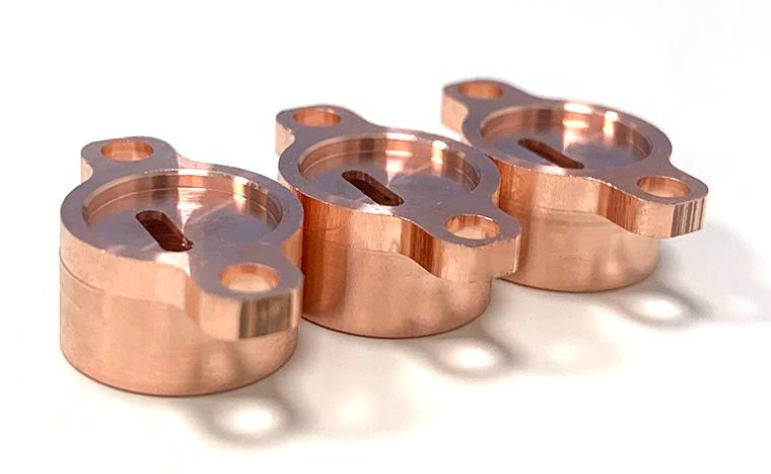
Copper (Cu) is one of the few metals that occurs naturally in its pure form. It has a distinctive reddish-brown colour and a melting point of ~1,085°C. With a density of ~8.96 g/cm³, it is slightly heavier than steel.
Its electrical conductivity is second only to silver among all metals. This, combined with outstanding ductility and natural corrosion resistance, makes copper the standard material for electrical wiring, plumbing systems and heat exchangers. Among copper-based alloys, pure copper grades offer the highest conductivity but the lowest mechanical strength.
Oxygen-free copper (C10100) delivers the highest conductivity, while chromium copper adds enhanced strength for elevated-temperature electrical components.
Common Copper Grades
C10100 (Oxygen-Free Electronic, OFE): 99.99% pure copper engineered for high-vacuum electronics, audio components and semiconductor manufacturing.
C11000 (Electrolytic Tough Pitch, ETP): 99.90% pure copper. The industry standard for electrical power distribution, busbars, wiring and grounding equipment. Electrical conductivity reaches 100-101% IACS.
C12200 (Phosphorised High Residual Phosphorus, DHP): Deoxidised copper widely used for plumbing pipes, HVAC tubing and heat exchanger assemblies.
C14500 (Tellurium Copper): A free-machining copper alloy with ~0.5% tellurium added. Retains about 93% of pure copper’s conductivity while offering significantly better machinability. Ideal for CNC-machined electrical components, soldering iron tips and welding torch tips.
Pros
- Highest electrical (~100% IACS) and thermal conductivity (~401 W/m·K) among industrial base metals.
- Outstanding cold-working ductility. Easy to draw, bend and form.
- Excellent resistance to atmospheric and freshwater corrosion. Develops a protective patina over time.
- Natural antimicrobial and biostatic properties.
- 100% recyclable without loss of properties.
Cons
- Soft and gummy during CNC machining. Causes continuous chip wrapping and burr formation.
- Lower tensile and yield strength compared to brass and bronze alloys.
- High raw material cost driven by global electrification demand.
- Gradually oxidises over time. Surface colour changes from reddish-brown to green patina.
- Low wear resistance. Not suitable for high-friction applications.
What Is Brass?
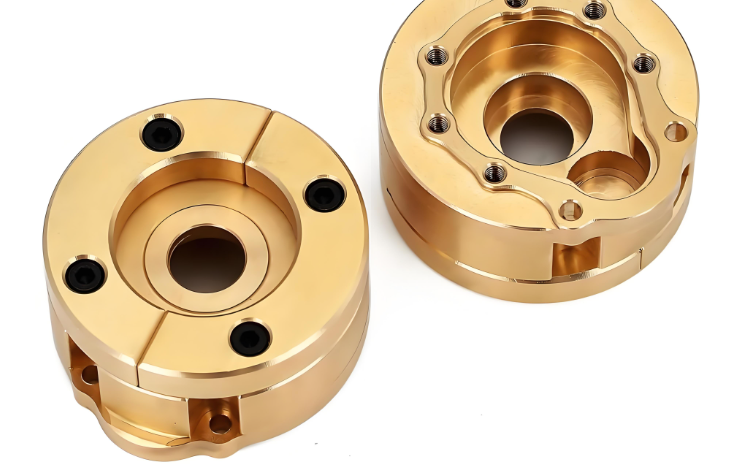
Brass is a copper-zinc alloy (Cu-Zn) with a distinctive golden-yellow colour. By adjusting the copper-to-zinc ratio (typically 55-95% copper content), engineers can modify the material’s strength, hardness, colour and machinability. Adding more zinc produces a stronger, more yellow alloy with competitive pricing, making brass the most cost-effective of the three red metals.
As a copper-zinc alloy, brass is the most versatile metal alloy in the red metals family. It is corrosion resistant in most indoor and freshwater conditions.
Common Brass Alloys
C36000 (Free-Cutting Brass): Contains ~3% lead, which acts as an internal chip breaker. Rated at 100% on the machinability index, the benchmark for all copper alloys. The go-to grade for high-speed CNC turning to ensure smoother machining.
C26000 (Cartridge Brass): 70% copper, 30% zinc. Excellent cold-working performance for deep drawing, stamping and fastener production.
C46400 (Naval Brass): Modified with ~1% tin to resist dezincification in marine and brackish water environments. The standard brass alloy for marine hardware and valve components.
Pros
- Exceptional machinability. Reduces cycle times and tool wear in CNC production.
- Attractive golden appearance. Suitable for architectural fittings, plumbing fixtures and consumer hardware.
- Low coefficient of friction. Ideal for gears, valves and lock mechanisms.
- Good corrosion resistance in dry and freshwater environments.
Cons
- Prone to dezincification in acidic, high-chloride or stagnant water.
- Lower electrical conductivity (~28% IACS) compared to pure copper.
- Vulnerable to stress corrosion cracking (SCC) in ammonia-rich environments.
What Is Bronze?
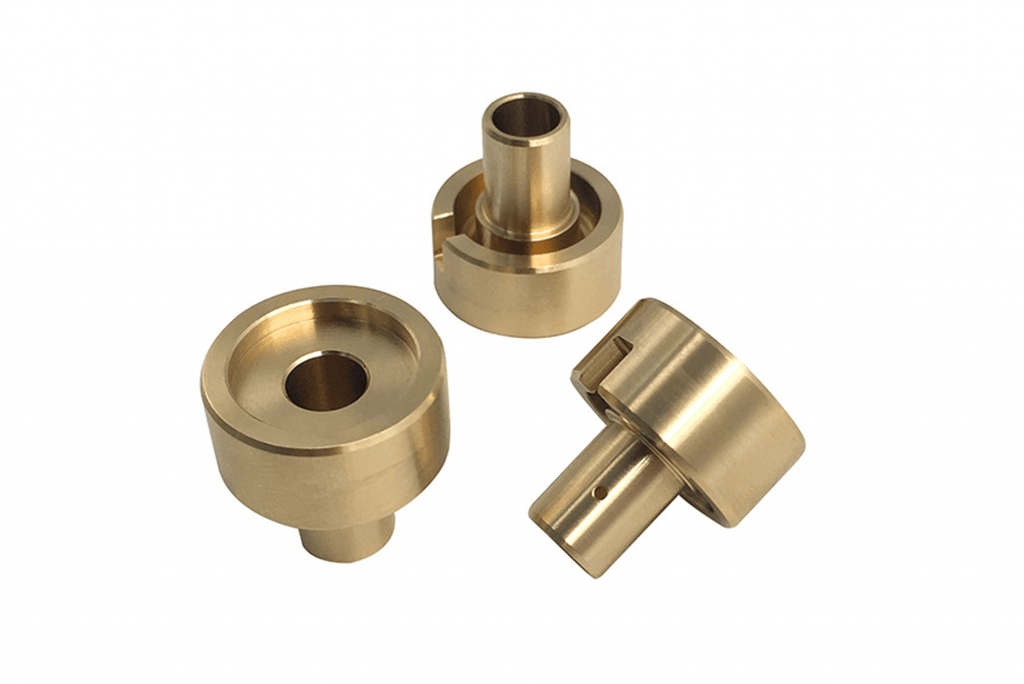
Bronze is a copper-based alloy (Cu-Sn) with a darker, brownish-gold colour. Traditional formulations contain 80-95% copper and 5-20% tin. Modern bronze alloys often replace or supplement tin with aluminium, silicon, manganese or phosphorus. This specific alloy composition tailoring allows engineers to optimise mechanical strength, hardness and superior wear resistance for industrial applications.
Common bronze alloys include tin bronze, silicon bronze and aluminium bronze. Each offers distinct properties depending on the other elements added to the copper base.
Common Bronze Alloys
C93200 (SAE 660 Bearing Bronze): A tin bronze and the standard continuous-cast alloy for sleeve bearings, bushings, thrust washers and wear plates.
C63000 (Nickel Aluminium Bronze): A heavy-duty aluminium bronze alloy providing extreme tensile strength and enhanced strength against cavitation and marine corrosion. Highly resistant in corrosive environments including seawater and chemical processing.
C51000 (Phosphor Bronze): A brass bronze alternative alloyed with tin and phosphorus to yield high fatigue strength, spring temper and low friction. Widely used for springs, electrical connectors and fasteners in electrical applications.
Pros
- Superior tensile strength, hardness and fatigue endurance compared to brass and copper.
- Exceptional resistance to saltwater corrosion and marine biofouling in marine environments.
- High resistance to metal-on-metal wear, galling and seizure under heavy loads. Metals offer increased durability in demanding conditions.
- Good casting properties. Suitable for complex shapes and sculptures.
Cons
- Higher raw material cost due to expensive alloying elements (tin, nickel).
- Lower machinability rating compared to free-cutting brass grades.
- More brittle under high impact loading depending on the specific alloy grade.
Differences Bewteen Brass, Bronze and Copper
Colour and Appearance
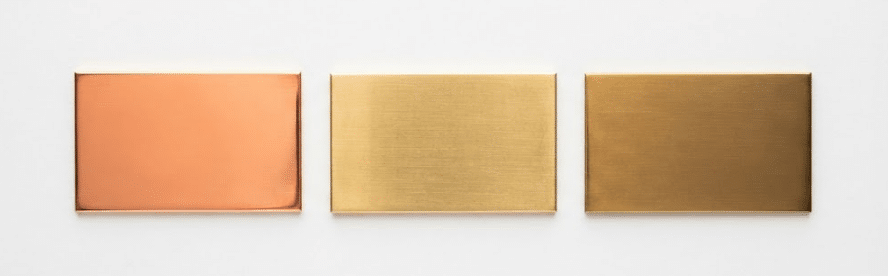
Copper: displays a distinctive reddish-orange hue when fresh. Over time, it gradually oxidises and develops a blue-green patina (verdigris). The Statue of Liberty is the most famous example of this natural colour change.
Brass: exhibits a bright, golden-yellow finish. Higher zinc content produces a lighter, more yellow tone. Lower zinc content shifts the colour closer to reddish-gold.
Bronze: features a warm, golden-brown surface when new. It first darkens to a deep chocolate brown, and can eventually develop a green patina in humid or marine environments. The higher the copper content in the alloy, the more green the final colour.
Density and Weight
Copper: the densest of the three metals at ~8.96 g/cm³. This higher mass is a consideration for weight-sensitive designs.
Brass: the lightest at ~8.40-8.73 g/cm³. The zinc content reduces overall density, offering a slight weight advantage.
Bronze: falls between the two at ~8.80-8.90 g/cm³, varying with tin and aluminium content.
Mechanical Properties
Copper: the softest of the three with a yield strength of 70-350 MPa (depending on temper). It offers superior elongation and ductility, making it ideal for drawing and forming.
Brass: offers moderate strength at 300-550 MPa tensile. It balances formability with enough hardness for wear-resistant parts like gears and valve stems.
Bronze: the strongest and hardest. Nickel aluminium bronze (C63000) can exceed 800 MPa tensile strength. Its high hardness and key features make it the best choice for heavy-load bearings and industrial machinery.
Electrical Conductivity
Copper: sets the benchmark at 100% IACS with excellent electrical conductivity. It is the standard material for power transmission, electrical wiring and busbars.
Brass: achieves 25-50% IACS. Adequate for connectors and terminals, but not suitable for high-current electrical applications.
Bronze: ranges from 7-15% IACS. Phosphor bronze (C51000) is used in electrical springs and contacts, but high conductivity is not its primary advantage.
Thermal and Electrical Conductivity Comparison
Copper: conducts heat rapidly at ~385 W/m·K. The preferred material for heat exchangers, radiators and cooling systems.
Brass: moderate thermal conductivity at ~115 W/m·K. Sufficient for general plumbing and low-demand heat transfer applications.
Bronze: lowest at ~60 W/m·K due to its complex alloy structure. Thermal performance is not a primary selection factor for bronze.
Corrosion Resistance
Copper: offers high corrosion resistance in atmospheric and freshwater conditions by forming a protective green patina. However, it is vulnerable in acidic, high-sulphur and corrosive environments.
Brass: resists freshwater corrosion but is prone to further corrosion through dezincification in chloride-rich, acidic or stagnant water. Naval Brass (C46400) is stabilised for marine use.
Bronze: the top performer with excellent corrosion resistance, particularly in saltwater and marine environments. It forms a stable protective layer and resists marine biofouling. The go-to metal for subsea and marine applications.
Melting Point
Copper: melts at 1,085°C (1,984°F). The highest melting point of the three, requiring more energy for casting and forming at elevated temperatures.
Brass: melts at 900-940°C (1,650-1,720°F). The lowest range makes it the easiest to cast, but zinc vaporisation can be a concern during high-temperature processing.
Bronze: melts between 913-1,025°C (1,675-1,877°F). Sits between copper and brass, with good castability for complex shapes.
Machinability
Copper: rates around 20%. It is soft and gummy during cutting, causing chip wrapping and burr formation. Tellurium copper (C14500) improves this significantly to ensure smoother machining.
Brass: free-cutting brass (C36000) rates at 100%, the benchmark for all copper alloys. It produces short chips, low cutting forces and excellent surface finish in CNC operations.
Bronze: ranges from 20-60% depending on grade. Harder alloys require carbide tooling and slower speeds. Leaded bearing bronze (C93200) machines more easily than aluminium bronze.
Weldability
Copper: can be TIG/MIG welded with proper preheating. Oxygen-free copper (C10100) welds most easily. High thermal conductivity requires higher heat input.
Brass: the most difficult to weld of the three metals. Zinc vaporises during welding, producing toxic fumes and causing porosity. Silver soldering or brazing is often preferred.
Bronze: welds cleanly using matching filler alloys. Unleaded grades have fair weldability, though stress cracking can occur under certain environmental conditions.
Costs and Competitive Pricing
Copper: the most expensive raw stock due to global electrification demand and commodity pricing.
Brass: the most cost-effective option with competitive pricing. Lower copper content and easier manufacturing make it ideal for mass production and cost reduction.
Bronze: moderate to high cost due to tin, nickel and aluminium alloying elements. Justified by longer service life in demanding environments.
Industrial Applications
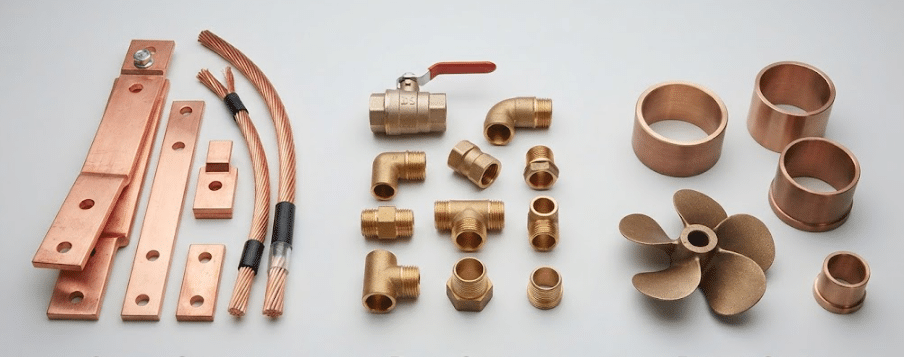
Copper: electrical wiring, busbars, heat sinks, heat exchangers, plumbing pipes, electrical components and roofing.
Brass: plumbing fixtures, precision turnings, fasteners, decorative hardware, valve components, musical instruments and ammunition casings.
Bronze: marine propellers, heavy bushings, pump impellers, worm gears, marine hardware, sculptures and ship fittings.
How to Choose the Right Material
Need electrical or thermal conductivity?
Choose Copper. No other metal comes close. For wiring, busbars, heat sinks and heat exchangers, pure copper (C11000) is the only practical option. If the part also needs CNC machining, use tellurium copper (C14500) for better chip control.
Need high-speed CNC machining at low cost?
Choose Brass. Free-cutting brass (C36000) machines faster than any other copper alloy. It produces short chips, low tool wear and excellent surface finish. It is also the cheapest of the three red metals. Ideal for high-volume production of plumbing fixtures, valves, connectors and precision turnings.
Need strength, wear resistance or marine corrosion resistance?
Choose Bronze. For bearings, bushings and sliding wear surfaces, bearing bronze (C93200) is the industry standard. For marine environments with seawater or brine exposure, nickel aluminium bronze (C63000) offers the best corrosion resistance. For springs and electrical contacts that need to withstand fatigue, use phosphor bronze (C51000).
Need decorative or architectural appearance?
Brass is the best fit for most decorative and architectural applications. Its golden-yellow colour and ease of polishing make it ideal for hardware, trim and consumer-facing products. Bronze works well for outdoor sculptures and architectural elements where a classic aged patina is desired.
Learn More From Aria Manufacturing
With over 10 years in CNC machining and sheet metal fabrication, Aria Manufacturing has hands-on experience with a wide range of copper, brass and bronze grades. From free-cutting brass C36000 to nickel aluminium bronze C63000, we understand how each alloy behaves on the machine and in the field. If you are not sure which grade is the best fit for your project, contact us and we will help you decide.
