

 EU
EUPolyamide fiber and nylon materials are increasingly used in many industries due to their exceptional properties, toughness, and versatility. Understanding the differences between these materials is important to help you make informed decisions when selecting the right material for your products.
This guide clears up how polyamide and nylon relate, where their properties differ, and how each behaves in CNC machining, injection molding, and 3D printing.
Quick Comparison
| Attribute | Polyamide (PA) | Nylon |
| What it is | A whole family of polymers with repeating amide bonds | A synthetic sub-group of that family |
| Origin | Natural or synthetic | Fully synthetic (petroleum, some bio-based) |
| Includes | Nylons, aramids (Kevlar, Nomex), PPA), natural fibers (silk, wool) | Aliphatic grades such as PA6, PA66, PA12 |
| Chemical structure | Flexible aliphatic or rigid aromatic chains | Symmetrical aliphatic chains that crystallize |
| Tensile strength | About 40 to 3,600 MPa across the family | About 40 to 90 MPa, grade dependent |
| Impact resistance | Generally good; aromatic grades are stiffer | High, especially PA6 |
| Heat resistance | Very high for aramids and PPA | Moderate to good |
| Chemical resistance | Resists oils and solvents; weak to strong acids | Resists oils and alkalis; weak to strong acids |
| Moisture absorption | Varies widely; aromatics absorb little | Higher for PA6 and PA66, lowest for PA12 |
| Cost and processing | Wide range; specialty grades are costly | Affordable and easy to process |
| Common usage | Technical term, standard on European textile labels | Trade name from DuPont, common in engineering and North America |
| Relationship | The umbrella category | One branch under that umbrella |
What Is Polyamide?
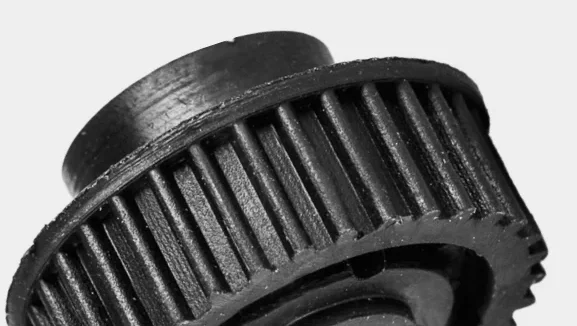
Polyamide is a family of synthetic polymers, with some natural members too, whose molecular structure is built from repeating units joined by amide bonds, the amide groups that give the material its name (a carbon and oxygen group bonded to a nitrogen atom). Those bonds are what give the whole family its strength, toughness, and flexibility, but the family itself is broad.
The term polyamide refers to materials that can be natural, such as silk and wool, which are built from amino acids, or synthetic, and the synthetic side splits into three groups: aliphatic polyamides, which are the nylons; aromatic polyamides, or aramids, such as Kevlar and Nomex, which are rigid and extremely heat resistant; and semi-aromatic grades (PPA) that fill the high-temperature middle ground.
Because the family spans this much range, the word “polyamide” alone can describe anything from a 40 MPa molded gear to a 3,600 MPa ballistic fiber.
What Is Nylon?
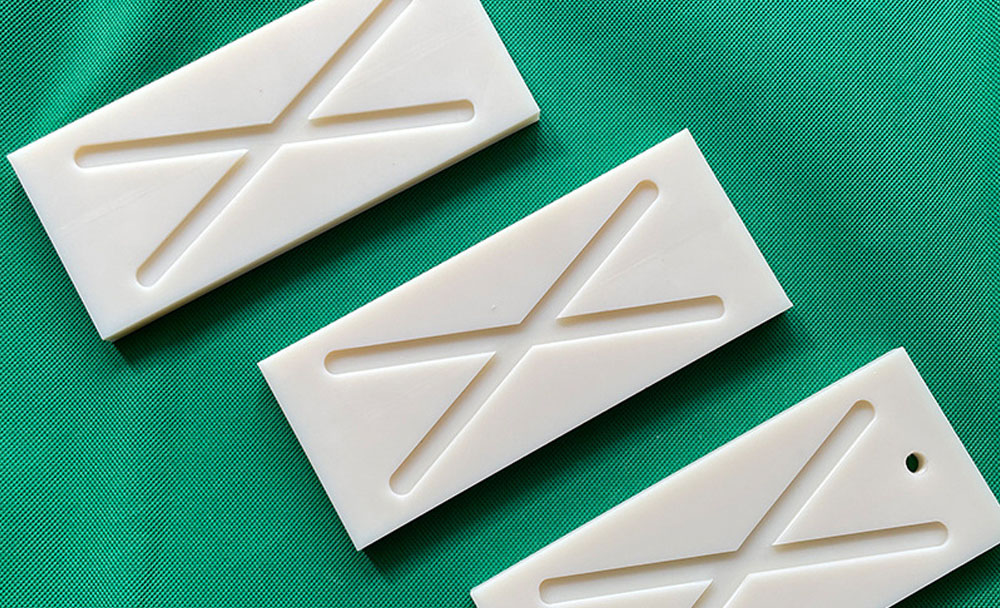
Nylon is the trade name DuPont gave to a specific type of polyamide, the synthetic aliphatic grades, in the mid-1930s. It is made by condensation polymerization, where monomers join into long chains and release water as a byproduct. Nylon appeared first as nylon fibers for stockings and became the first commercially successful synthetic fiber, then went to war in parachutes and cords.
PA66, one of the most common grades, is produced from adipic acid and hexamethylenediamine, while PA6 comes from a single monomer, caprolactam. Every nylon is a polyamide, but nylon is always a fully synthetic, petroleum-derived synthetic polyamide that sits only in the aliphatic branch.
Its regular, symmetrical chains pack tightly and crystallize, which is what gives nylon the mechanical strength, toughness, and wear resistance that made it one of the most widely used engineering thermoplastics. In practice, nylon is also the polyamide you are most likely to machine, mold, or print, which is why the two words so often stand in for each other.
Key Differences Between Polyamide and Nylon
The single most important point is that nylon is a type of polyamide, not a competing material, the way a sedan is a type of car. All nylon is polyamide, but not all polyamides are nylon, and the family’s distinct properties come from how wide a range you are talking about. The dimensions below break down where the broader family and its most common member part ways.
Composition and Origin
Polyamide: The umbrella term for any polymer built on repeating amide groups. It can be natural, such as silk and wool, which are built from amino acids, or synthetic, and the synthetic side divides into aliphatic, aromatic, and semi-aromatic types.
Nylon: A specific subset of that family, always a fully synthetic, petroleum-based synthetic polyamide, with a few bio-based grades, that sits only in the aliphatic branch. Every nylon is a polyamide, but not every polyamide is a nylon.
Chemical Structure
Polyamide: Molecular structure varies by type. The repeating units and amide groups stay the same, but aliphatic chains are simple and flexible, while aromatic chains are rigid, ring-shaped, and far more heat resistant.
Nylon: Regular, symmetrical aliphatic chains that pack tightly and crystallize, which is the source of its mechanical strength and wear resistance.
Tensile Strength and Impact Resistance
Polyamide: Tensile strength covers a huge span because the family is so broad, from roughly 40 MPa for a molded nylon up to about 3,600 MPa for a high-strength aramid fiber such as Kevlar. Impact resistance and overall mechanical properties are generally strong, though the rigid aromatic grades trade some toughness for stiffness.
Nylon: Tensile strength sits in a narrower band of about 40 to 90 MPa and rises with glass fillers. Impact resistance is one of nylon’s strong points, especially PA6, which absorbs shocks and resists cracking under repeated mechanical stress, with high abrasion resistance and a strength-to-weight ratio that makes it a common metal replacement.
Heat Resistance
Polyamide: The specialty grades excel here. Aramids and semi-aromatic PPA withstand high temperatures well beyond standard engineering plastics and keep their form at extreme temperatures.
Nylon: Moderate to good. It handles typical engineering service well, and PA66 tolerates more heat than PA6, but it cannot match aramids or PPA at high temperatures.
Chemical Resistance
Polyamide: As a family, polyamides resist fuels, oils, greases, and many solvents, which is why they hold up in engine bays and industrial environments. They are highly resistant to hydrocarbons but weaker against strong mineral acids and some polar solvents, which attack the amide bonds.
Nylon: Shares that broad chemical resistance and chemical stability against hydrocarbons, oils, and alkalis, but like other polyamides it is vulnerable to strong acids and softens with prolonged moisture. Grade matters here: PA12 and the longer-chain nylons resist chemicals and moisture better than PA6 or PA66.
Moisture Absorption
Polyamide: Depends heavily on the grade, and aromatic polyamides absorb very little water. Contrary to a common claim, nylon is not the more moisture resistant of the two.
Nylon: Standard grades such as PA6 and PA66 absorb a noticeable amount, which can shift part dimensions, while PA12 offers the low moisture absorption and dimensional stability that the other nylons lack.
Cost and Processing
Polyamide: As a family the range is wide. Specialty grades such as aramids and PPA are expensive and demand higher processing temperatures.
Nylon: Its cost effectiveness, wide availability, and easy processing give it an excellent balance of properties, which is why it is the default polyamide for most manufactured parts. It machines, molds, and prints without special equipment.
Put together, nylon is the low-cost, easy-to-process, well-balanced core of the polyamide family, while the rest of the family trades that affordability for something extreme, such as the heat resistance of a PPA or the tensile strength of an aramid. When people say “polyamide vs nylon,” they are usually comparing that broader family against its most common member.
Nylon vs polyamide in Manufacturing Processes
Here is where the distinction becomes practical. Across the three processes Aria runs most often, the polyamide you actually machine, mold, or print is almost always a nylon grade, while the specialty polyamides either behave very differently or are not used at all. Here is how each process compares.
CNC Machining
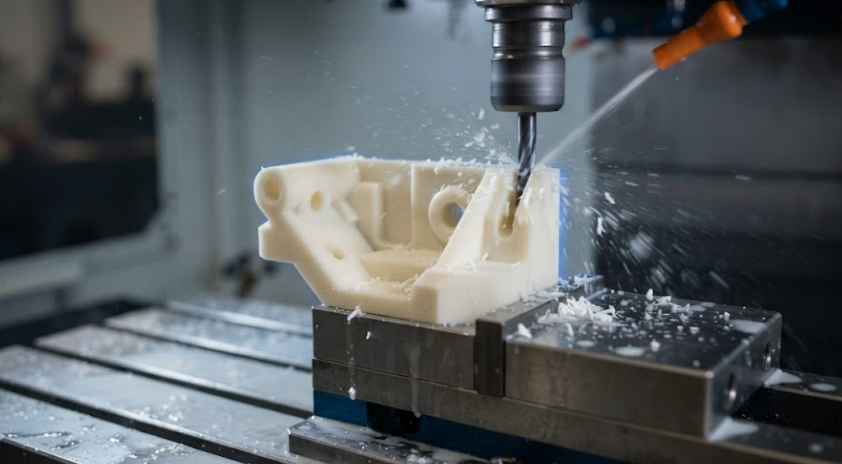
Nylon is the polyamide that dominates CNC work. Cast nylon 6 and extruded nylon 66 come as rod, plate, and tube stock that machines cleanly into mechanical components such as gears, bushings, rollers, insulators, and other wear parts, offering low friction and a strong strength-to-weight ratio as a metal replacement.
The main thing to control is moisture: nylon absorbs water and can swell, so tolerances need to allow for dimensional drift, and sharp tooling with good chip clearance keeps the material from turning gummy.
The wider polyamide family is harder to machine. Glass-filled and semi-aromatic PPA grades are far more abrasive and wear tooling quickly, while aramids such as Kevlar are used as fibers or composites rather than machined from bulk stock. For a machined polyamide part, you are effectively choosing a nylon grade.
Injection Molding
Nylon 6 and nylon 66 are among the most common injection-molded thermoplastics, valued for their excellent mechanical properties, wear resistance, and chemical resistance. Both are semi-crystalline and must be dried thoroughly before molding, because trapped moisture causes surface defects and lowers strength. Nylon 66 runs at a higher melt temperature than nylon 6 and sets up faster, and glass fillers are often added to control shrinkage and increase stiffness.
Stepping outside nylon, semi-aromatic PPA grades can be molded too, but they need much higher barrel and mold temperatures, and aramids cannot be injection molded at all because they degrade before they flow. So for molding, the practical polyamide choices are the nylons, plus PPA when the part has to survive high heat.
3D Printing
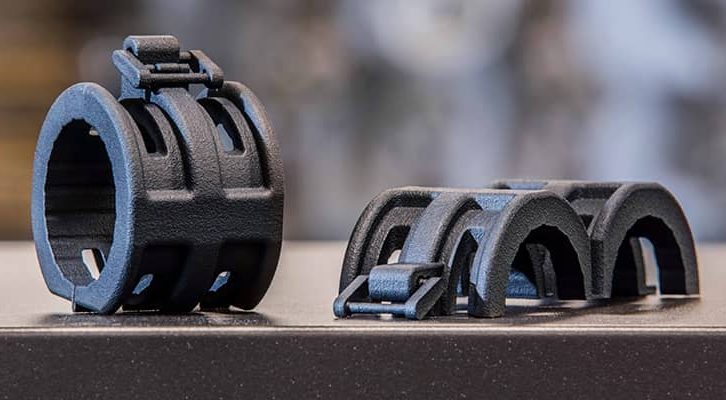
This is where polyamide and nylon are effectively the same thing. Powder-bed processes like SLS and MJF are built around nylon powders and can produce complex geometries, with PA12 as the default and PA11 as a bio-based alternative, while nylon filaments cover FDM. PA12 wins here because it has the lowest moisture absorption of any nylon, which gives printed parts good dimensional stability and consistent mechanical performance.
You will not find a printer running raw Kevlar or Nomex. Where those names appear in 3D printing, they are chopped fibers reinforcing a nylon matrix. So if a supplier offers “polyamide 3D printing,” they mean nylon, almost always PA12.
How to Choose the Right Material
Because nylon is a polyamide, the real question is which grade fits your process and part, not which name to use.
- Machined wear parts and metal replacements: cast nylon 6 or extruded nylon 66.
- High-volume molded components: nylon 6 or nylon 66, glass-filled when you need extra stiffness or high strength.
- Printed functional prototypes and parts: polyamide materials
- For industrial applications requiring extreme heat, flame protection, or other demanding environments: step outside nylon to a semi-aromatic PPA or an aramid such as Nomex.
The most useful habit is to tell your manufacturer the grade, any fillers, and the process, rather than just “nylon” or “polyamide.” That detail is what secures the mechanical strength, heat resistance, and dimensional stability your part actually needs. Aria machines, molds, and 3D prints across these polyamide grades for customers in various industries and can help you match the right material before you commit to tooling.
Frequently Asked Questions
Q: Is polyamide the same as nylon?
A: Yes and no. Nylon is a type of polyamide, specifically the aliphatic kind. All nylon is polyamide, but not all polyamides are nylon; the family also includes aramids and natural fibers. On most clothing labels, the two words do mean the same fiber.
Q: Which is better for a manufactured part, polyamide or nylon?
A: Neither name settles it; the grade does. For most CNC, molding, and printing jobs, a nylon grade is the right polyamide. Reach for a specialty polyamide only when you need extreme heat resistance or high strength.
Q: What are the common types of nylon?
A: The most common nylon types are all aliphatic polyamides: PA6 and PA66 for general engineering applications and molding, and PA12 and PA11 for low moisture absorption and 3D printing. PA610 and PA612 sit in between with good dimensional stability. Each grade tunes strength, heat resistance, and moisture behavior for a specific job.
Q: What industries use polyamide and nylon?
A: Polyamide and nylon show up across many industries. In automotive and the aerospace industry they form fuel lines, engine covers, and structural components; in electronics they make electrical connectors and insulators; in healthcare they go into medical devices and tubing; and in consumer goods they cover everything from outdoor gear to food packaging. This reach across industrial machinery and everyday products comes from how easily the material’s properties can be tuned by grade.
Q: Is nylon a synthetic polymer?
A: Yes. Nylon is a fully synthetic polymer, one of a family of synthetic polymers made by condensation polymerization from petrochemical monomers such as adipic acid and caprolactam. A few grades, like PA11, use bio-based alternatives derived from castor oil.
Q: Does polyamide or nylon absorb more water?
A: Standard nylons such as PA6 and PA66 absorb a fair amount, PA12 absorbs the least of the nylons, and some aromatic polyamides absorb less still. It is driven by the grade, not the name.
Q: Can you 3D print polyamide?
A: Yes. Nearly all polyamide 3D printing uses nylon, most often PA12 through selective laser sintering (SLS) or MJF, with PA11 as a bio-based option.
