


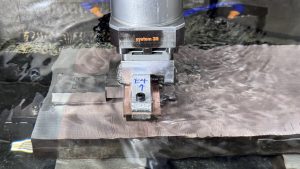
Sinker EDM uses controlled electrical sparks to machine features that milling struggles to produce, such as deep blind cavities and small internal radii. This guide covers how it works, materials, machine components, benefits and limitations, cost factors, applications, and design tips.
What Is Sinker EDM (Electrical Discharge Machining)?
Sinker EDM is an electrical discharge machining process that removes material from a conductive workpiece. As a non-contact process, it uses a shaped electrode and controlled sparks to produce deep cavities and complex geometries.
Sinker EDM, also called die sinking EDM, ram EDM, plunge EDM, or volume EDM, is used when conventional machining cannot produce a feature economically. Typical applications include mold cavities, blind features, and intricate shapes with small internal radii.
Sinker EDM Working Principle
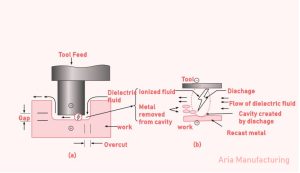
In this EDM process, pulsed electric current passes between a shaped electrode and a conductive workpiece across a gap filled with dielectric oil. When the electric field across the gap exceeds the oil’s dielectric strength, a discharge channel forms. Local temperatures reach roughly 8,000 to 12,000°C. This melts and vaporizes a tiny amount of metal.
Before each discharge, the oil insulates the gap. Afterward, it cools the surface and carries away debris from the molten material. A servo system adjusts the spark gap, while the CNC controls electrode motion and discharge settings.
The final geometry follows the electrode shape and motion. Electrode design and process control account for the spark gap and wear.
How Does the Sinker EDM Process Work?
The sinker EDM process often follows CNC machining, which removes accessible bulk material first.
Make the Electrode
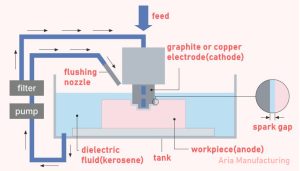
A CNC machine cuts a graphite or copper tool electrode based on the desired shape, with a spark-gap allowance. The quality of this EDM tool affects the result, but not every detail is copied exactly.
Set Up the Workpiece
The workpiece is clamped on the worktable and placed in a tank of dielectric fluid. The fluid circulates and passes through a filter.
Position the Electrode
The electrode is positioned over the workpiece. During machining, a small gap separates them, with no physical tool contact.
Rough Machining
A roughing electrode runs at high discharge energy. It removes most of the material quickly and burns the cavity to its rough shape. Roughing prioritizes removal rate while controlling wear and leaving stock for finishing.
Finish Machining
The sparks also erode the electrode. Its corners can round off as the burn continues. Finishing uses lower-energy sparks and, when needed, additional electrodes to improve dimensional accuracy, corner definition, and surface quality.
Materials Used in Sinker EDM Machining
Sinker EDM involves two sets of materials: the electrode and the workpiece.
Electrode Materials
Electrode selection depends on conductivity, wear resistance, machinability, and the EDM process requirements. Common options include graphite, copper, and copper alloys.
- Graphite: Widely used for sinker EDM electrodes. It is cost-effective and easy to machine. Suitable grades retain fine detail and offer low wear under appropriate machining conditions. This makes graphite useful for roughing and complex shapes.
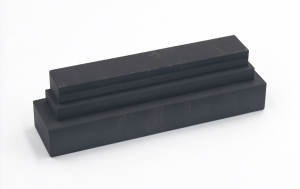
- Copper and copper alloys: Conduct electricity well and suit finishing work that needs a fine surface. They are also used to machine cemented tungsten carbide. Copper electrodes can be harder to machine than graphite electrodes, increasing production time and cost.
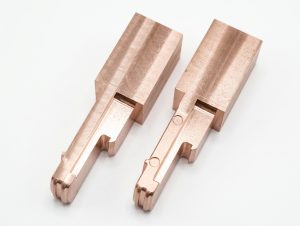
- Tellurium copper: Easier to machine than pure copper, with machinability approaching that of free-machining brass. It is an option where electrode machinability and finish requirements justify its use.
Workpiece Materials
Conventional sinker EDM requires sufficient electrical conductivity. Unlike conventional machining with conventional cutting tools, this EDM process removes material through discharge heat rather than mechanical cutting. Hardness is not the main constraint.
Conductivity
The workpiece must conduct electricity to complete the discharge circuit. Conventional sinker EDM cannot directly machine ordinary insulating plastics or ceramics.
Thermal Properties
Removal rate depends on thermal properties, material composition, and machining settings. Copper’s high thermal conductivity can reduce removal efficiency.
Hardness: Not a Limit
Hardened steel and cemented tungsten carbide can both be machined. Performance depends on electrical and thermal properties, composition, electrode material, polarity, pulse settings, and flushing.
Common Machinable Materials
Sinker EDM can machine many conductive materials, including hard metals that are difficult to cut by conventional machining.
- Steel alloys: Hardened tool steels and other steels suit sinker EDM well.
- Copper: Machinable by EDM, though its high thermal conductivity requires suitable electrodes and settings.
- Aluminum: Aluminum alloys can be machined by sinker EDM, although milling is often more economical for accessible features.
- Titanium: Light, strong, and corrosion-resistant. EDM can produce selected features in titanium components, including medical parts.
- Cemented tungsten carbide: Hard to cut conventionally but machinable by EDM. Electrode material, polarity, and settings depend on the carbide grade and finish required.
- Nickel alloys: Include Inconel, Hastelloy, and Monel. Heat, corrosion, and oxidation resistance vary by alloy and grade.
Sinker EDM Machine Components
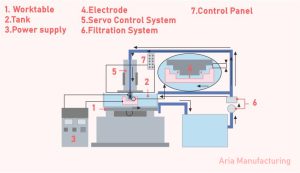
A sinker EDM machine has several main components that work together to produce the cavity.
Worktable: Holds the workpiece. Axis motion comes from the table, electrode head, or both. Some machines also have rotary axes.
Tank: Holds the dielectric fluid that covers the machining area. The fluid circulates through a filtration system.
Power Supply: Generates controlled electrical pulses. Voltage, current, and pulse duration can be adjusted.Adaptive generators can monitor discharge conditions and adjust machining parameters.
Electrode: A shaped conductive tool, usually graphite or copper. Sparks remove material across a small gap without tool contact.
Servo Control System: Adjusts electrode position, typically along the Z axis, to maintain a suitable spark gap.
Filtration System: Removes debris from the dielectric fluid to help maintain stable discharges.
Control Panel: Lets the operator set machining parameters and monitor the job.
Automatic Electrode Changer: An optional system that switches electrodes to support longer unattended machining.
Benefits and Limitations of Sinker EDM
Benefits
Tight, Consistent Tolerances
Sinker EDM can maintain dimensional accuracy when electrode condition, spark gap, and machining conditions are controlled.Machine positioning accuracy also affects how precisely the electrode follows its programmed path.
Complex Cavities and Small Internal Radii
It suits blind cavities, deep narrow features, and small internal radii that are difficult to mill.
Machines Hardened Materials
It machines hardened tool steel and wear-resistant alloys after heat treatment, avoiding distortion from later hardening.
No Mechanical Cutting Forces
Unlike conventional machining, EDM applies no mechanical cutting forces, reducing load-induced mechanical stress on thin walls and delicate sections. Discharge heat can still affect the surface.
Limitations
Slow Material Removal
This machining process is generally slower than milling for bulk removal, so pre-machining can reduce total cycle time.
Requires Conductive Materials
CNC milling can machine metals, plastics, and many other materials. Conventional sinker EDM requires sufficient conductivity and cannot directly machine ordinary insulating plastics or ceramics.
Higher Cost for Some Features
Electrode production and burn time add cost. Electrodes may be reused if wear allows. Total cost depends on the feature and manufacturing route.
Heat Damage to the Surface
EDM can leave a recast layer, an underlying heat-affected zone, and microcracks. Some parts need further finishing. Milling can also affect surface integrity.
Limited Electrode Access
The electrode needs a clear approach and withdrawal path. Orbiting or extra axes can improve access. Deep cavities need effective flushing.
Features Limited by Electrode Design
Feature complexity is limited by electrode design, access, and the available machining strategy.
Electrode Wear and Overcut
Discharges also erode the electrode, particularly at corners and fine details. The spark gap makes the cavity larger than the corresponding electrode geometry. Wear and unstable discharge conditions can cause dimensional errors.
Unstable Discharge
Poor flushing or changes in dielectric condition can destabilize the EDM process, affecting cavity size and surface quality. Routine machine maintenance includes servicing filters and checking dielectric condition.
Sinker EDM Machining Cost Factors
A sinker EDM quote depends on the part and the manufacturing requirements. The following factors have a major effect.
Cavity Depth and Complexity
Electrodes must be prepared before machining. Complex features may need intricate electrodes, extra setups, or additional electrodes. Each electrode requires appropriate design, manufacturing, and inspection. Electrode production can account for a large share of the total cost.
Deeper and more complex cavities often require longer machining times. Machine time and electrode production are major cost drivers.
Corner Sharpness and Fine Details
Separate roughing and finishing electrodes may be needed to control wear, size, and surface finish. Smaller internal radii and finer details may require additional finishing electrodes. Each added stage increases setup time and tooling cost.
Tolerance Requirements
Tighter tolerances demand tighter control of the electrode, spark gap, and discharge settings. They may require additional finishing electrodes and slower settings, increasing time and cost.
Surface Finish Requirements
A fine finish directly from EDM often requires multiple low-energy finishing stages. These stages lengthen the machining cycle. Some molds and precision cavities also need polishing or surface treatment.
Material
Material properties affect removal rate, electrode wear, and finishing needs. Slower machining and extra finishing increase cost.
Sinker EDM Applications
Sinker EDM produces selected features in aerospace, medical device, automotive, and mold manufacturing. It complements milling where access or geometry makes cutting difficult. Typical applications include:
- Automotive Parts: Internal splines, blind slots, and selected gear features on hardened parts, as well as cavities in automotive molds.
- Molds and Dies: Used in mold making for cavities, deep ribs, small internal radii, and surface textures in injection molds, die casting molds, and forging dies, often after hardening.
- Aerospace Components: Blind slots and irregular cavities in high-temperature alloy parts, plus precision features in aerospace tooling.
- Medical Devices: Small blind slots and fine features in suitable implants and surgical instruments, plus cavities in molds for medical devices.
- Electronic Components: Tiny cavities and fine details in connector mold inserts.
- Research and Development: Cavities and detailed features in prototypes and trial molds that are difficult to mill.
Sinker EDM vs Wire EDM vs CNC Milling
| Feature | Sinker EDM |
Wire EDM (Wire Cut EDM) |
CNC Milling |
| Best For | Blind cavities, deep pockets, and selected 3D details | Through-profiles and ruled or tapered surfaces | Accessible surfaces, open pockets, and general 3D shapes |
| Accuracy | High; depends on electrode accuracy, wear, and gap control | High; depends on machine, part thickness, and cutting strategy | High; depends on machine, tooling, and cutting conditions |
| Surface Finish | EDM texture; finer with low-energy finishing | EDM texture; finer with trim cuts | Depends on tools and finishing steps |
| Speed | Generally slow for bulk removal | Depends on thickness and cutting strategy | Efficient for accessible bulk removal |
| Main Cost Drivers | Electrode production and burn time | Machine time and wire consumption | Cutting tools and machine time |
Part tolerances depend on geometry, material, machine capability, and process conditions.
Wire cut EDM uses a moving wire electrode and usually deionized water, while sinker EDM typically uses a shaped electrode and dielectric oil.
Milling suits bulk removal, wire EDM suits through-profiles, and sinker EDM suits blind cavities and details that are difficult to mill.
When to Use Sinker EDM
Use milling for efficient bulk removal, wire EDM for through-profiles, and sinker EDM for suitable cavities and difficult details.
| Feature Type | Fit for Sinker EDM | Why | How Other Methods Compare |
| Deep blind cavities | Excellent for suitable geometry | Avoids cutting-tool deflection; wear and flushing still affect accuracy | Long milling tools may face reach and rigidity limits |
| Small internal radii | Excellent | Gap and electrode wear set the minimum radius | Milling is constrained by cutter geometry |
| Hardened steel | Excellent for suitable features | No mechanical cutting forces; hardness is not the main constraint | Hard milling, grinding, or wire EDM may also suit the feature |
| Complex mold cavities | Excellent for difficult details | Electrode geometry and motion generate the feature | Milling can rough and finish many cavities |
| Thin ribs and delicate features | Good, with limits | No mechanical cutting forces on the part | Milling can deflect delicate features |
| Large open areas | Usually not preferred | Bulk removal can be slow | Milling is often faster |
| Through-profiles | Usually not preferred | Often less efficient than wire EDM | Wire EDM is generally the better fit |
| Simple accessible shapes | Usually not preferred | Electrode production may add unnecessary cost | Milling is often faster and cheaper |
Using Sinker EDM with CNC Machining
Sinker EDM often works alongside CNC machining. Milling removes accessible material, while the EDM process produces difficult features through roughing, finishing, or both.
CNC and EDM Working Together
CNC machining can quickly create the rough shape and reference features. EDM then produces selected small internal radii, deep cavities, and difficult features in hardened material. Milling accessible areas first often saves time.
Typical Process Order
One possible sequence for a hardened mold part is: CNC roughing → heat treatment → EDM finishing → polishing, if required.
CNC machining roughs the part while the material is soft. EDM then finishes selected critical features after hardening, avoiding later heat-treatment distortion of those finished features. Pre-milling reduces EDM stock, though some features still need EDM roughing.
Planning Before Machining
Electrode count, cavity depth, surface finish, and tolerance affect cost and lead time. This review identifies whether CNC machining, wire EDM, or sinker EDM best suits each feature. For repeat jobs, automated electrode and workpiece handling may reduce manual intervention.
Machining Superalloys with Sinker EDM
Nickel-based superalloys, including suitable Inconel grades, retain strength at elevated temperatures and can be difficult to cut conventionally. Sinker EDM offers an alternative for selected features.
Why It Works on Superalloys
- Heat Instead of Pressure: EDM machines conductive superalloys such as Inconel without mechanical cutting forces.
- Handles Nickel-Based Alloys: Suitable electrodes, parameters, and flushing help achieve stable machining.
- Hardness Is Not the Main Constraint: Performance depends on electrical and thermal properties, composition, electrode material, polarity, pulse settings, and flushing rather than hardness alone.
Key Challenges
- Thermal Properties: Thermal properties and discharge settings affect removal rate. Higher energy can speed machining but worsen surface damage.
- Poor Heat Dissipation: Many nickel-based superalloys conduct heat poorly. Localized heating can increase the risk of surface damage and microcracks.
- Slower Erosion: Thermal properties and flushing conditions can slow machining. Deep cavities require particular attention to debris removal and discharge stability.
- Recast Layer and Heat-Affected Zone: EDM can leave a recast layer and an underlying heat-affected zone. Their properties depend on the material and settings. Low-energy finishing reduces the affected depth; further removal may be required.
- Electrode Wear Over Long Runs: Long machining cycles require careful control of electrode wear.
Sinker EDM Design Tips
Design choices affect machining time and cost. The following tips can help improve manufacturability.
Plan Electrode Access
Plan how the electrode enters and exits. Orbiting or extra axes can improve access, but overhangs and hidden features still need review.
Review Deep, Narrow Cavities
Deep, narrow cavities are harder to flush. Poor debris removal can destabilize machining, reduce accuracy, and slow the cut. Allow for suitable flushing and machining strategies.
Allow for Electrode Wear
Corners and fine details are particularly sensitive to wear. Include appropriate compensation and use separate roughing and finishing electrodes when needed.
Limit Fine Finishes
Finer finishes generally require lower-energy machining and more time. Specify fine finishes only where needed. Allow rougher finishes elsewhere if dimensional and surface requirements permit.
Conclusion
Sinker EDM uses controlled sparks to machine conductive materials. It suits hardened parts, deep cavities, and small internal radii. Accuracy depends on electrode design, wear, gap control, and flushing. Often paired with CNC machining, this EDM process can perform both roughing and finishing.
