Types of CNC Fixtures and Their Uses

CNC Fixture

Share:

Table of Content

Table of Content

A precise toolpath produces a bad part when the workpiece moves. I rely on CNC fixtures to hold parts in a fixed position so every cut lands where the program says. Here is how they work, the main types, and how I design them.

What Is a CNC Fixture?

A CNC fixture is a workholding device that locates, supports, and clamps a workpiece during machining. It fixes the part relative to the machine coordinate system, so every operation starts from the same reference. The fixture grips the part tightly enough to resist cutting forces without distorting it. Its job is stability, accuracy, and repeatability across every part in a run.

CNC Fixture

Types of CNC Fixtures

I group fixtures two ways: by the machining process they support and by how they are built. The two views overlap, but together they cover the options I choose from.

By Machining Process

Each process applies different cutting forces, so I match the fixture to how the part is cut.

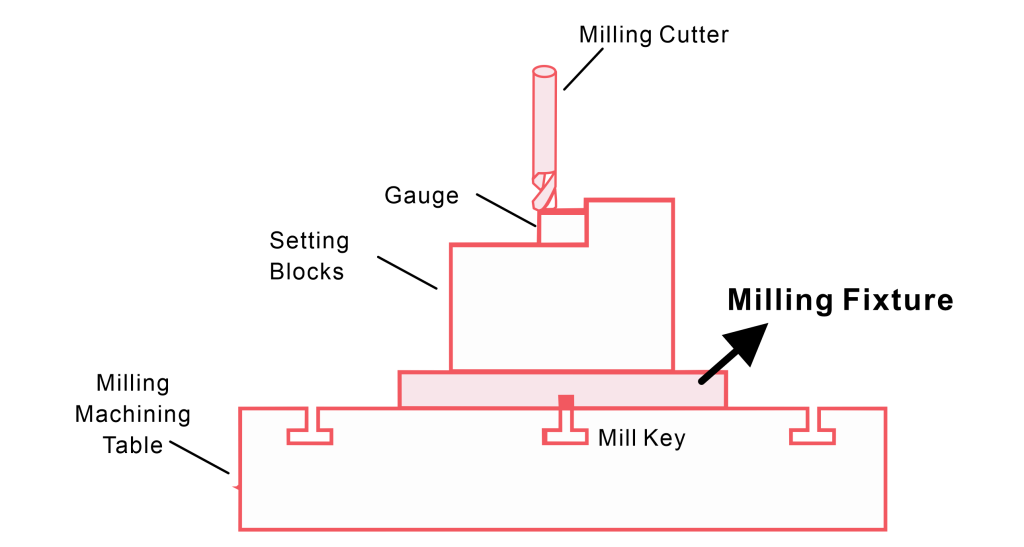
Milling fixtures

Hold prismatic parts like housings, brackets, and plates against multi-direction cutting forces; rigidity is the priority.

Turning fixtures

Grip round parts during rotation; the three-jaw chuck, collets, and tool holders are the common forms.

Drilling fixtures

Use bushings to guide the drill and locate the hole position accurately.

Drilling Fixture

Boring fixtures

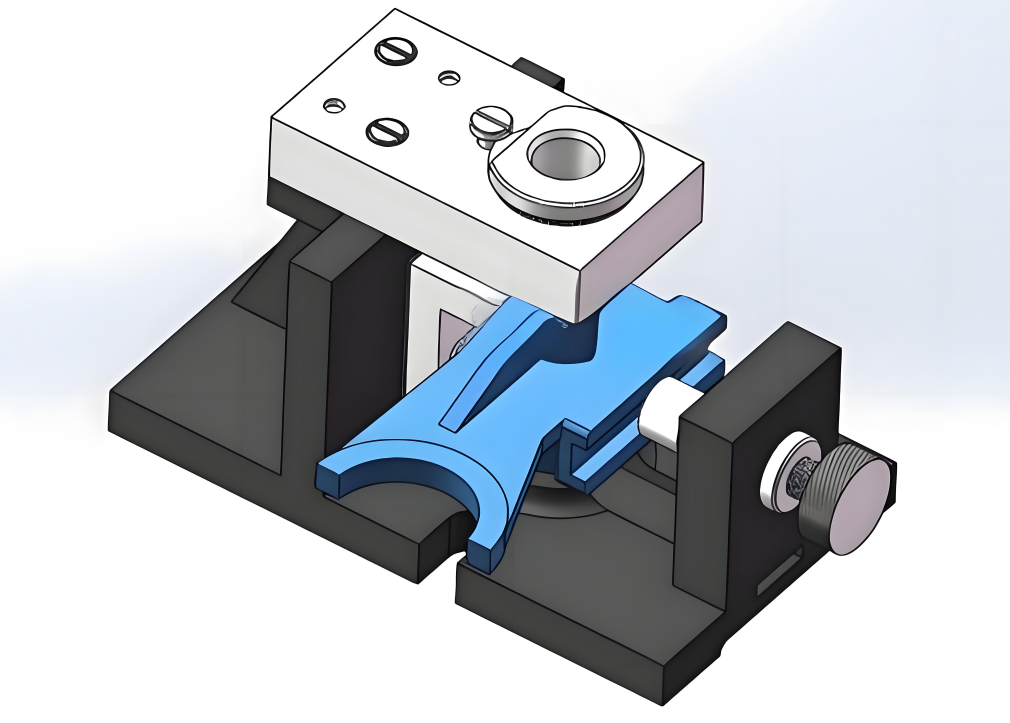
Fix the part so the boring bar cuts holes to precise diameters, often with adjustable stops for repeat work.

Boring Fixture

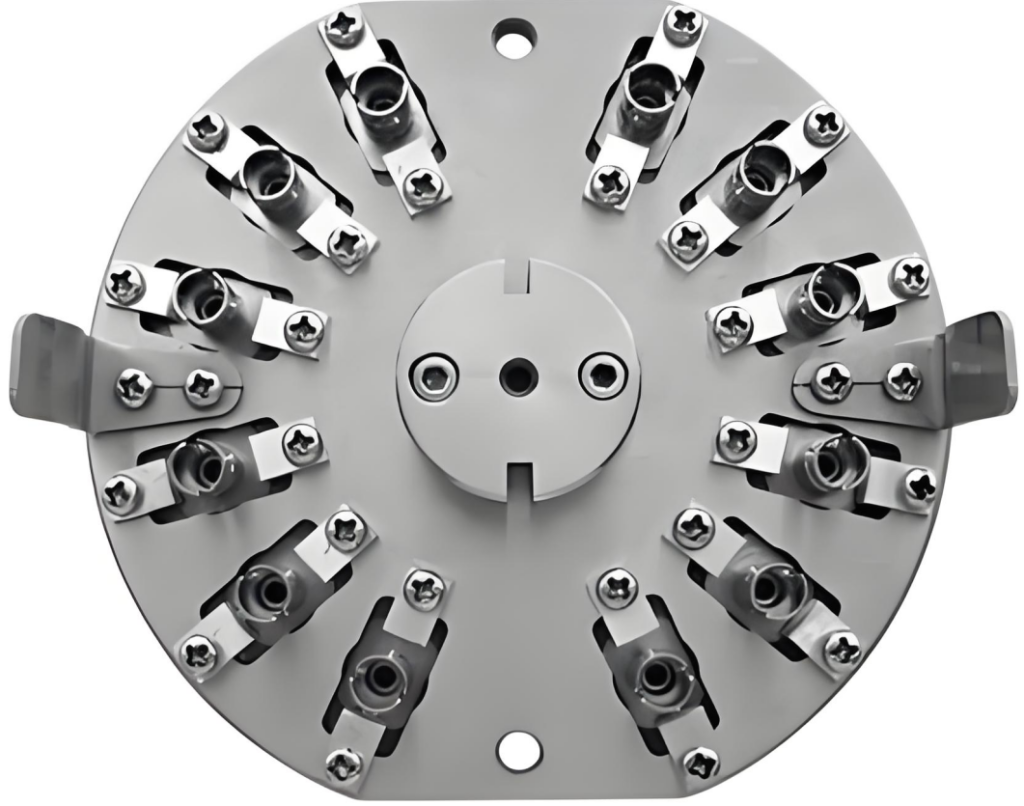
Grinding fixtures

Hold the part rigidly for tight tolerances and fine surface finish.

Grinding Fixtures.jpg

By Structure

Vises

The go-to fixture for prismatic parts in low-to-medium volume; precision-ground jaws give fast, repeatable setup.

Dedicated fixtures

Custom-built for one part or part family; highest rigidity and fastest load time, justified by high volume.

Modular fixtures

Standard plates, locators, and clamps assembled and reconfigured for different parts; flexible with short lead time, lower rigidity than dedicated fixtures.

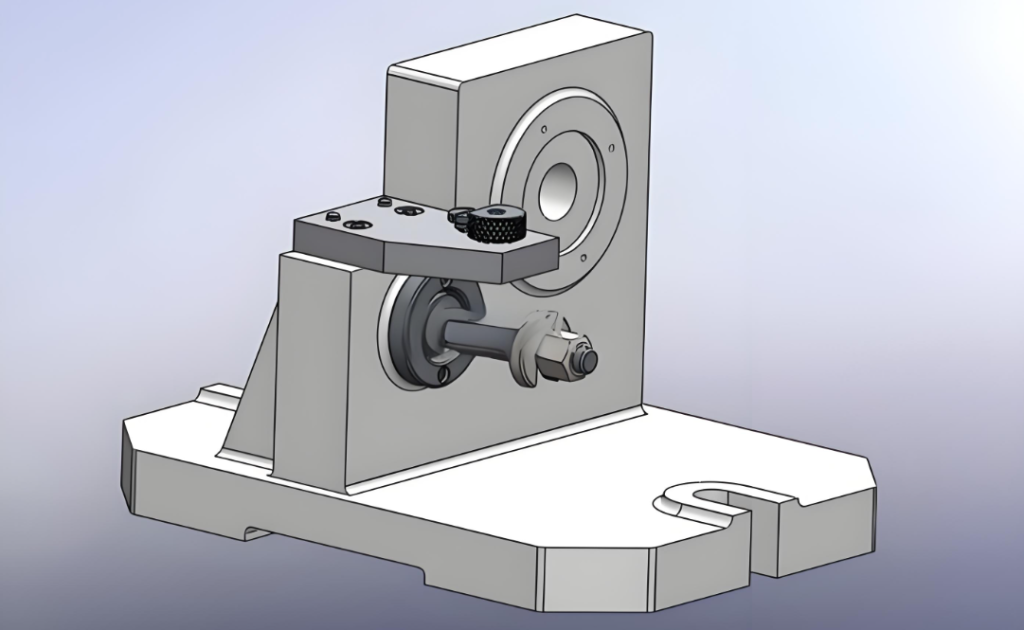
Angle fixtures

Hold the part at a fixed angle to machine chamfers, slots, and compound features without extra setups.

Universal fixtures

General-purpose workholding that accepts a range of part sizes and shapes.

Considerations When Designing or Using a CNC Fixture

  • Rigidity — Build the fixture from steel or aluminum plate and brace large fixtures to stop twisting under load.
  • Accurate location — Use guide pins, registers, and stops so the part sets the same way every time.
  • Clamping strategy — Apply even force; pneumatic or hydraulic clamps give consistent force for repeat setups.
  • Material compatibility — Match fixture material to the workpiece to avoid marking or distortion; Al 6061 and 7075 are common for lighter setups.
  • Production volume — Use dedicated fixtures for high volume and modular fixtures for changing, low-volume work.
  • Vibration control — Add damping and support to suppress chatter, which protects tool life and surface finish.
  • Fixture offset — Measure the fixture position relative to the machine coordinate system and enter it into the control so the toolpaths adjust correctly.

Get Your Custom CNC Fixture at Aria

Lorem ipsum dolor sit amet, consectetur adipiscing elit. Ut elit tellus, luctus nec ullamcorper mattis, pulvinar dapibus leo.

Written By
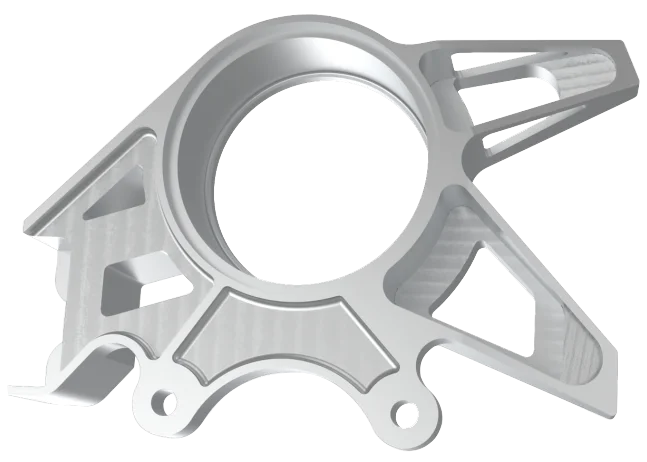
CNC milled aluminum precision part with complex geometry and multiple machining features

Custom Quality Parts By Aria

Send your specs. We’ll get back with a quote in 12 hours.

Scroll to Top