Understanding Aluminum Alloy: Properties, Types And Applications
Written By:Gavin Leo
Updated By:
Coco
Published:
Updated:
Share:
Table of Content
Table of Content
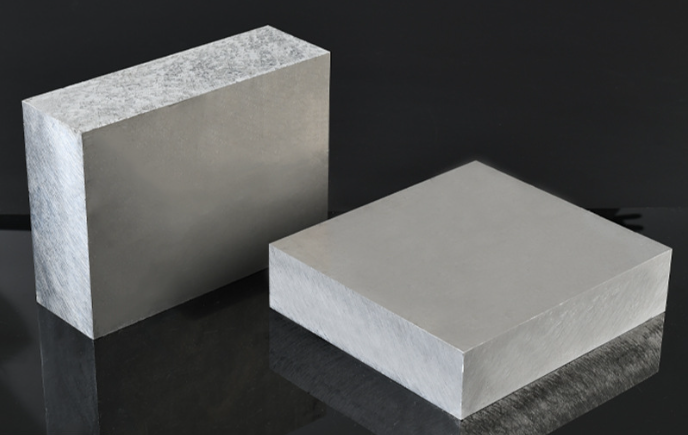
Aluminum alloy is a material made by combining pure aluminum with alloying elements such as copper, magnesium, silicon, or zinc to improve strength, corrosion resistance, and processing performance. Compared with pure aluminum, aluminum alloy offers better mechanical properties while maintaining low weight and good conductivity. Different alloy compositions are designed for different manufacturing requirements, making aluminum alloy widely used in aerospace, automotive, construction, electronics, and industrial equipment. Understanding its composition is the first step in selecting the right aluminum alloy for any application.
The Advantages of Aluminum Alloy
Evaluating aluminum alloy for engineering design typically relies on four primary technical metrics:
High Strength-to-Weight Ratio: Low material density facilitates critical structural lightweighting.
Natural Corrosion Resistance: Exposure to oxygen automatically generates a dense, protective oxide film, halting internal metal degradation.
Thermal and Electrical Conductivity: Provides necessary heat dissipation for electronic enclosures and electrical systems.
Formability and Recyclability: Offers extensive manufacturing plasticity, alongside 100% recyclability that demands minimal energy during remelting.
Common Types of Aluminum Alloy
Categorizing industrial aluminum requires an initial bifurcation into wrought and cast designations, determined entirely by the intended manufacturing routing. Analyzing these metallurgical categories establishes clear pathways for efficient component engineering and supply chain optimization.
Wrought Aluminum Alloys
Subjecting solid aluminum billets to mechanical deformation processes—such as forging, rolling, or extrusion—defines the wrought category. Based on primary alloying elements, the industry categorizes these wrought materials into a standardized 4-digit system from the 1000 to 7000 series.
1000 Series (Pure Aluminum)
Composition: Minimum 99.00% aluminum.
Properties: Maximum electrical and thermal conductivity paired with peak corrosion resistance. Incapable of heat treatment strengthening; exhibits the lowest baseline mechanical strength.
Applications: Chemical storage vessels, electrical busbars, foil packaging.
2000 Series (Copper Integration)
Composition: Copper acts as the primary alloying agent (3%-5%).
Properties: Delivers high mechanical strength and superior CNC machinability. Galvanic potential differences significantly lower environmental corrosion resistance.
Applications: Aerospace structural components, high-load mechanical parts, specialized military hardware.
3000 Series (Manganese Integration)
Composition: Manganese acts as the primary alloying agent (1%-1.5%).
Properties: Provides exceptional rust prevention, optimized cold forming, and superior weldability. Non-heat-treatable.
Composition: Magnesium acts as the primary alloying agent (3%-5%).
Properties: Features a low specific gravity coupled with high tensile and fatigue strength. Exhibits extreme resistance to marine and humid environments.
Applications: Marine vessels, armor plating, heavy vehicle load-bearing structures.
6000 Series (Magnesium-Silicon Integration)
Composition: Synthesizes both magnesium and silicon elements.
Properties: Maintains high oxidation resistance, excellent machinability, and optimal response to surface anodizing.
Composition: Zinc serves as the primary element, frequently compounded with magnesium and copper.
Properties: Classified as ultra-high-strength; yield limits rival specific low-carbon steels. Exhibits high stress-corrosion sensitivity and poor weldability.
Pouring molten metal into precise molds defines the cast alloy category, bypassing mechanical deformation entirely to achieve near-net-shape manufacturing.
Primary Alloying Elements: Silicon remains the dominant additive for casting, frequently combined with copper or magnesium. High silicon ratios drastically lower the melting point and maximize liquid fluidity, effectively minimizing shrinkage and casting defects.
Properties: Exhibits lower baseline tensile strength than wrought counterparts but offers isotropic structural integrity and significant cost reductions for high-volume production.
Applications: Essential for mass-producing complex geometries requiring minimal subtractive machining, including engine blocks, transmission housings, and specialized industrial enclosures.
Common Aluminum Alloy at a Glance
Alloy Grade
Core Advantage
Physical Properties
Typical Applications
Relative Cost
6061 (Wrought)
Optimal balance of mechanical strength and CNC machinability
Moderate yield limit, high corrosion resistance, low thermal distortion
Finalizing material specifications requires evaluating component constraints across four dimensions:
Load Specifications: Assess operational load-bearing requirements. Specify 7000 series grades for extreme mechanical stress environments.
Environmental Exposure: Determine exposure levels to corrosive or saline conditions. Specify 5000 series or mandate protective anodizing for high-rust environments.
Manufacturing Routing: Define the fabrication sequence (CNC, bending, or welding). Route 6061 for subtractive machining and 5052 for press-brake forming.
Budgetary Limits: Conduct precise material cost analyses. Prioritize standard, high-volume grades to minimize supply chain expenditure while meeting baseline performance metrics.
Aluminum Alloy Processing Methods
Distinct fabrication methods impose specific metallurgical requirements.
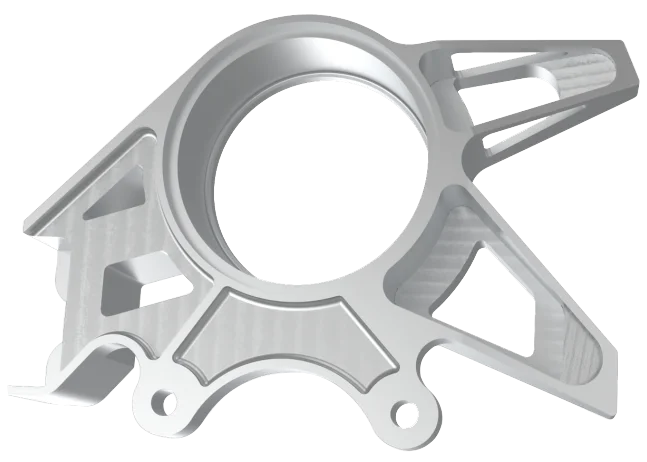
CNC Machining: Enables high-speed material removal; necessitates strict monitoring of chip evacuation and tool degradation. Continuous coolant application remains mandatory to prevent thermal deformation.
Extrusion: Serves as the optimal method for producing profiles with complex cross-sections. The 6000 series dominates this process due to its unique thermoplastic behavior.
Die Casting: Facilitates high-volume production of intricate geometries, relying heavily on silicon-aluminum grades. Increased silicon ratios maximize molten fluidity and suppress casting defects.
Welding Operations: Demands caution regarding heat-affected zones, which induce structural strength degradation. Avoid welding heat-treated grades like 7075; substitute with mechanical fastening (rivets or bolts).
Surface Treatment: Applying anodization serves as the primary post-processing method, exponentially increasing surface hardness, wear resistance, and dye-absorption capabilities.
Red rust, characteristic of ferrous metals, does not occur. Rapid atmospheric oxidation forms a microscopic, impenetrable aluminum oxide shield, neutralizing further internal degradation.
No. Both pure aluminum and standard alloys are strictly non-magnetic. Implementing these materials prevents magnetic interference in sensitive electronic and medical instrumentation.
Yes, provided specific equipment is utilized. High thermal conductivity and beam reflectivity require high-power fiber lasers paired with high-pressure assist gases to maintain edge integrity.
The 7000 series (specifically grades 7075 and 7068) holds the highest mechanical limits, surpassing the ultimate tensile strength of several commercial low-carbon steels.
Custom Quality Parts By Aria
Send your specs. We’ll get back with a quote in 12 hours.
Coco is a mechanical engineer and content editor at Aria. She partners with process engineers and shop-floor teams across CNC machining, injection molding, sheet metal fabrication, and surface finishing — turning real production know-how into practical, honest guides for the people designing, specifying, and buying parts.


 EU
EU