

 EU
Anodized aluminum colors range from clear and black to bronze, gold, red, blue, and custom shades. Picking a color is easy. Getting the same color in every batch of aluminum parts is harder.
The alloy, anodizing type, and coloring method all affect which colors are possible and how well they repeat. This guide explains how each one works, which colors are most stable in production, and how to keep shades consistent.
What Is Anodized Aluminum?

Anodized aluminum is aluminum with a thick oxide layer grown on its surface through an electrochemical process. The part serves as the anode in an acid bath, and electric current converts its surface layer into aluminum oxide.
The anodized layer is much thicker than the thin oxide film that forms on aluminum naturally in air. It makes the surface harder and more resistant to corrosion and wear.
Unlike paint, the oxide is part of the metal, so it does not peel. The layer is also porous and translucent. Its pores can absorb dyes before sealing, which is how anodized parts get color while keeping a metallic look.
What Color Is Natural Anodized Aluminum?
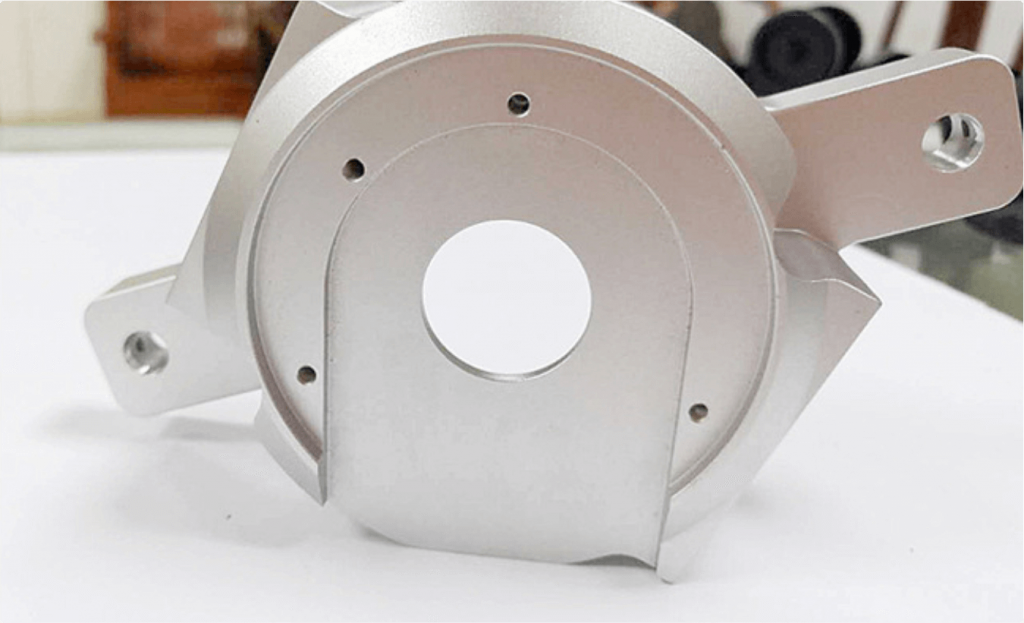
Natural anodized aluminum, also called clear anodized aluminum, is silver to light gray. No dye is added, and the translucent oxide layer shows the metal underneath. MIL-A-8625 lists this undyed finish as Class1.
Different aluminum alloys anodize to different shades. 6063 and 5005 give the brightest silver, while 6061 looks matte silver-gray. 2024 and 7075 often turn slightly yellowish because of their copper content. High-silicon cast alloys such as ADC12 and A380 turn gray or brownish and often look uneven.
The thickness of the anodized coating matters too. Type II clear coats, up to 25 µm, stay close to silver. Type III hard coats, with a default thickness of 50 µm (0.002 in), come out gray to dark bronze even without dye.
The Process of Anodizing Aluminum Parts
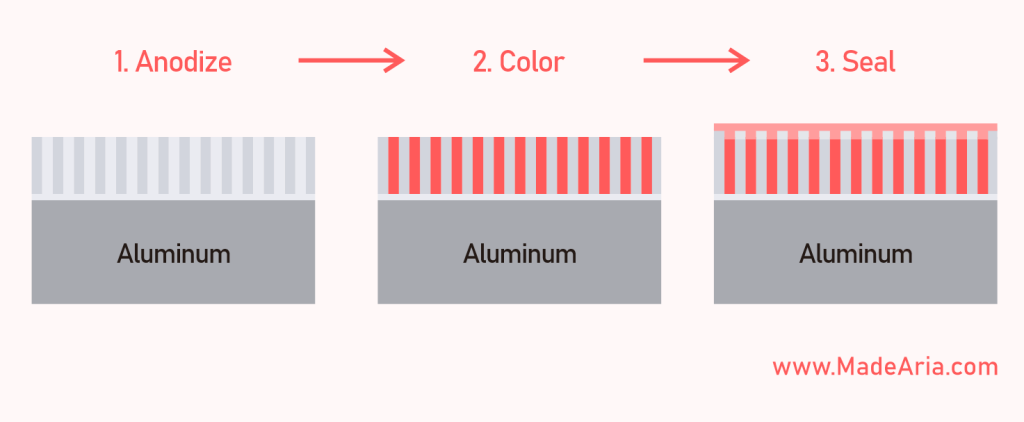
Each of the four anodizing steps changes the final shade. For chemistry and equipment details, see the full anodizing process.
Surface Preparation:
Degreasing, etching, and desmutting set the base texture. Any bead blasting or polishing happens first, and it decides whether the color reads matte or glossy.
Anodizing:
The part goes into an electrolytic solution of sulfuric acid, and direct current grows a porous oxide layer. Tank time sets the coating thickness, which controls how much dye the pores can hold.
Coloring:
Dye or metal deposits go into the pores while they are still open. Bath temperature and immersion time decide how deep the color gets.
Sealing:
Hot deionized water or nickel acetate closes the pores and locks the color in. A sealed part can no longer take dye.
How Coloring Works in Anodized Aluminum
Anodized aluminum gets its color from inside the oxide layer, not from a coating on top. A Type II layer is full of open pores, each around 20 nm wide. Color must be added before sealing closes them. It can come from dyes, metal deposits, the alloy itself, or light interference, as covered below.
The oxide layer formed during anodizing is translucent. Light passes through it, reflects off the metal, and comes back out. This gives anodized colors their metallic look and lets the alloy and surface finish affect the final shade.
For dyed parts, color depth depends on process parameters such as coating thickness, dye concentration, immersion time, and bath temperature. Thicker coatings have deeper pores that hold more dye, so darker colors need more thickness. Black dye needs at least about 10 to 15 µm to reach a deep black, and outdoor black parts usually call for about 18 µm (0.0007 in).
Types of Anodizing Processes and Their Coloring Capabilities
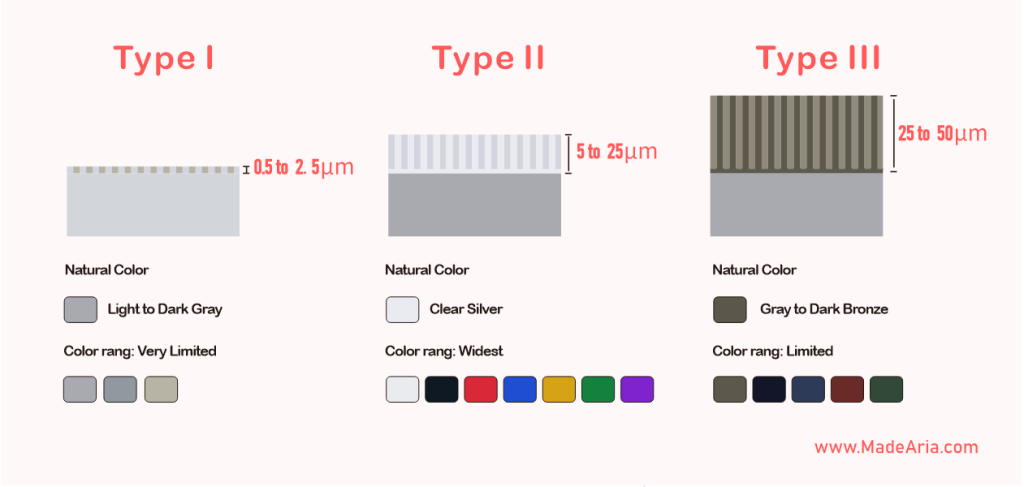
MIL-A-8625 defines three types of aluminum anodizing. Each produces a different coating thickness and pore structure, which sets the colors it can achieve.
Type I Anodizing
Type I uses chromic acid and produces the thinnest coating. The finish is gray and opaque. Its shallow pores hold very little dye, so it is rarely used for color.
It is chosen mainly for aerospace parts that need paint adhesion and minimal effect on fatigue strength. Because chromic acid contains hexavalent chromium, many shops now use boric-sulfuric acid anodizing (BSAA) instead.
Type II Anodizing
Type II uses sulfuric acid and is the most common anodizing process for colored parts such as electronics housings, panels, and consumer products. Its clear, evenly porous layer accepts the widest range of dyes, including black, red, blue, gold, green, and purple. MIL-A-8625 lists undyed Type II as Class 1 and dyed Type II as Class 2.
Type III Anodizing
Type III, also called hard anodizing, runs in a colder sulfuric acid bath at higher current density. It builds a dense, wear-resistant layer with a default thickness of 50 µm, used on parts like pistons, slides, gears, and tooling.
The layer is naturally gray to dark bronze. Thicker coatings come out darker, and copper- and silicon-rich alloys turn darker still. This base tone tints any dye applied over it.
Black is the most common and consistent color. Dark blue, red, and green are possible but look muted and vary more between batches than Type II. Bright and light colors are not achievable.
MIL-A-8625 leaves Type III unsealed unless the drawing calls for a seal, because sealing lowers abrasion resistance. Dyed parts still need sealing to hold the color.
About half of a Type III coating grows outward, so a 50 µm coat adds roughly 25 µm per side. Type II grows less, about one-third outward. Tight-tolerance features such as threads and bores often need masking or machining allowance.
Methods of Aluminum Anodizing Colors
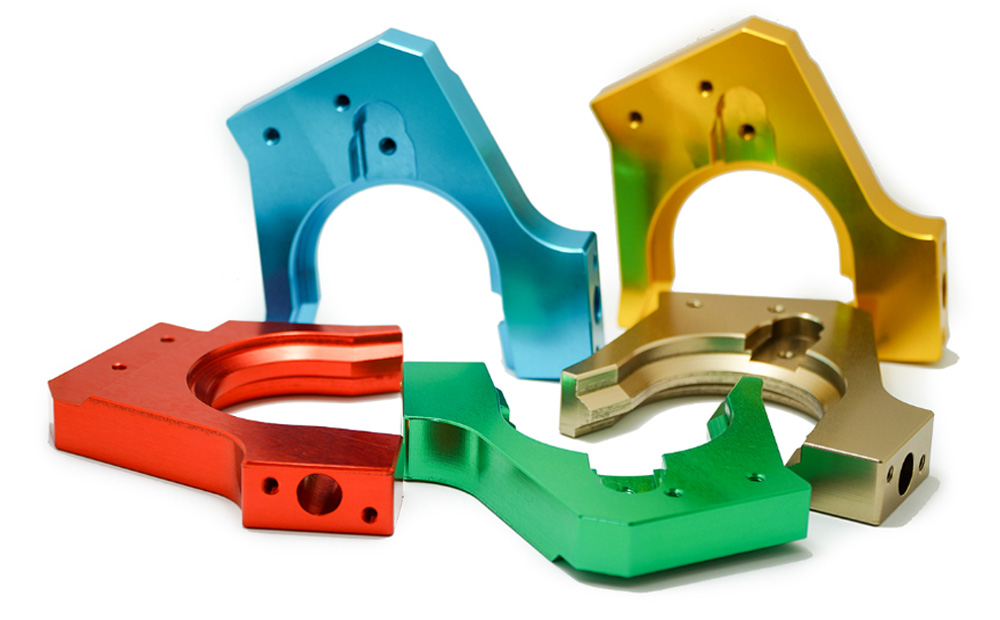
There are five common ways to color anodized aluminum. They differ in color range, UV resistance, and how well the color repeats from batch to batch.
| Method | Color Range | UV Resistance | Batch Consistency | Typical Use |
| Dye coloring | Widest | Low to medium | Moderate | Consumer products, enclosures |
| Electrolytic coloring | Champagne, bronze, black | High | High | Architecture, outdoor parts |
| Integral coloring | Bronze, gray, black | High | High | Architecture (now rare) |
| Interference coloring | Blue, green, yellow, red, gray | High | Low | Architectural panels |
| Dip coloring | Wide, including multi-color | Low to medium | Moderate | Decorative and branded parts |
Dye Coloring
Dye coloring is the most common method. The anodized part goes into a heated dye bath, and the dye absorbs into the open pores. Organic dyes give the widest color range, including red, blue, purple, and bright green.
Inorganic dyes, such as ferric ammonium oxalate for gold, offer fewer colors but better lightfastness. Many organic dyes fade under long sun exposure, so they suit indoor parts best.
Electrolytic Coloring
Electrolytic coloring, also called two-step coloring, starts after anodizing. The part moves to a bath of metal salts, usually tin, nickel, or cobalt. An electric current deposits the metal at the bottom of the pores.
Colors range from light champagne through bronze to black, controlled by time and voltage. Because the color comes from metal rather than dye, it holds up well in sunlight. This is the standard method for window frames and building facades.
Integral Coloring
Integral coloring forms color during anodizing itself, in one step. It uses a special electrolyte solution, often based on organic acids, together with alloys chosen for the effect. The oxide grows with built-in bronze, gray, or black tones.
The finish is hard and lightfast, but the process needs high power and tight alloy control. Electrolytic coloring has largely replaced it.
Interference Coloring
Interference coloring is a modified electrolytic process. The pore bottoms are first widened, then metal is deposited inside them. Light reflecting off the metal deposits interferes with light reflecting off the aluminum. This optical interference creates color without dye.
Shades include blue, green, yellow, red, and gray. The colors are lightfast but shift slightly with viewing angle, and they are hard to control. Use is mostly limited to architectural panels.
Dip Coloring
Dip coloring is the shop-floor term for immersion dyeing. The part is dipped in a dye tank, rinsed, and sealed in hot deionized water.
Its real advantage is flexibility. Shops can make two-tone or multi-color parts by masking an area, dyeing, removing the mask, and dyeing again. Like other dyed finishes, dip colors have lower UV resistance than electrolytic colors.
Can You Anodize Aluminum in Any Color?
No. Anodizing covers most colors, including black, red, blue, green, gold, bronze, purple, orange, and pink. A few colors are hard or impossible to achieve.
White is the main exception. The oxide layer is translucent and cannot hide the metal like paint does. Most “white” parts come out light gray or off-white. For true white or precise brand colors, powder coating or paint is the better choice.
Pastels and neon colors are possible but hard to keep consistent. Exact Pantone or RAL matches are also difficult, because anodized color always shows some metallic tone. Custom colors usually need test runs, which adds cost and lead time.
Common Anodized Colors Selection
Choosing anodized aluminum colors comes down to appearance, outdoor exposure, and how closely parts must match. The options fall into two groups.
Standard and Neutral Colors
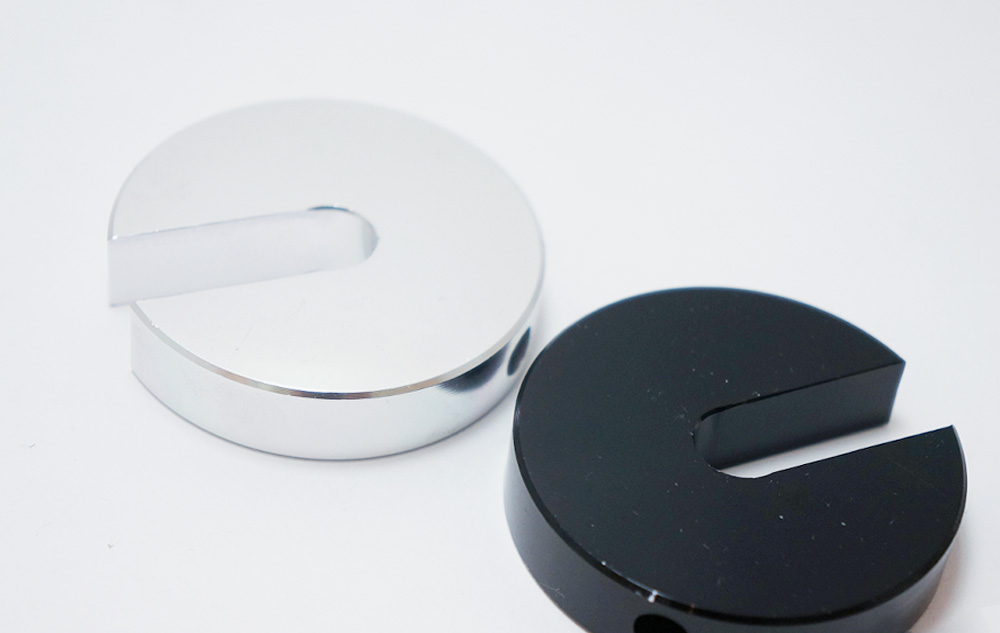
- Clear (silver): Keeps the natural metal look. With no coloring step, it is the cheapest and most repeatable finish, and it performs well outdoors.
- Black: Black anodizing is the most common dyed finish and usually the fastest to produce. Black anodized aluminum stays consistent between batches, hides surface marks, and reduces glare. Laser marking on black leaves bright white text.
- Gray: A low-key industrial color that holds steady from batch to batch.
- Bronze and champagne: Usually made by electrolytic coloring, so they resist sunlight best. They are the standard for window frames and facades.
Vibrant and Specialty Colors
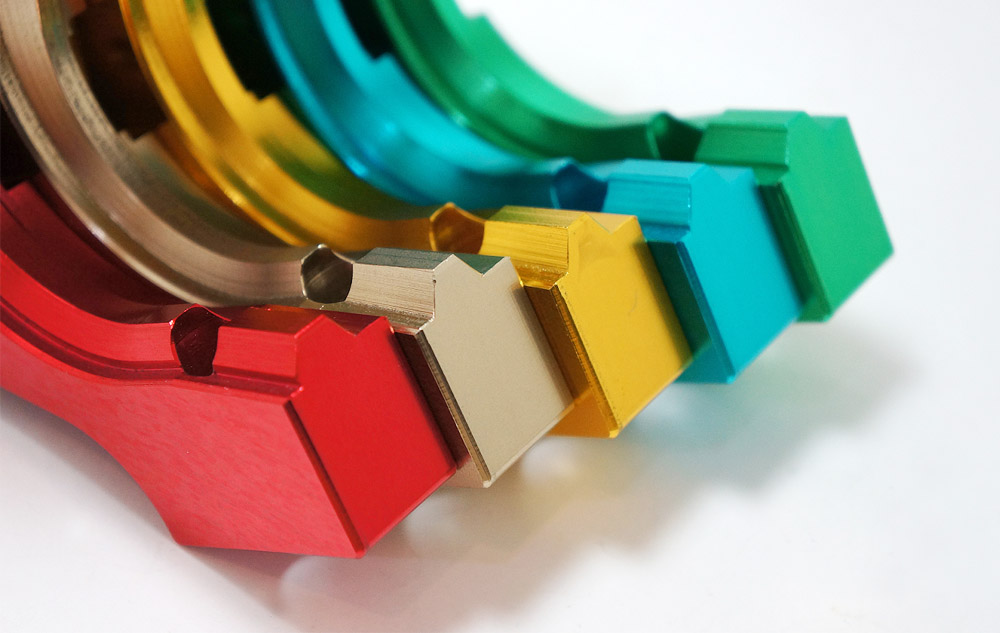
- Gold: A warm decorative color. Gold from ferric ammonium oxalate holds up well outdoors, but organic gold dyes fade. It can streak on large flat faces.
- Blue: Popular for consumer and sports products. It can shift toward purple at edges.
- Red and burgundy: Strong accent colors, but they fade fastest in sunlight. Best for indoor parts.
- Green, purple, orange, pink, and copper: Used for branding and color-coded parts. These vary most between batches, so approve a physical sample before production.
Surface finish changes how any color reads. Bead blasting gives a soft matte finish, while polishing makes the same color brighter and glossier.
Benefits of Anodized Aluminum
- Color that does not peel: The color sits inside the oxide layer, so it will not flake like paint.
- Corrosion resistance: Sealed Type II coatings must pass 336 hours of salt spray testing under MIL-A-8625. This makes anodized parts a good fit for harsh environments such as outdoor and industrial settings.
- Wear resistance: The oxide is much harder than bare aluminum, and Type III hard coats suit sliding and wearing parts.
- Aesthetic versatility: Dyes, metal deposits, and surface finishes give a wide range of looks, while the translucent layer keeps the metallic character.
- High-contrast marking: Laser marking on black or dark colors leaves bright, permanent text and logos.
Limitations of Anodized Aluminum
- Batch color variation: Alloy, coating thickness, and dye conditions shift the shade between lots.
- Limited color range: True white is not achievable, and many organic dyes fade in sunlight.
- UV fading: Many organic dyes, especially red and some golds, fade in sunlight.
- Dimensional change: The coating grows partly outward, so tight-tolerance features need masking or allowance.
- Low electrical conductivity: The oxide is an electrical insulator, so grounding points and contact areas need masking.
Applications of Anodized Finishes
Anodized aluminum is a preferred material in numerous industrial applications. It suits parts that need durable color, corrosion protection, or a hard surface. The color usually follows the job the part does.
- Consumer electronics: Laptop shells and phone frames use Type II in black, silver, and brand colors. Heat sinks often use black to shed heat.
- Architecture: Window frames and facades use clear, bronze, and champagne anodized finishes that resist sunlight.
- Automotive: Trim and interior parts use black or clear for a clean look. Type III covers wear parts such as pistons.
- Aerospace components: Structural parts use Type I or Type II as a paint base. Actuators and hydraulic fittings use hard coat.
- Industrial and medical equipment: Machine covers use black or gray for consistency. Red, yellow, and green mark safety zones or tool sizes.
- Optics and sports gear: Lens barrels use black to cut stray light. Bike parts use bright colors for branding.
Color Consistency & Batch Variations
Some color variation is normal in anodizing. Light, bright, and custom colors show it most. Black and clear stay the most stable.
What Causes Color Variation
- Alloy and material lot: Trace elements such as silicon, copper, and iron change the base tone before dyeing. Different lots of the same alloy can also differ.
- Process conditions: Without tight process control, small changes in coating thickness, dye concentration, bath temperature, and immersion time shift the shade.
- Surface finish: Bead-blasted, brushed, and polished surfaces reflect light differently under the same dye.
- Part geometry and racking: Sharp edges often look lighter. Deep pockets and parts at different rack positions can come out darker or uneven.
- Lighting and viewing angle: The same part can look different under daylight, shop lights, and LEDs, or when viewed from another angle.
- Age and exposure: Dyed parts fade over time outdoors, so new replacement parts may not match older ones in service.
How to Keep Colors Consistent
- Keep materials uniform: Use one alloy, one material lot, and one surface finish for parts in the same assembly to get a uniform appearance.
- Define the full spec: List alloy, anodizing type, coating thickness, and finish on the drawing, not just a color name.
- Approve a physical sample: Use Pantone or RAL as a reference, but accept parts against a sample made under production conditions.
- Set a tolerance and light source: Agree on limit samples or a ΔE range. The architectural standard AAMA 611 allows up to 5 ΔE, and top anodizers hold 1 to 3 ΔE. Inspect under one light source, such as D65 daylight.
- Anodize mating parts together: Run visible parts that sit side by side in the same batch.
- Break sharp edges: An edge radius of about 0.5 to 1 mm reduces light edges on dyed parts.
Aria can produce color samples for approval before production runs.
