

 EU
Bare aluminum is light and strong, but it scratches, pits and stains easily. Anodizing aluminum gives machined parts better wear resistance, corrosion protection and lasting color, without a coating that can peel.
Anodizing varies based on the type you choose. Type I, II and III differ in hardness, color range and dimensional change. This guide covers how the anodizing process works, how the types compare, and what to check before you send a drawing to your supplier.
What Is Anodizing?
Anodizing aluminum is an electrochemical process that thickens the natural oxide layer on the metal. Anodized aluminum has a harder surface with better corrosion resistance and wear resistance, and it can take color.
In the anodizing process, the part is placed in an acid electrolyte bath as the anode. Electrical current passes through the bath, and the metal surface converts to an aluminum oxide layer.
Unlike paint or plating, this anodic layer grows from the base metal, so it does not peel or chip. The layer is porous before sealing. Dye enters the pores, and sealing then closes them to lock in the color and improve corrosion resistance.
Why Is Aluminum Anodized?
Aluminum alloy is anodized to protect it from corrosion and wear where its natural protective oxide layer is too thin to cope. Moisture, salt spray, outdoor exposure, and sliding contact all wear that natural film away. Anodizing creates a thicker, far harder anodic coating in its place, which helps increase corrosion resistance and abrasion resistance.
The porous structure also takes dye, so parts can be finished in black, red, blue and many other colors. Designers use color for branding. Assemblers use it to tell similar parts apart.
Anodizing solves a few other problems too. The oxide layer is an electrical insulator, so it can isolate a part from live components. It gives paint a better surface to grip and improves adhesive bonding. On heat sinks, it improves heat radiation. In optical housings, a black finish cuts stray light.
How Does the Anodizing Process Work?
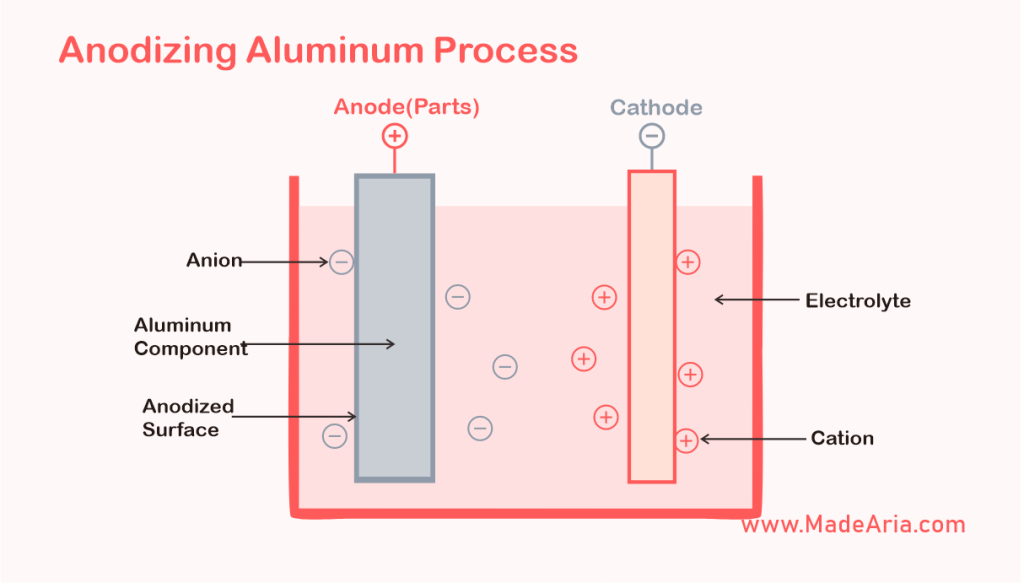
Anodizing aluminum has four stages: pre-treatment, anodizing, coloring and sealing. Coloring is optional. Each stage of the anodizing process affects the final thickness, appearance and durability.
Pre-treatment
Surface preparation starts with degreasing to remove oil. The part is then dipped in a caustic bath such as sodium hydroxide. This step is called etching. It dissolves a very thin surface layer of metal, which removes the natural oxide film and fine marks and leaves a matte appearance. The dip also leaves a thin residue on the part, so a dip in an acidic solution follows to clear it, often nitric acid. This is called desmutting.
Surface preparation for cosmetic parts can also include wet sanding, polishing or bead blasting. Bead blasting hides machining marks and gives a matte finish. Every step ends with a rinse, because any dirt left on the part shows up later as an uneven finish.
Anodizing
The part is hung on a rack in a bath of dilute sulfuric acid. This acidic solution acts as the electrolyte solution. The part is wired to the positive terminal of a DC power supply, so it becomes the anode. A cathode, the negative electrode, sits on the tank wall and is wired to the negative terminal.
When current flows, oxygen ions move to the positive part and bond with the metal to form aluminum oxide. The anodic layer starts solid, then pores form as it thickens. Current density, time and bath temperature control the final thickness of the anodized layer. The part is then rinsed to remove residual acid.
Coloring
Dip coloring soaks the porous anodic layer in a dye bath. Electrolytic coloring deposits metal salts inside the pores. These metallic salts resist UV better than organic dyes. Organic dyes offer the widest color range but fade faster outdoors.
Sealing
Sealing is the last step of the anodizing process. It closes the pores. Hot deionized water sealing makes the oxide absorb water and swell, which shuts the pores. Nickel acetate and cold chemical sealing are also used. Sealing locks in the color and protects the pores from moisture. An unsealed coating stains and corrodes more easily. Hard coat (Type III) is an exception. It is often left unsealed, because sealing slightly lowers its hardness and wear resistance.
Anodizing is usually the last step, after machining and forming. Cutting or bending an anodized part can crack the anodic layer. The rack contact point also stays bare, so it should sit in a hole or a non-cosmetic area.
Types of Aluminum Anodizing Processes
Anodizing types are defined by the military specification MIL-PRF-8625, which most industry standards follow. The three types differ in bath chemistry, coating thickness and performance. Each type also comes in Class 1 (undyed) and Class 2 (dyed).
Type I: Chromic Acid Anodizing
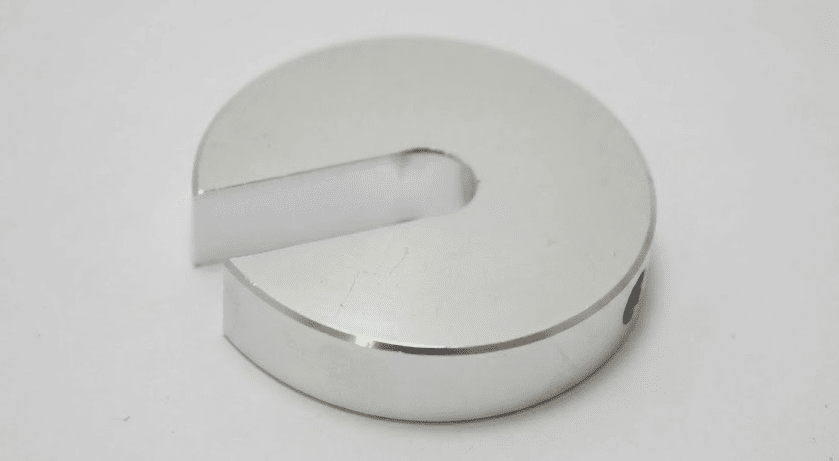
Type I uses chromic acid as the electrolyte. It produces the thinnest coating of the three, around 0.5 to 2.5 µm. The thin anodizing layer barely changes part dimensions and has little effect on fatigue life, so it is used on fatigue-critical aircraft structures. It also makes a good base for paint. The acid is gentle on the base metal, so solution trapped in blind holes or joints does not corrode it.
Type I takes dye poorly. Black dye often comes out gray. The bath contains hexavalent chromium, which is heavily restricted, so Type I is now rare and mostly limited to aerospace and defense work. Types IC and IIB are non-chromate alternatives in the same specification.
Type II: Sulfuric Acid Anodizing
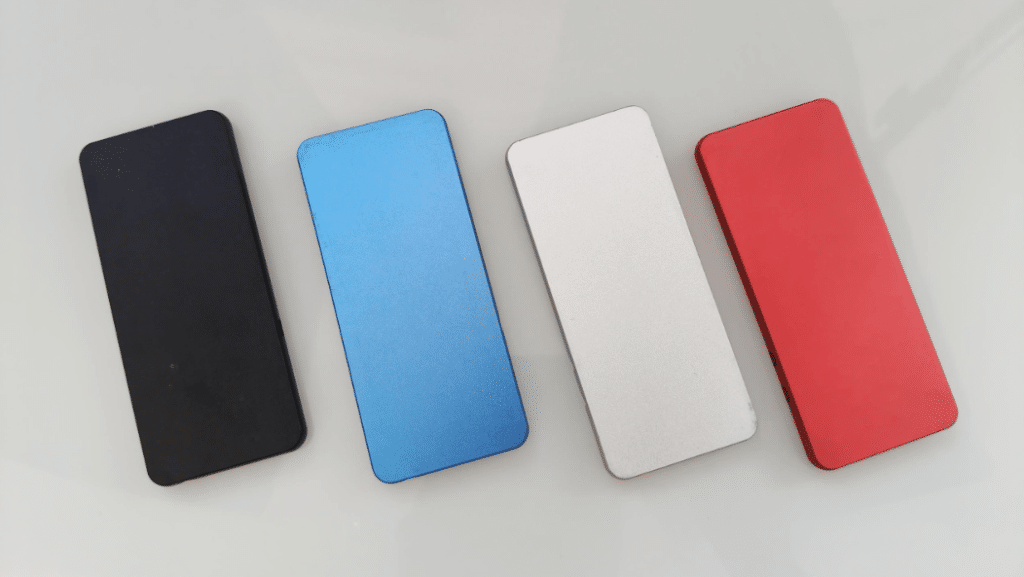
Type II uses dilute sulfuric acid and is the most common type for machined parts. This sulfuric anodizing process gives an anodized layer typically about 5 to 25 µm thick. It is harder and more durable than Type I, and costs less.
The pores accept dye easily, so Type II offers the widest color range. Exact matches to a Pantone or RAL color are difficult, and color can vary between batches. Parts that must match should be dyed in the same batch.
Type III: Hard Coat Anodizing
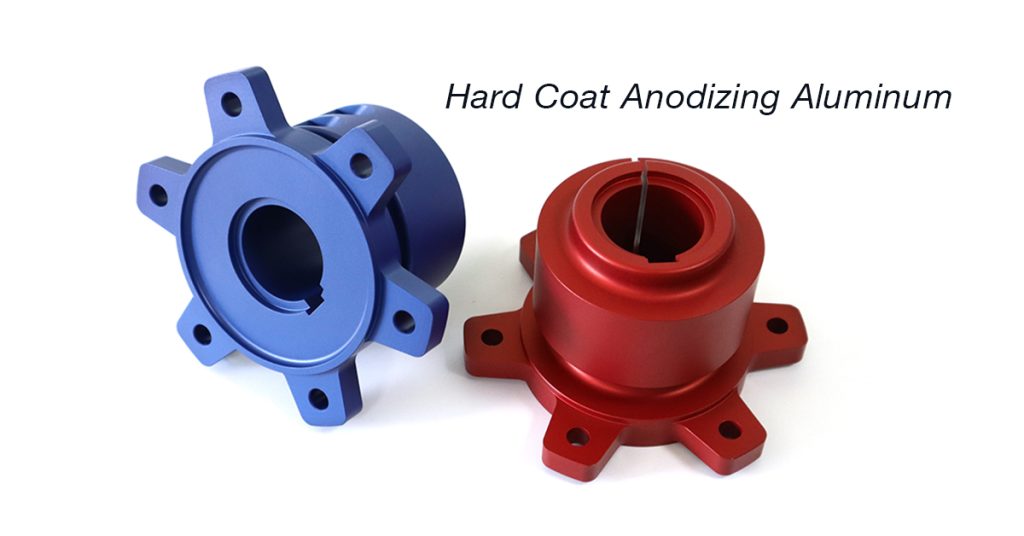
Type III anodizing, also called hard anodizing, uses the same sulfuric bath as Type II, but kept close to freezing, with a higher voltage and a longer immersion time. The result is a much thicker coating, usually 25 to 50 µm and sometimes more. Type III coatings are very hard and highly abrasion resistant, often compared to hardened tool steel, though actual hardness depends on the alloy and process. This suits gears, valves, pistons and other sliding parts.
The thicker layer darkens the aluminum to gray or black, and the smaller pores take dye poorly. Type III coatings can also reduce fatigue life. Coating growth changes dimensions more than in Types I and II, so precise features need to be planned for.
Other variants exist, such as phosphoric acid anodizing and plasma electrolytic oxidation. They are mostly used in specialized or research work. Hard coat is often left unsealed for maximum wear resistance. If corrosion protection matters more than wear, specify sealing on the drawing.
Anodizing Types Quick Comparison
| Type I | Type II | Type III | |
|---|---|---|---|
| Name | Chromic acid anodizing | Sulfuric acid anodizing | Hard coat anodizing |
| Electrolyte | Chromic acid | Dilute sulfuric acid | Sulfuric acid, near freezing |
| Typical thickness | 0.5 to 2.5 µm | 5 to 25 µm | 25 to 50 µm or more |
| Hardness and wear resistance | Lowest | Moderate | Highest, can exceed tool steel |
| Dye acceptance | Poor | Widest color range | Limited, dark tones |
| Dimensional change | Minimal | Moderate | Largest |
| Fatigue impact | Least | Some reduction | Greatest reduction |
| Corrosion resistance | Good for its thickness | Good when sealed | Very good when sealed; often left unsealed for wear |
| Main uses | Fatigue-critical aerospace parts, paint base | Enclosures, housings, consumer products | Gears, valves, pistons, sliding parts |
Benefits of Anodizing
Anodizing aluminum gives parts these practical advantages:
- Does not peel or chip: The anodic layer grows from the metal itself, so it stays bonded in a way paint and powder coat cannot.
- Corrosion resistance: A sealed layer keeps the part corrosion resistant in moisture, salt and industrial atmospheres. Protection improves with thickness and good sealing.
- Wear resistance: Surface hardness and abrasion resistance rise from Type II to Type III. A sealed Type II layer suits most enclosures and housings. Sliding parts need Type III.
- Thin coating: Compared with other surface treatments, anodized coatings are thin. Powder coat can add up to five times as much thickness, so anodizing suits parts that must keep close dimensions.
- Lasting color: The color sits inside the oxide layer, so it does not chip or peel like paint. For outdoor parts, choose electrolytic coloring, since many organic dyes fade in sunlight.
- Electrical insulation: The oxide surface does not conduct electricity, which helps near wiring and electronics.
Limitations of Anodizing
Check these points before you specify anodized aluminum parts:
- Dimensions change: Anodizing adds thickness. About 50% of the coating builds up on the surface, and the rest grows into the metal. Outer diameters get larger and holes get smaller. A typical Type II coating adds up to about 0.001 in to a diameter, and Type III adds up to about 0.002 in. This matters for press fits, threads and bearing seats. Threaded holes may need re-tapping afterwards, or masking before anodizing. State on the drawing whether dimensions apply before or after anodizing.
- The layer insulates: Grounding points and other contact areas must be masked or given a conversion coating.
- Color is hard to match: Shades vary between batches, alloys and suppliers. Parts in one assembly should be dyed together. Organic dyes also fade under UV and heat.
- Alloy sensitivity: The 5xxx, 6xxx and 7xxx series anodize best. Copper-rich and high-silicon cast alloys give a poorer finish.
- Brittle surface: The anodized layer is hard but can crack or craze under mechanical stress. Thick anodized surface can also reduce fatigue life.
- Chemical attack: Strong acids and alkalis attack the anodic layer.
- Cost and lead time: Anodizing is a separate finishing step, so it adds cost and time compared with leaving the part bare.
Color Selections for Anodized Parts
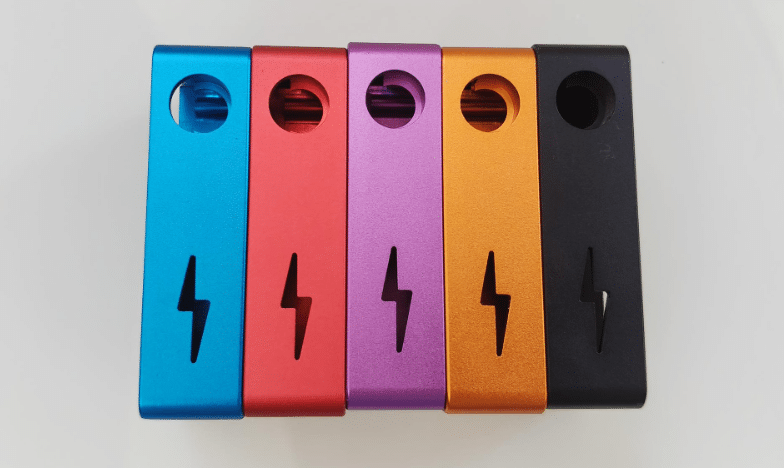
Anodizing offers a wide range of color options by absorbing dyes into the porous oxide layer before sealing. Unlike paint or powder coating, the color becomes part of the aluminum surface, maintaining its metallic appearance while resisting chipping and peeling.
Popular finishes include clear for a natural aluminum look, black for optical and cosmetic parts, and bronze or champagne for architectural applications. Vibrant colors such as red, blue, and gold are also available for branding and functional color coding. Bead blasting before anodizing gives a matte look instead of a bright one. Explore our anodized aluminum color guide for more details on shade matching and dye performance.
Which Aluminum Alloys Are Best for Anodizing?
The alloy affects the finish as much as the anodizing type.
- Best results: 5xxx, 6xxx and 7xxx series. 6061 is the most common choice for machined parts and gives an even finish. 7075 also anodizes well, though clear coats can look slightly yellow.
- Less suitable: 2xxx series alloys such as 2024 are high in copper and give a softer, less wear-resistant hard coat. High-silicon cast alloys such as A380 give a dark, blotchy finish.
Color can also shift between material lots of the same alloy, so parts that must match should come from one lot and be dyed in one batch.
Applications for Anodized Aluminum Parts
Anodized aluminum parts are used where they need to be light and durable.
- Aerospace and defense: Brackets, housings, hydraulic control housings and structural parts. Type I suits fatigue-critical structures, and Type III suits wear parts.
- Automotive and transport: Pistons, valve bodies, engine brackets and exterior trim. Hard coat handles sliding wear, and Type II resists road salt and weather.
- Consumer electronics: Laptop and phone casings, camera bodies and heat sinks. The finish resists scratches and fingerprints, and can be dyed in many colors. Lens barrels and sensor mounts use matte black to absorb stray light.
- Industrial equipment and robotics: Gears, valves, pneumatic cylinders, clamps, brackets, fixture plates and sliding mechanisms. Hard coat handles repeated motion and wear.
- Medical: Medical devices and equipment such as tools and housings. The surface is hard and easy to clean. It tolerates routine chemical disinfection, but repeated autoclave cycles can fade dyes, so confirm the finish suits your sterilization method.
- Architecture: Window frames, curtain walls, door tracks and handrails. Clear and electrolytic bronze finishes hold their color outdoors for years.
Anodizing Finish vs Chromate Conversion Coating (Alodine Finish)
Both protect aluminum from corrosion, but they suit different jobs. Anodizing grows a thick, hard anodic layer with electric current. Chromate conversion coating, also called chem film and sold under the brand name Alodine, is a chemical dip that leaves a very thin film on aluminum. The trivalent version is a clear chemical conversion coating, while the hexavalent version looks gold. No current is used.
| Anodizing | Chromate conversion (Alodine) | |
|---|---|---|
| Thickness | Type II: 5 to 25 µm | 0.25 to 0.75 µm |
| Electrical conductivity | Insulating | Conductive |
| Wear resistance | High | Low |
| Color | Wide range of dyed colors | Clear or gold |
| Standard | MIL-PRF-8625 | MIL-DTL-5541 |
Choose anodizing for wear resistance, color and outdoor durability. Choose chromate conversion for grounding, EMI shielding, tight tolerances or a paint base. The two can share one part. The grounding areas are masked during anodizing and given a chromate conversion coating instead.
For a full comparison see our guide to Alodine vs anodize.
