

 EU
EUCNC prototype machining gives engineers test parts that behave like production parts. Each part is cut from the same aluminium, steel or engineering plastic planned for production. Fit, strength and assembly can be checked before any money goes into tooling, and a design change only needs an updated program.
This guide covers the process, machining methods and materials, how CNC technology with its computerized controls compares with other prototyping options, and what drives cost and lead time.
What Is CNC Prototyping?
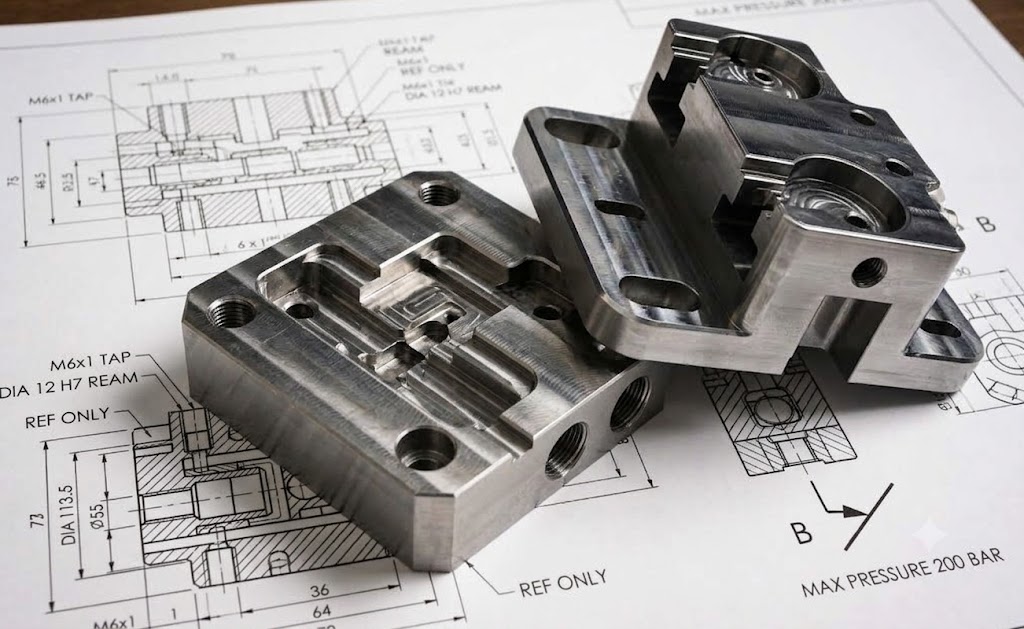
CNC prototyping is a subtractive manufacturing process that uses computer-controlled cutting tools to make one-off or low-volume parts from solid metal or plastic. These parts validate a design before production begins.
CAM software converts a 3D CAD model into machine code. The machine follows that code and cuts material away from a block, bar or plate until the part matches the design.
An aluminium housing for a fit check is a CNC prototype. So is a steel bracket loaded to failure, or a few valve bodies needed before the casting tool arrives.
CNC Rapid Prototyping vs Mass Production
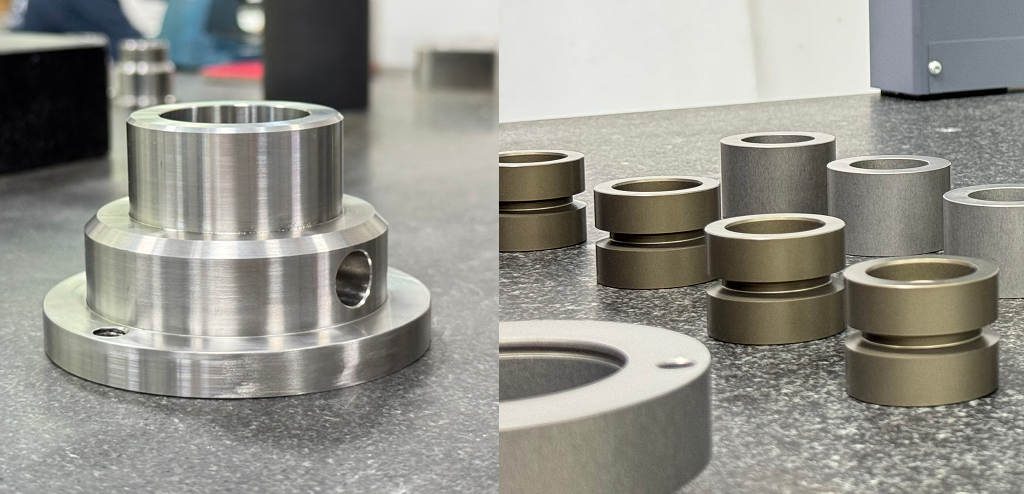
CNC Prototype machining and production machining use the same equipment, but they are run differently. A prototype run makes one to a few dozen custom prototypes. Programs and fixtures are kept simple, because the design may change after every test. Speed and flexibility matter more than cycle time.
High Volume production works the other way round. The design is frozen before production starts. Dedicated fixtures, optimised toolpaths and sometimes moulds or dies are built to cut unit cost across thousands of parts. That upfront investment only pays off once the design stops changing.
How does CNC prototyping work?
A CNC prototype moves through five stages: CAD design, CAM programming, machine setup, machining and post-processing.
CAD File Design
CAD design defines the geometry and requirements of the part. Engineers build a 3D model in software such as SolidWorks or Fusion 360, with a 2D drawing for tolerances, material and finish. A DFM review then flags features that are hard to machine, such as sharp internal corners, deep narrow pockets and thin walls.
CAM Programming
CAM programming turns the 3D model into G-code that tells the machine where and how to cut. Programming begins when the programmer selects tools, sets speeds and feeds, and plans the order of operations. The software simulates each toolpath to check for collisions. For a one-off prototype, programming often takes longer than cutting.
Machine Setup
Machine setup prepares the stock, tools and coordinates before cutting begins. The operator clamps the stock in a vice, chuck or fixture, loads the tools and sets the work zero. Each extra part orientation needs a new setup. Five-axis machines reduce this by reaching several faces in one clamping.
Machining
Machining removes material from the stock until the part matches the model. A mill moves a rotating tool across a fixed workpiece. A lathe spins the workpiece against a stationary tool. Roughing passes remove bulk material. Finishing passes bring features to final size and surface quality.This is the core of the CNC process.
Post-Processing
Post-processing finishes and inspects the part before it ships. Deburring comes first, followed by surface finishes such as bead blasting, anodising or plating. Critical dimensions are checked with callipers, micrometers or a CMM. Inspection results feed into the next design revision.
Why Use CNC Machining Prototypes?
CNC machining prototypes are used because they are made from production materials, hold tight tolerances and can be tested like final parts.
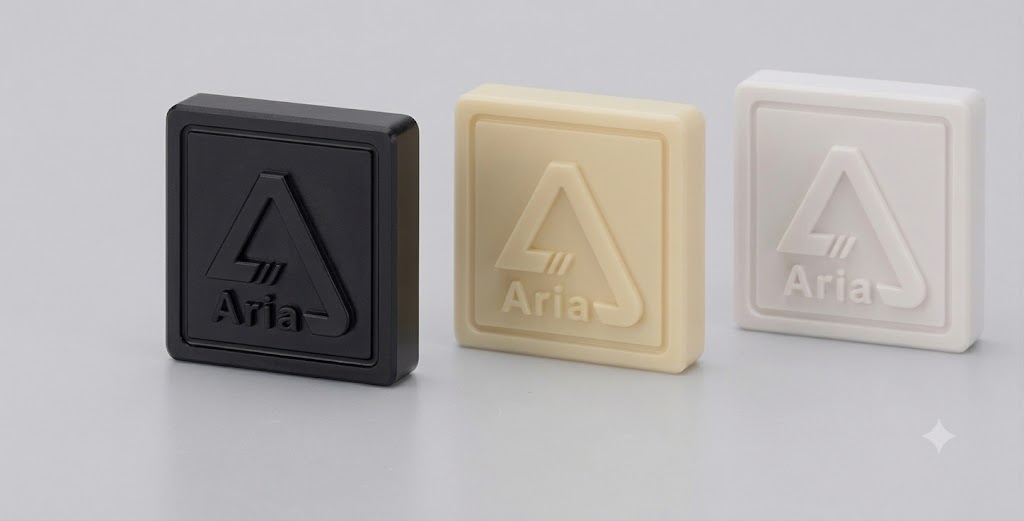
Production-Grade Materials
CNC prototypes are cut from the same metals and plastics specified for production. The stock is solid material, so parts have no layer lines, voids or direction-dependent weakness, and material certifications can trace the stock back to its source. Test results reflect how the final part will behave.
Tolerances Close to Production
Standard machined tolerances are around ±0.1 mm, and critical features can reach ±0.01 mm, giving the dimensional accuracy needed to check bearing fits, sealing faces and mating parts on the first prototype.
Functional, Fit and Assembly Testing
CNC prototypes can be assembled, loaded, pressure tested and thermally cycled like production parts, even when they include complex internal geometry, which shortens development cycles. The results carry over to the final design with fewer assumptions.
Better As-Machined Surface Finish
A standard as-machined finish is around Ra 3.2 μm, with finer finishes possible on request. Threads, chamfers and edges keep full detail, and parts can go straight to anodising or plating.
Seamless Prototype-to-Production Path
The same process can make the production part. An approved CNC program can run the next batch with little change, and a machined prototype gives verified data if production later moves to moulding or casting. The result is reliable functional prototypes that de-risk every later stage.
Types of CNC Prototyping Process
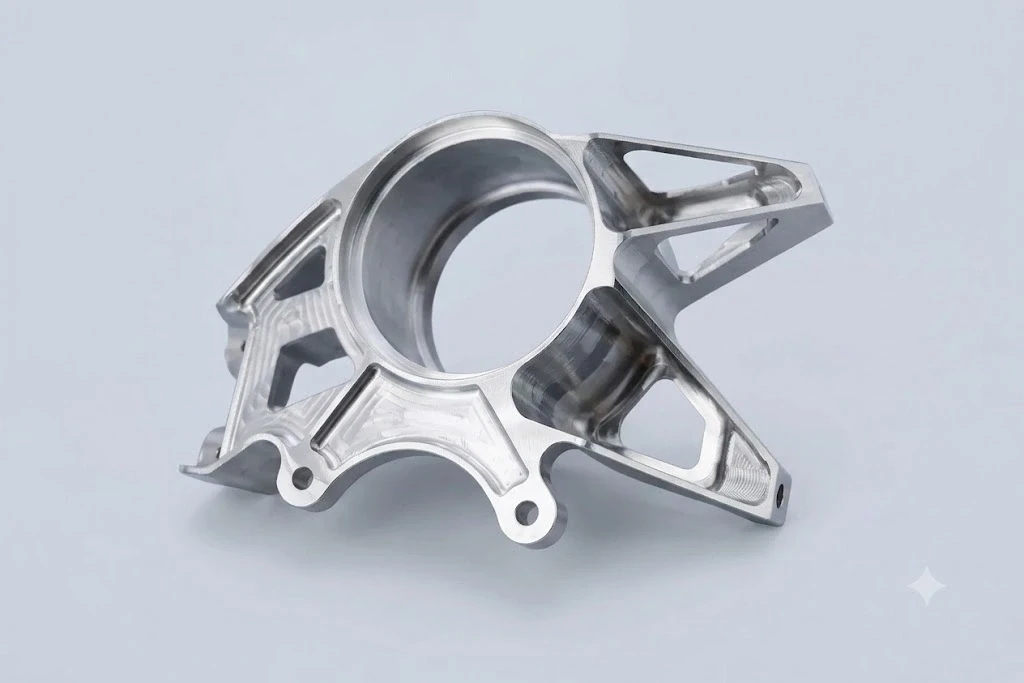
Most CNC prototypes are milled or turned. Drilling, grinding, EDM and profile cutting handle specific features, materials or part shapes.
CNC Milling
CNC milling uses a rotating multi-point cutter to remove material from the workpiece. It suits prismatic CNC machined parts such as housings, brackets and manifolds. Three-axis mills cut flat faces, slots and pockets. Four-axis and five-axis mills add rotary axes, so angled faces and curved surfaces can be cut in fewer setups.
CNC Turning
CNC turning rotates the workpiece against a stationary single-point tool. It shapes both outer diameters and internal bores, and suits round parts such as shafts, pins, bushings and threaded fittings, producing fast and precise models. Mill-turn centres add live tooling, so flats and cross holes can be machined in the same setup.
CNC Drilling
CNC drilling produces round holes at programmed positions and depths. As a subtractive process, it is usually done on prototypes on a mill or lathe as part of the main operation. Holes can then be reamed for accurate fits or tapped for threads.
CNC Grinding
CNC grinding uses an abrasive wheel to remove very small amounts of material. It finishes features that need tighter tolerances or finer surfaces than milling or turning can reach, such as shaft journals, bearing seats and precision flat faces. It often follows heat treatment, when the material is too hard to cut.
CNC Electrical Discharge Machining (EDM)
EDM removes material with controlled electrical sparks instead of a cutting tool. It works on any conductive metal, including hardened steel. Wire EDM cuts precise profiles and narrow slots with high precision. Sinker EDM forms sharp internal corners and deep cavities that a rotating cutter cannot reach.
CNC Plasma, Laser and Waterjet Cutting
These processes cut 2D profiles from sheet or plate. Laser cutting gives clean, accurate edges on thin to medium sheet metal. Waterjet cutting uses high-pressure water and abrasive, and cuts metals, plastics and composites without heat distortion. Plasma cutting is fast on thick conductive metals but leaves a rougher edge.
Benefits and Limitations of Rapid CNC Prototyping
CNC prototyping helps teams move faster and test more design versions before production. Its limits come from the way material is cut away.
Benefits
- Fast turnaround: Machining starts as soon as the CAD model and program are ready. Simple prototypes can ship within a few days.
- No moulds or tooling: CNC machining needs no moulds or dies. Budgets go into testing the design, not into tooling that may be scrapped after the next revision.
- Quick design changes: A revision only needs an updated model and program. Teams can run several iterations in the time one mould would take to build.
- Repeatability: A proven program produces the same part every time. When a new version performs differently, the cause can be traced to the design.
- Cost-effective at low volumes: Cost stays reasonable from one part to a few dozen, which suits test batches, trade shows and pilot builds.
Limitations
- Higher cost than 3D printing for simple models: Programming and setup are charged even for one part, so a basic concept model usually costs more to machine than to print.
- Geometric limits: Internal channels, hollow structures and deep undercuts are hard or impossible to reach with a cutting tool. Internal corners always keep a small radius.
- Material waste: Much of the stock becomes chips, especially on thin-walled or hollow parts. Titanium and Inconel add further cost because they wear tools faster.
- Setup and finishing time: Complex parts may need several setups or custom fixtures. Machined parts also need deburring, and often finishing, before they are ready to use.
- Higher unit cost at large volumes: At higher volumes, injection moulding or casting usually becomes cheaper per part.
Applications of CNC Prototypes
CNC prototypes are used to test parts before production in any industry where strength, fit or accuracy matters.
- Automotive Industry: Brackets, suspension arms, transmission housings and EV battery enclosures are machined to test fit, durability and sealing before tooling is ordered.
- Aerospace Industry: Structural brackets, manifolds, bushings and landing gear parts in aluminium 7075 or titanium are used for load, vibration and fatigue testing, since the aerospace industry constantly pushes materials to their limits.
- Medical industry: Surgical instrument parts, orthopaedic implant trials and device housings in stainless steel, titanium or PEEK are tested for fit, handling and sterilisation.
- Consumer electronics: Aluminium enclosures, heat sinks, hinges and internal frames check assembly with circuit boards and preview the final finish.
- Robotics and automation: Joint housings, gearbox parts and end effectors let engineers test motion, backlash and alignment on real assemblies.
- Industrial equipment: Pump impellers, hydraulic valve blocks, gears and drive shafts are pressure tested or run under load before small-batch production.
CNC Prototyping vs Other Rapid Prototyping Methods
No single method suits every prototype. The right choice depends on material, quantity and what the part needs to prove.
| Method | Lead time | Typical tolerance | Best for | Materials |
| CNC machining Process | 3 to 7 days | ±0.1 mm standard, ±0.01 mm precision | Functional tests, mating parts | Production metals and plastics |
| 3D printing | 1 to 3 days | ±0.1 to ±0.3 mm | Visual models, internal channels | Resins, polymers, some metals |
| Vacuum casting | 7 to 14 days | ±0.2 to ±0.3 mm | 10 to 50 plastic copies | Polyurethane resins |
| Rapid tooling | 2 to 4 weeks | Affected by moulding shrinkage | Pre-production moulded parts | Production thermoplastics |
| Sheet metal fabrication | 5 to 10 days | ±0.1 to ±0.5 mm | Enclosures, brackets, chassis | Sheet steel, aluminium, stainless |
CNC Prototyping vs Additive manufacturing process
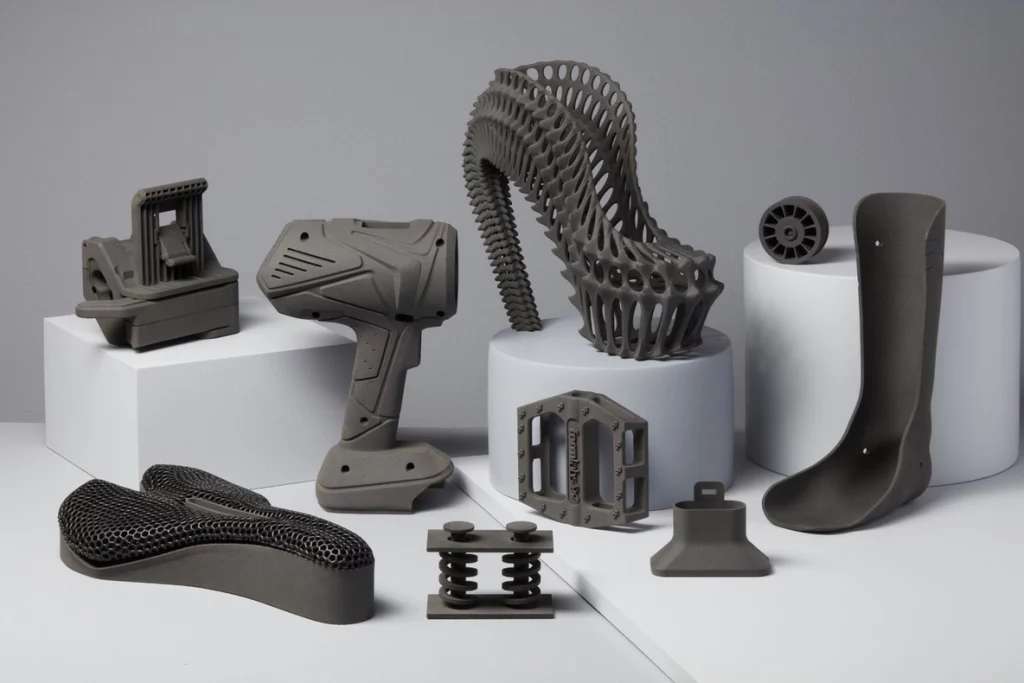
3D printing prototypes parts layer by layer, while CNC machining cuts them from solid stock. These additive processes are faster and cheaper for visual models, enclosed channels and lattice structures. CNC machining is the better choice when a part needs production materials, tight tolerances or full strength.
CNC Prototyping vs Vacuum Casting (Urethane)
Vacuum casting copies a master pattern in polyurethane resin using a silicone mould. It suits small batches of plastic parts in different colours, but the resins only imitate production plastics. CNC machining suits smaller quantities, metal parts and real engineering grades such as PEEK or POM.
CNC Prototyping vs Rapid Tooling
Rapid tooling uses aluminium or soft steel moulds to injection mould parts in the production resin. It pays off once the design is nearly frozen and hundreds of parts are needed. CNC machining fits earlier iterations, when design changes are still frequent. Choose CNC machining when you need production-grade materials, tight tolerances or full strength in the earliest iterations, before committing to production tooling.
What Affects CNC Prototype Cost and Lead Time
CNC prototype cost and lead time are driven mainly by geometry, material, tolerance and finish, and quantity. Typical lead times range from 5 to 10 working days, plus shipping.
Geometry & Complexity
Deep pockets, thin walls, undercuts and sharp internal corners need special tools, slower cuts or EDM, which raises machine time. Features on several faces need extra setups or fixtures, adding hours or days to the schedule.
Material
Aluminium, brass and POM are low cost and fast to machine. Stainless steel, titanium and PEEK cost more, cut more slowly and wear tools faster, but they offer far better corrosion resistance. Uncommon or certified grades may need to be ordered, which delays the start.
Tolerance & Finish
Tight tolerances need lighter cuts and more inspection, often on a CMM. Anodising, plating, heat treatment and first article inspection each add further time.
Volume & Setup
Programming and setup cost the same for one part or ten, so a single prototype carries the highest unit cost. Small batches spread this fixed cost. Rush orders usually cost extra.
How to Reduce Cost and Lead Time
Most of a prototype’s cost is machine time, and CNC rates start at roughly $35 an hour. A few design choices keep that clock short. Tighten tolerances only where the part genuinely needs them. Match internal radii to standard cutter sizes, so the shop runs a full-size tool instead of a slower small one. Use common materials for the first test parts before switching to the production alloy. Ask for a DFM review before you order, which catches costly issues while they are still cheap to fix.
Precision CNC Prototype Machining Services at Aria Manufacturing
Aria Manufacturing machines precision prototypes in Dongguan, China, with a European office in Denmark. Parts are cut on 3-, 4- and 5-axis mills and CNC lathes, holding tolerances down to ±0.01 mm.
Anodising, bead blasting, plating and other finishes are handled in-house. Approved designs can move straight into low-volume production, injection moulding or sheet metal fabrication.
Upload a CAD file for a quote and free DFM feedback within few minutes.
FAQs
Q: How much does CNC prototyping cost?
A: It comes down to machine time, which starts at roughly $35 an hour. Simple parts run tens of dollars, while complex or tight-tolerance parts reach the hundreds.
Q: What does CNC prototype machining mean?
A: It is the use of CNC machines to cut early test parts from solid stock, so a design can be checked and refined before full production.
Q: Is CNC machining a dying trade?
A: No. It stays central to manufacturing, and skilled machinists remain in steady demand.
Q: Will AI replace CNC machining?
A: No. AI speeds up programming and toolpath optimisation, but the setup, cutting, and quality checks still need machines and operators.
Q: What are the tolerances of CNC prototypes?
A: CNC machining achieves surface finishes of 32 to 125 microinches Ra.
