Heat Treatment Quenching:Definition, Process and Benefits

Quenching

Share:

Table of Content

Table of Content

Deeply involved in the field of heat treatment and materials engineering for many years, the decisive role of microstructural changes on the macroscopic properties of metals is profoundly understood. Among numerous thermal processing techniques, heat treatment quenching is undoubtedly the core method for enhancing the mechanical properties of materials. Today, strictly based on materials science theory, the definition, process, and core advantages of quenching will be precisely broken down.

What is Quenching?

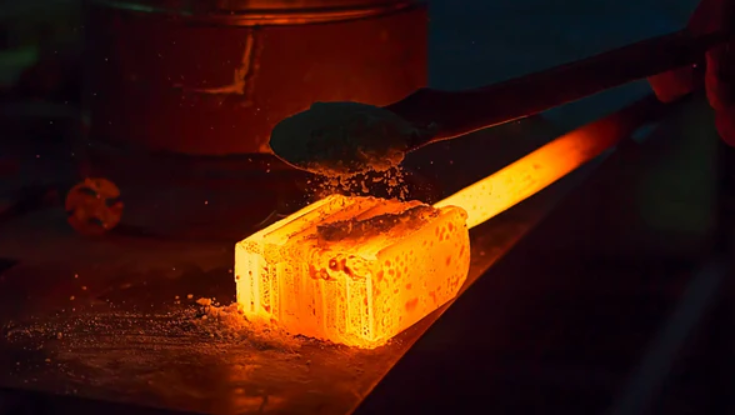
Quenching is a rapid cooling process that alters specific material properties by controlling the cooling rate. Materials are heated to a temperature above the recrystallization temperature but below the melting point to promote grain restructuring, followed by controlled cooling to a predetermined temperature. This process is designed to alter the microstructure of metals, thereby improving the hardness, strength, and wear resistance of steel and other heat-treatable alloys.

Before the rapid cooling phase, the metal must be heated to the austenitizing temperature range (800°C to 950°C, or 1470°F to 1740°F) to ensure that carbon is fully dissolved into the iron lattice before quenching begins. Commonly quenched materials include carbon steel, alloy steel, tool steel, and certain aluminum and titanium alloys.

The Quenching Process

Quenching Stages

During the quenching process, the material does not experience a linear temperature drop; rather, it goes through three stages with distinct heat transfer characteristics:

  • Vapor Stage: When the part is first immersed in the medium, vapor is instantly generated on the surface, forming an insulating vapor blanket. The cooling rate in this stage is relatively slow.
  • Boiling Stage: As the surface temperature drops, the vapor blanket collapses, and the medium directly contacts the metal, causing violent nucleate boiling. This is the fastest and most critical stage of heat removal in the entire quenching process.
  • Convection Stage: After the surface temperature drops below the boiling point of the medium, boiling ceases, and cooling continues via liquid convection at a significantly reduced rate.

Quenching Media

A quenching medium refers to the material that absorbs heat from the metal during the quenching process. A wide variety of quenching media are available, each with unique advantages and limitations. The selection of a quenching medium depends on factors such as the required cooling rate, material characteristics, cost, reusability, and environmental impact.

Air: Offers the slowest cooling rate with minimal distortion, suitable for certain high-alloy steels.

Oil: Provides a moderate cooling rate, effectively balancing hardness requirements with a reduced risk of cracking; the most widely used medium.

Fresh Water: Delivers an extremely fast cooling rate, suitable for specific carbon steels, but improper control can easily lead to micro-cracking.

Brine: Achieves a faster and more uniform cooling rate than fresh water by disrupting the vapor blanket, effectively reducing the formation of soft spots.

Polymer: Concentration-adjustable, offering cooling performance between water and oil, environmentally friendly with no fire hazard.

Benefits of Quenching

As a critical step in determining the final service life of a component, quenching brings irreplaceable performance leaps to materials:

Highest Hardness Among All Heat Treatment Processes: Pushes the hardness of the material’s surface and core to their limits.

Retention of Beneficial Crystal Structures: Forcibly solid-solves carbon atoms to form high-strength metastable phase structures.

Enhanced Toughness: Optimizes internal stress states, improving the material’s fracture resistance.

More Regular Grain Structure: Following a controlled phase transformation, the internal microstructure becomes denser and more evenly distributed.

Comprehensive Performance Improvement: Significantly enhances wear resistance, shock resistance, and anti-galling properties, ensuring the reliable operation of components under extreme conditions.

Written By
CNC milled aluminum precision part with complex geometry and multiple machining features

Custom Quality Parts By Aria

Send your specs. We’ll get back with a quote in 12 hours.

Scroll to Top