What Is Precision Injection Molding: Process, Advantages and Materials

Share:

Table of Content

Table of Content

I work with parts that have to fit, seal, and function the first time, every time. When tolerances tighten past what standard molding can hold, I move the job to precision injection molding. Here I explain how the process works, what drives accuracy, and how I design parts for it.

What Is Precision Injection Molding

Precision injection molding is injection molding controlled tightly enough to hold strict dimensional tolerances and repeat them across high volumes. The distinction is not the machine type but the level of control.

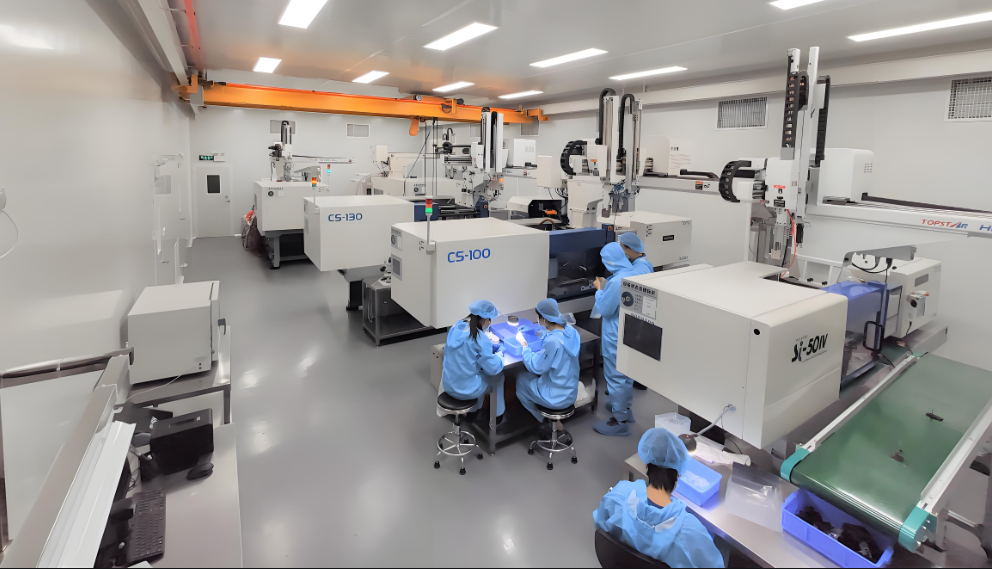
I manage mold quality, material behavior, and process parameters so each part matches the design within a narrow deviation band. The goal is repeatability: parts that stay identical from the first shot to the last across a production run.

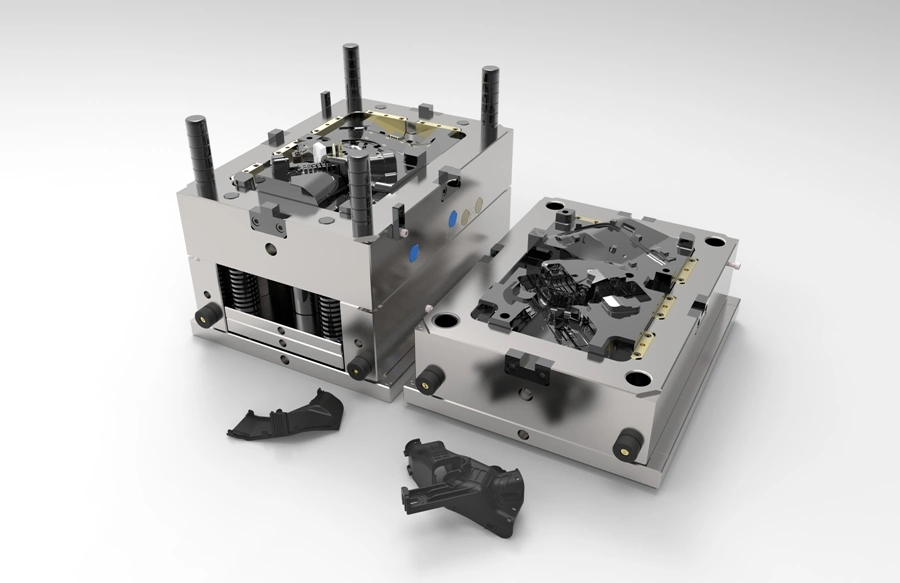
High Precision Injection Molding

Key Components of the Precision Injection Molding Process

Several elements work together to hold accuracy. I focus on each one because a weakness in any single area pushes parts out of tolerance.

High-precision mold.

I machine cavities and cores from hardened steel, which holds tighter tolerances over more cycles than aluminum and resists dimensional change. Cavity and core alignment must be exact, with layout access for maintenance.

Process parameter control.

Injection pressure, melt temperature, mold temperature, injection speed, and packing pressure all affect final dimensions. I set them to an optimized window and hold them there. Consistent injection pressure fills the cavity fully and keeps dimensions stable.

Cooling system.

Cooling channels control cavity and material temperature. Uniform cooling solidifies the plastic evenly and controls shrinkage. I position channels near areas that cool slowly and keep them clear of the gate and runner system.

Real-time monitoring.

I use inline inspection and monitoring to catch parameter drift as it happens, then correct it before parts fall out of spec.

Tool maintenance.

Routine cleaning and maintenance keep the mold accurate. A mold run past its capacity loses the ability to hold dimensions.

Advantages of Precision Injection Molding

The process earns its place when accuracy and consistency are not optional.

  • Tight tolerances.Parts meet strict dimensional requirements needed for components that fit together in assemblies.
  • High repeatability.A more precise process produces parts that stay nearly identical from run to run.
  • Lower scrap and rework.Aggressive process control reduces scrap rates and cuts secondary operations.
  • Complex and thin-wall geometry.Controlled filling and cooling support intricate shapes and thinner walls.
  • High-volume efficiency.Once the process is dialed in, it produces accurate parts at production speed.

Design Considerations for Precision Injection Molding

Accuracy starts at the design stage. I apply these rules before a mold is cut.

  • Uniform wall thickness.The most important decision. Varying thickness makes sections cool at different rates, causing warping, sink marks, and dimensional error. I keep walls consistent, typically 1.2–3 mm, with gradual transitions where thickness must change.
  • Shrinkage compensation.Resin shrinks as it cools, and thicker sections shrink more than thin ones. I account for material shrinkage rates when sizing the cavity.
  • Gate location and type.The gate dictates the force, angle, and temperature at which material enters the cavity. Its placement affects fill uniformity and final part quality, so I position it to feed the part evenly.
  • Radii over sharp corners.I use internal corner radii of at least 0.5 times the adjacent wall thickness. Fillets improve flow, cooling, part strength, and mold life. Sharp internal corners concentrate stress.
  • Draft angles and ejection.Draft and proper support during ejection keep parts from sticking or distorting as they leave the mold.
  • Tolerance allocation.I assign tight tolerances only to critical dimensions. Over-constraining every dimension raises manufacturing and inspection cost without adding function.

Common Materials

I select resin based on function, tolerance needs, and shrinkage behavior. Materials I use regularly include:

  • ABS
  • Polycarbonate (PC)
  • POM (acetal)
  • Nylon (PA)
  • PBT
  • PEEK
  • LCP

Conclusion

Precision injection molding comes down to control. I hold tolerances by combining a hardened, well-aligned mold, tightly managed process parameters, uniform cooling, and real-time monitoring, then design parts with consistent walls, smart gating, and tolerances applied only where they matter. Done right, it produces accurate, repeatable parts at production volume.

Need precision injection molded parts that hold tight tolerances at scale? Aria runs in-house tooling and process control across injection molding and CNC machining. Send us your part drawing for a DFM review and quote.

Written By
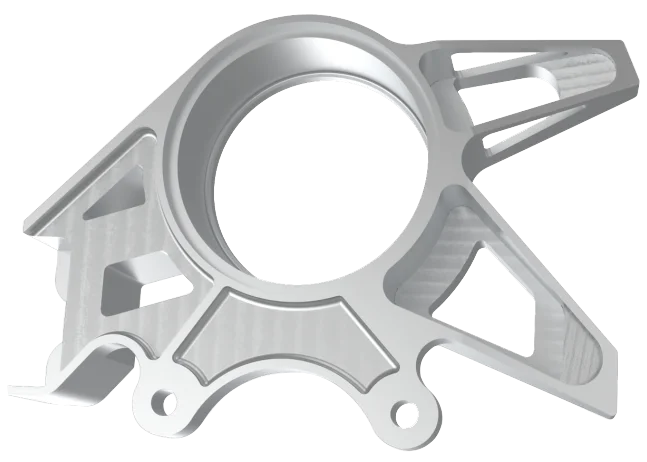
CNC milled aluminum precision part with complex geometry and multiple machining features

Custom Quality Parts By Aria

Send your specs. We’ll get back with a quote in 12 hours.

Scroll to Top