
Welding Defects:Causes, Prevention & Detection

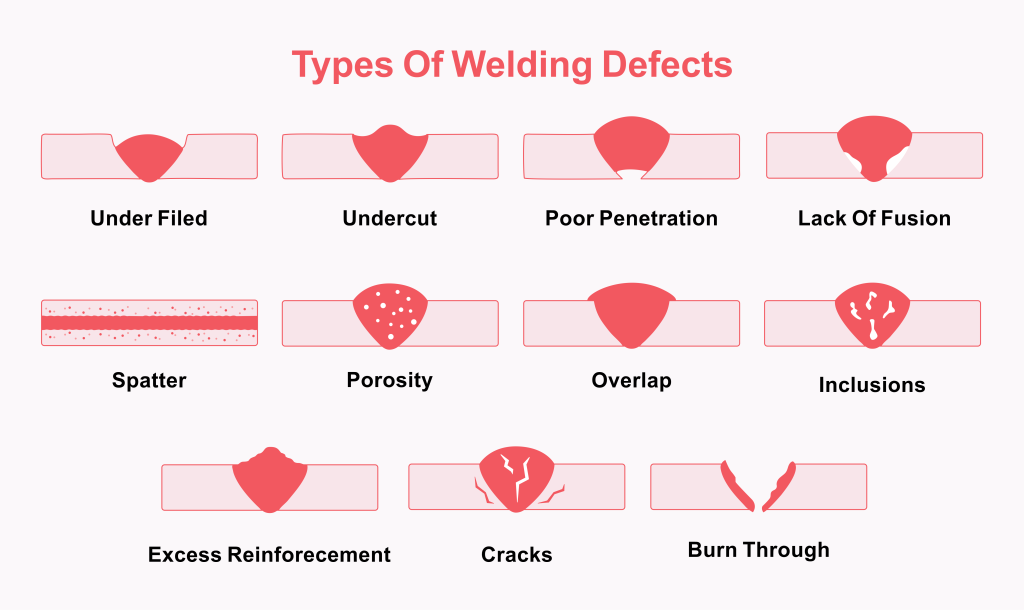
types of welding defects

Welding defects can silently compromise joint strength, trigger costly rework, and cause structural failure. This guide covers all 16 common weld defects — with causes, ISO standard references, remedies, and detection methods — so you can weld with confidence every time.

What Are Welding Defects?

A welding defect is any imperfection that reduces weld strength or falls outside the limits defined by ISO 6520 (defect classification) and ISO 5817 (quality levels for steel welds). Defects can be dimensional, surface, or subsurface.

They fall into two categories:

  • External defects— visible on the weld surface.
  • Internal defects— hidden inside the weld; require NDT to find.

Common root causes: wrong parameters (current, voltage, travel speed), contaminated base metal, poor joint preparation, and insufficient shielding gas.

Defect vs. Discontinuity: A discontinuity is any interruption in the weld structure. It only becomes a defect when it exceeds the tolerance limits in ISO 5817 — at which point it must be repaired or rejected.

Quick View: Welding Defects Summary Table

# Defect Type Primary Cause Key Fix
1 Porosity External Poor shielding gas / contamination Clean base metal; check gas coverage
2 Cracks Ext / Int Rapid cooling; high hydrogen Preheat; use low-hydrogen electrodes
3 Undercut External Excessive current / travel speed Reduce amperage; correct electrode angle
4 Overlap External Too-slow travel; low current Increase travel speed; adjust current
5 Burn-Through External Excessive heat on thin metal Reduce amperage; use backing bar
6 Spatter External High current / arc length Optimise settings; shorten arc
7 Under-Fill External Too-fast travel; insufficient filler Slow down; add weld passes
8 Excess Reinforcement External Too-slow travel; excess filler Increase speed; grind flush
9 Mechanical Damage External Arc strikes; rough handling Strike only in weld zone; MPI inspect
10 Distortion External Uneven heat; no fixturing Clamp firmly; balanced weld sequence
11 Misalignment External Poor fit-up Use jigs; verify before tacking
12 Slag Inclusion Internal Incomplete slag removal Clean between every pass
13 Incomplete Fusion Internal Insufficient heat; wrong angle Increase current; direct arc to fusion face
14 Incomplete Penetration Internal Low heat; wrong joint design Increase current; adjust root gap
15 Whiskers Special Wire protrudes past root gap Control stick-out; check root gap
16 Necklace Cracking Special Abrupt beam termination (EBW) Use beam current run-out

External Welding Defects

External defects are visible on the weld surface. Under ISO 6520, they fall in Group 1 (cracks) and Group 5 (shape imperfections).

1.Porosity

Gas gets trapped in the weld pool, forming voids, bubbles, or pitting. These voids reduce the effective cross-section and accelerate corrosion. ISO 5817 sets the maximum allowable pore size by quality level.

Porosity
Causes
  • Poor or absent shielding gas
  • Contaminated base metal (oil, rust, moisture)
  • Damp electrodes or filler wire
  • Excessive arc length
Prevention
  • Clean and degrease base metal
  • Check shielding gas flow rate
  • Use dry, stored filler materials
  • Maintain correct arc length

2.Weld Cracks

The most dangerous welding defect — cracks propagate rapidly and cause sudden failure. ISO 6520 Group 1 (highest severity); ISO 5817 Level B allows virtually zero cracks. Types: longitudinal, transverse, crater, hot, and cold (hydrogen-induced).

cracks
Causes
  • Rapid cooling / residual stress
  • High hydrogen or carbon content
  • Abrupt arc termination
  • Poor joint design
Prevention
  • Preheat base metal
  • Apply PWHT after welding
  • Use low-hydrogen electrodes (e.g. E7018)
  • Fill craters before stopping arc

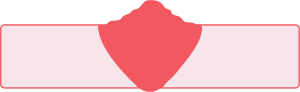
3.Undercut

A groove forms along the weld toe where base metal melted away but was never replaced with filler. It is a stress concentration point that traps corrosive media. ISO 5817 Level B limits undercut to 0.5 mm.

undercut
Causes
  • Excessive current or arc voltage
  • Too-fast travel speed
  • Wrong electrode angle
Prevention
  • Reduce amperage and voltage
  • Maintain 5–15° electrode angle
  • Slow down travel speed

4. Overlap

Also called cold lap. Molten metal flows beyond the fusion zone and solidifies on the base surface without bonding. Creates a sharp notch at the weld toe — a fatigue crack initiation point.

overlap
Causes
  • Too-slow travel speed
  • Low welding current
  • Incorrect electrode angle
Prevention
  • Increase travel speed
  • Adjust current for proper fusion
  • Grind excess metal flush

5.Burn-Through

Excessive heat melts completely through the base metal, leaving a hole. Most common on thin sheet metal and butt joint roots. The section must be repaired or replaced.

burn though
Causes
  • Excessive current for material thickness
  • Too-slow travel speed
  • Large root gap
Prevention
  • Reduce amperage
  • Use a backing bar
  • Use pulsed welding on thin metals

6.Spatter

Molten droplets scatter and stick to the surrounding surface. Primarily cosmetic, but spatter can mask cracks and cause contamination in medical or food-grade applications.

spatter
Causes
  • High current or arc length
  • Damp or contaminated electrodes
  • Wrong shielding gas
Prevention
  • Optimise current and arc length
  • Use anti-spatter spray
  • Switch to spray transfer mode

7.Under-Fill

The weld bead does not fully fill the groove, leaving the surface below base metal level. A reduced throat directly lowers tensile strength. ISO 5817 sets maximum allowable under-fill per quality level.

under filled
Causes
  • Too-fast travel speed
  • Insufficient filler deposited
  • Too few weld passes
Prevention
  • Slow down travel speed
  • Add additional passes
  • Verify bead profile after each pass

8.Excess Reinforcement

The bead builds too high above base metal — beyond ISO 5817 limits. More metal does not mean stronger. The abrupt toe geometry creates stress concentrations and fatigue initiation points.

Excess Reinforcement
Causes
  • Too-slow travel speed
  • Excess wire feed rate
Prevention
  • Increase travel speed
  • Reduce wire feed rate
  • Grind flush to permitted height

9.Mechanical Damage

Physical damage from tools, hammers, or accidental arc strikes after welding. Arc strikes outside the weld zone create hard spots in the HAZ prone to hydrogen cracking. AWS D1.1 requires affected areas to be ground smooth and MPI-inspected.

Causes
  • Accidental arc strikes
  • Careless slag removal
  • Rough grinding
Prevention
  • Strike arc only within weld zone
  • Handle assemblies carefully
  • Grind and MPI-inspect arc strikes

10.Distortion

Uneven heating and cooling cause the base metal to warp, bow, or twist. Forms include angular distortion, longitudinal shrinkage, and transverse shrinkage. Costly to correct and can prevent assembly.

Causes
  • Excessive heat input
  • No fixturing or clamping
  • Unbalanced weld sequence
Prevention
  • Clamp firmly during welding
  • Use backstep or balanced sequences
  • Pre-set with opposite angular offset

11.Misalignment

The two pieces are offset at the joint (hi-lo). Even a small offset introduces a bending moment that reduces fatigue life. ISO 5817 and ASME B31.3 set tight hi-lo limits in pressure applications.

Causes
  • Poor fit-up during tacking
  • No jigs or fixtures
  • Pre-distorted components
Prevention
  • Use precision fit-up jigs
  • Check alignment before each pass
  • Taper transition per code if within limits

Internal Welding Defects

Internal defects are hidden inside the weld and require radiographic or ultrasonic testing. Under ISO 6520, they fall in Groups 2–4. Because they are invisible, they are often the most dangerous.

12.Slag Inclusion

Non-metallic flux residue trapped inside the weld metal reduces toughness and acts as a crack initiation point. Most common in SMAW, FCAW, and SAW. ISO 6520 Group 3; ISO 5817 sets strict size limits.

Slag Inclusion
Causes
  • Incomplete inter-pass slag removal
  • Wrong electrode angle
  • Too-low current density
Prevention
  • Clean slag between every pass
  • Adjust electrode angle and speed
  • Increase current density

13.Incomplete Fusion (LOF)

The weld metal fails to bond with the base metal sidewalls or a previous pass. The result is a planar, crack-like unbonded zone — highly dangerous under fatigue loading. ISO 5817 does not permit LOF in Level B welds.

Lack of Fusion
Causes
  • Insufficient heat input
  • Wrong electrode angle
  • Contaminated fusion faces
Prevention
  • Increase current; reduce travel speed
  • Direct arc to fusion face, not pool
  • Clean joint before welding

14.Incomplete Penetration (LOP)

The weld does not reach the root of the joint, leaving an unfused gap. LOP is a depth issue (arc did not reach the root); LOF is a bonding issue. ISO 5817 and API 1104 treat LOP as rejectable in critical welds.

Incomplete Penetration
Causes
  • Insufficient heat input
  • Root gap too small
  • Electrode too large for root pass
Prevention
  • Increase current; reduce speed
  • Correct joint design per ISO 9692
  • Use smaller electrode for root pass

Special Welding Defects

Process-specific defects. Relevant if you work with pipe welding or electron beam welding.

15.Whiskers

Unmelted wire filaments protrude into the pipe bore in GMAW/FCAW root passes. Inside a pipe, whiskers restrict flow, act as fatigue notches, and trap corrosive media — critical in oil, gas, and chemical pipelines.

Causes
  • Incorrect wire stick-out
  • Inconsistent root gap
Prevention
  • Control wire stick-out to spec
  • Maintain consistent root gap
  • Mechanically remove any whiskers found

16.Necklace Cracking

Interconnected cracks form a ring pattern at the weld–base metal interface. Specific to electron beam welding (EBW). Caused by solidification cracking in materials with low-melting-point secondary phases (e.g. nickel superalloys).

Causes
  • Abrupt beam termination
  • High S/P content in base metal
Prevention
  • Use beam current run-out
  • Optimise beam oscillation
  • Select low-impurity base metals

How to Detect Welding Defects

The right method depends on whether the defect is internal or external, the material type, and the applicable standard (ISO 5817, ASME IX, API 1104).

Method Best For Detects Limitation
Visual (VT) All welds — first step Cracks, undercut, overlap, spatter External only
Radiographic (RT) Butt welds, pipe, pressure vessels Porosity, slag, LOP, LOF Radiation hazard; misses planar defects
Ultrasonic (UT / PAUT) Thick sections, structural Cracks, LOF, LOP, slag Needs skilled operator
Magnetic Particle (MPI) Ferromagnetic materials Surface & near-surface cracks Ferromagnetic metals only
Dye Penetrant (DPT) Stainless, aluminium, non-ferrous Surface-breaking cracks, porosity Surface defects only

How to Prevent Welding Defects

Prevention costs far less than rework — a rejected weld can cost 3–5× more to fix than to get right first time. These seven areas eliminate the majority of defects.

1 Material Preparation

Clean all joint surfaces to bare metal. Remove oil, rust, mill scale, and moisture. Contamination drives porosity, slag inclusions, and LOF.

2 Correct Parameters

Follow your Welding Procedure Specification (WPS) for every joint. Deviating from the WPS is a leading cause of undercut, burn-through, and LOP.

3 Joint Design & Fit-Up

Get groove angle, root gap, and root face right before welding. Refer to ISO 9692 for recommended joint preparations. Poor fit-up directly causes misalignment and LOP.

4 Shielding Gas

Use the right gas mix — 75% Ar / 25% CO₂ for MIG on steel; pure Ar for TIG on aluminium. Keep flow at 10–20 L/min and shield from drafts.

5 Preheat & PWHT

Preheat hardenable steels to reduce hydrogen cracking. PWHT relieves residual stress. Check AWS D1.1, ASME VIII, or EN ISO 13916 for requirements.

6 Inter-Pass Cleaning

Remove all slag and inspect each bead before the next pass. Catching a fusion issue at pass 2 is far easier than at pass 8, when it is buried.

7 Welder Qualification

Qualify welders under AWS D1.1, ASME Section IX, or EN ISO 9606. Regular skills reviews reduce human-error defects significantly.

Conclusion

All 16 welding defects are preventable. Each has clear causes, measurable limits under ISO 6520 and ISO 5817, and proven fixes. Start with material preparation and correct parameters — those two steps eliminate the majority of defects.

FAQs

What are the most common welding defects?
Porosity, weld cracks, undercut, incomplete fusion, and slag inclusion. All five have specific acceptance criteria in ISO 5817.
What is the difference between a defect and a discontinuity?
A discontinuity is any interruption in the weld. It only becomes a defect when it exceeds the limits in ISO 5817 (steel) or ISO 10042 (aluminium).
Can welding defects be repaired?
Most can. Cracks are gouged out and re-welded. Porosity and slag are ground out and re-deposited. All repairs must follow the original WPS and be re-inspected.
Which defect is the most dangerous?
Weld cracks — they propagate under cyclic loading and cause sudden failure. Incomplete fusion is a close second: crack-like, yet invisible to the naked eye.
What standards govern welding defect acceptance?
ISO 6520 classifies types; ISO 5817 sets acceptance levels for steel; ISO 10042 for aluminium. Industry codes: AWS D1.1 (structural), ASME IX (pressure vessels), API 1104 (pipelines).
Scroll to Top