What is CNC Milling? Process, Types, and Applications

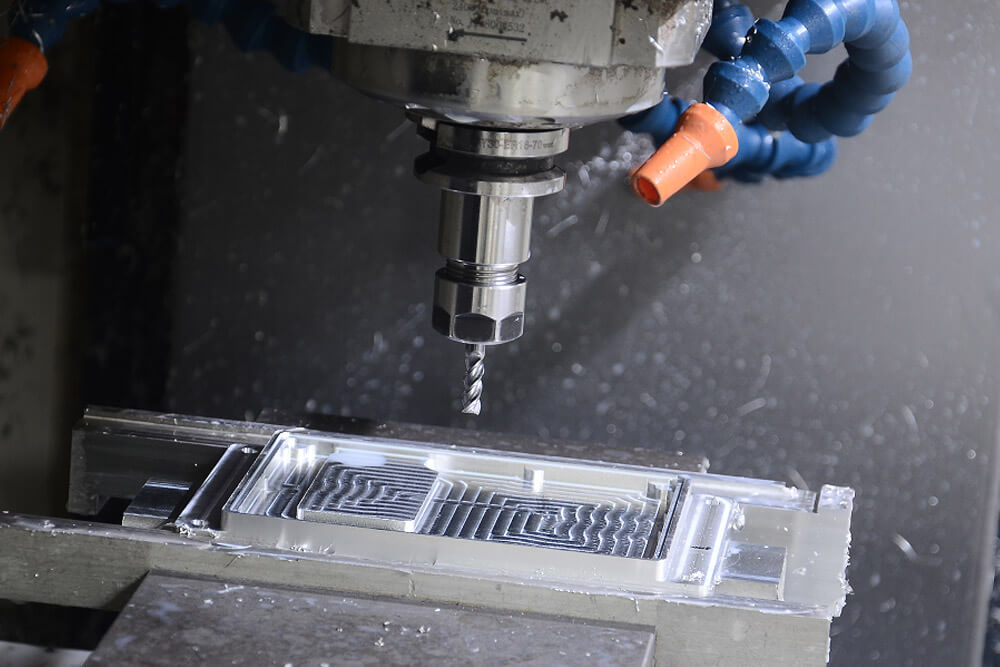
CNC milling machine with rotating cutter shaping aluminum workpiece

Share:

Table of Content

Table of Content

Pick up almost any precision metal or plastic part, and there’s a good chance it was made on a CNC milling machine. The process is everywhere, from aerospace to consumer electronics, yet most people outside manufacturing have never seen one run.

This guide covers how CNC milling works, the types of machines and operations involved, the materials it handles, and where it is most commonly used.

What is CNC Milling?

5-Axis Milling Machines

CNC milling is a subtractive manufacturing process that uses rotating cutting tools to remove material from a solid workpiece. The machine moves along multiple axes, guided by a pre-programmed G-code file, to cut the workpiece into the required shape.

CNC stands for Computer Numerical Control, meaning the machine’s movements are controlled by a computer rather than a human operator. The cutting path, speed, depth, and tool selection are all determined before the machine starts running.

Unlike manual milling, where an operator controls each movement by hand, CNC milling is fully automated. Once the program is set, the machine runs the same path every time, producing consistent parts without continuous supervision.

How Does CNC Milling Work?

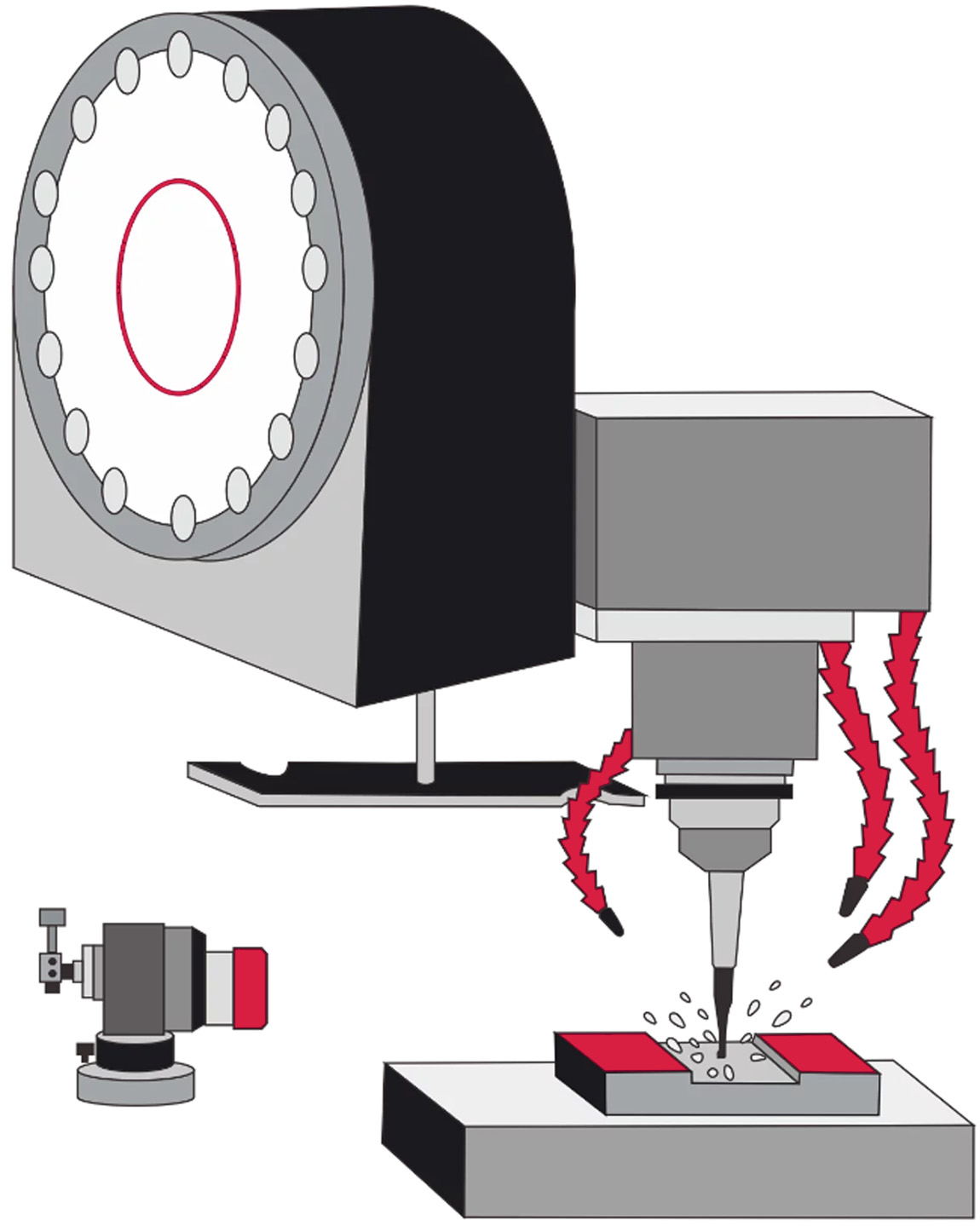
The core principle is straightforward. A spindle rotates a cutting tool at high speed while the machine moves the tool and workpiece along programmed axes, removing material until the final shape is complete.

The process covers four main steps:

  • CAD design
  • CAM programming and G-code generation
  • Machine setup
  • Machining and inspection

Step 1: CAD Design

CAD Drawing

Everything starts with a CAD file. The engineer creates a 3D model of the part, specifying every dimension, tolerance, and surface finish requirement. This file is the foundation of the entire process. A poorly made CAD file causes problems at every stage that follows.

Step 2: CAM Programming and G-code Generation

gcode_01

The CAD file is imported into CAM software, which plans the toolpaths and generates the G-code. The G-code tells the machine how to move, which tools to use, at what speed, and in what sequence. Modern CAM software also allows engineers to simulate the cutting process before the machine runs, catching potential errors early.

Step 3: Machine Setup

Before cutting starts, the operator loads the cutting tools into the spindle and clamps the workpiece to the table. Setting the work origin correctly is critical. It tells the machine exactly where the part sits so every cut lands in the right place.

Step 4: Machining and Inspection

Precision CNC Milling

Once the program runs, the machine works through the G-code automatically. The cutting tool removes material pass by pass without further input from the operator. When machining is done, the part goes through dimensional inspection to confirm it meets the drawing requirements. Surface finishing such as anodizing or bead blasting is applied if specified.

Key Components of a CNC Milling Machine

Understanding how CNC milling works is one thing. Knowing what makes the machine capable of doing it is another. A CNC milling machine has four core components that directly affect cut quality and dimensional accuracy.

CNC Milling Machine

Spindle

The spindle drives the cutting tool and is the component most directly responsible for cut quality. It rotates at high speed, and its rigidity under load determines how well the machine holds tolerance. A spindle with too much runout or bearing wear will show up immediately in the surface finish, no matter how good the program is.

Worktable

The workpiece sits on the worktable, held in place by clamps, vises, or custom fixtures. The table moves along the X and Y axes, positioning the workpiece under the cutting tool. If the part is not held rigidly, it will move during cutting, and the finished dimensions will be off.

Axis System

Most CNC milling machines run on three axes: X, Y, and Z. Adding a fourth or fifth axis means the machine can tilt or rotate the workpiece during cutting, reaching features that would otherwise require repositioning. Every time a part is repositioned, there is a risk of introducing alignment error. Fewer setups means better geometric accuracy.

CNC Controller

The controller reads the G-code and turns each line into physical machine movement. It manages speed, position, and tool selection throughout the cutting process. On modern machines, the controller also monitors spindle load and flags abnormal conditions before they become problems.

Types of CNC Milling Machines

CNC milling machines come in several types. Understanding the differences helps you choose the right process for your part.

by spindle orientation

Vertical Machining Center (VMC)

On a vertical machining center, the spindle points downward and the cutting tool approaches the workpiece from above. This is the most common setup in most machine shops. VMCs are straightforward to program, easy to set up, and handle a wide range of materials from aluminum to stainless steel. Most general milling work, including pockets, slots, flat surfaces, and contours, gets done on a VMC.

Horizontal Machining Center (HMC)

A horizontal machining center has the spindle running parallel to the floor. Chips fall away from the cut naturally, which keeps the cutting zone cleaner and reduces tool wear on long production runs. HMCs are the preferred choice for high-volume production and heavy components where chip evacuation and rigidity matter more than setup simplicity.

By Number of Axes

5 Axis CNC Machining

3-Axis CNC Milling Machine

A 3-axis machine moves along X, Y, and Z. It covers the majority of standard milling work and is the most widely used configuration in production. The limitation is that it can only access one face of the part at a time, so parts with features on multiple faces require repositioning between setups.

4-Axis CNC Milling Machine

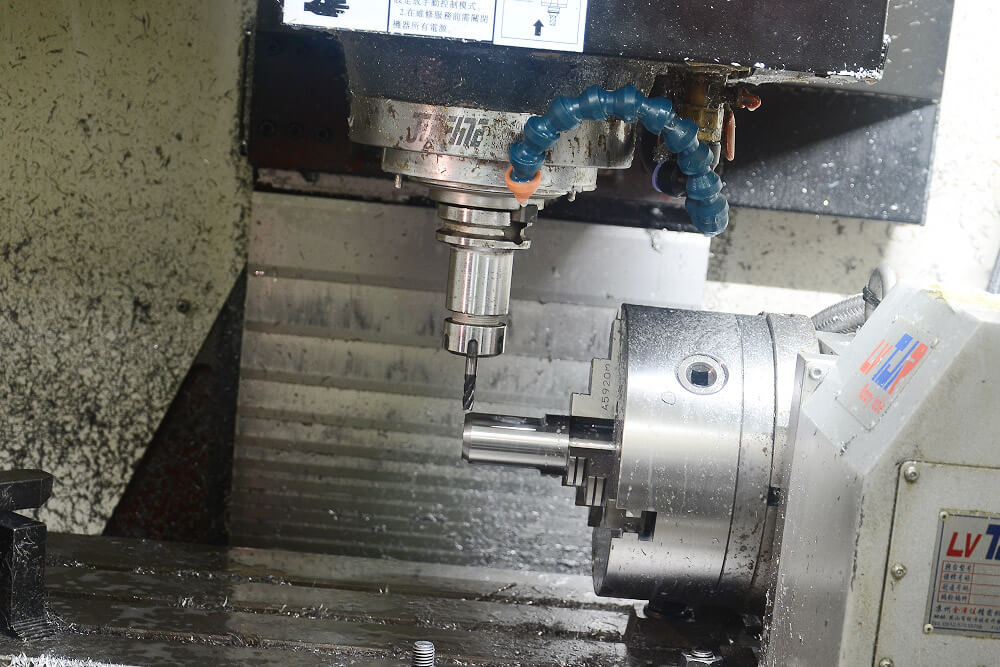
A 4-axis machine adds a rotational A-axis,which allows the workpiece to rotate during cutting. This means the machine can reach multiple faces without the operator having to manually reposition and re-clamp the part. It reduces setup time and improves consistency on parts with features distributed around a central axis.

5-Axis CNC Milling Machine

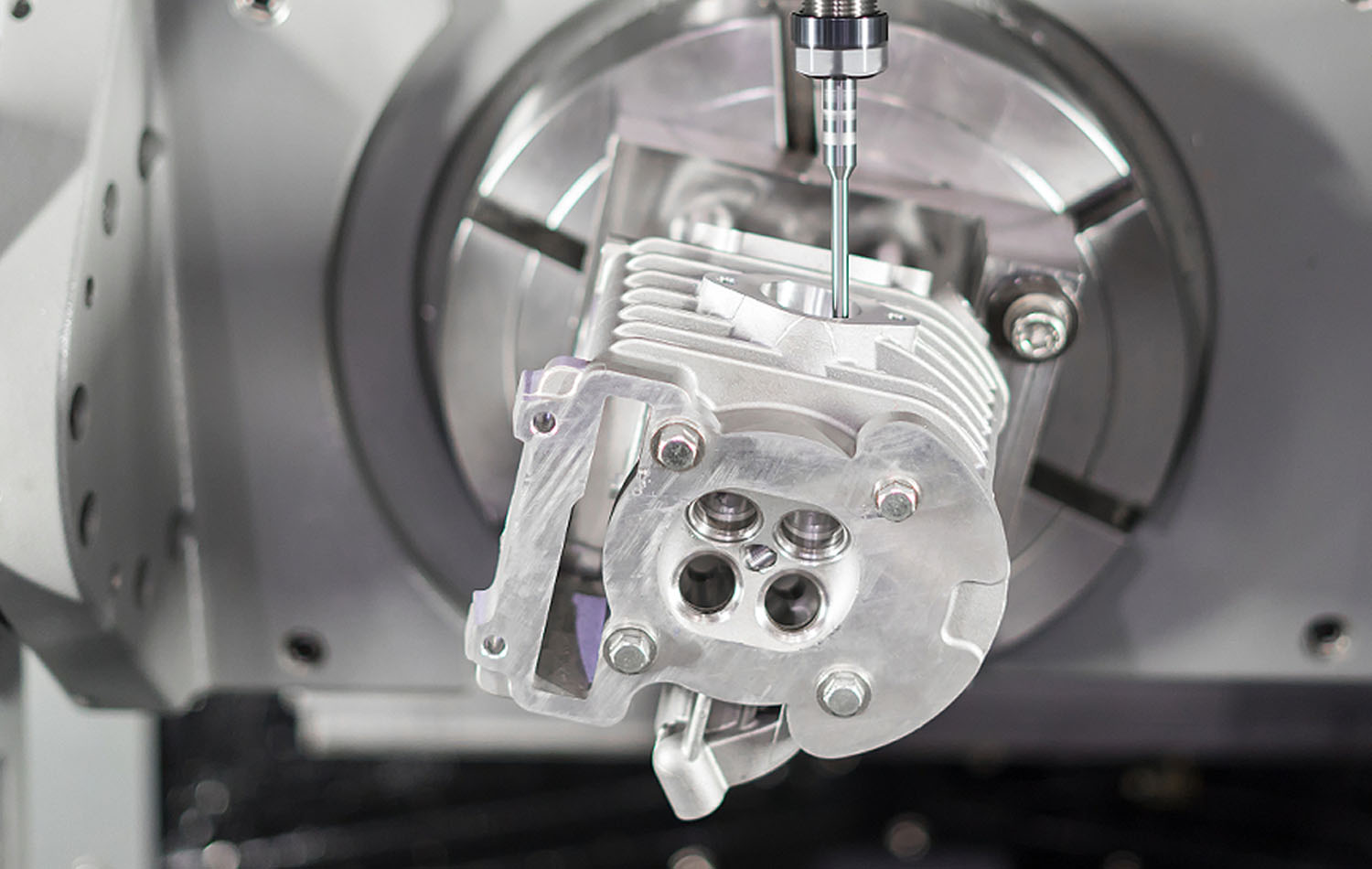
Adds two rotational axes, allowing the tool to reach almost any angle in a single setup. The preferred machine for complex aerospace, medical, and turbine components where geometric accuracy across multiple faces is critical.

Types of CNC Milling Operations

Knowing the machine is only part of the picture. The operations the machine runs determine what features end up on the part. Most CNC milled parts need more than one operation to reach their final shape.

Face Milling

Face Milling

When a part needs a flat, clean surface, face milling is the starting point. The cutter sweeps across the workpiece from above, removing high spots and establishing a consistent datum. It is fast, leaves a good surface finish, and is why most machining sequences start here before moving to other features.

Peripheral Milling

Plain Milling

Peripheral milling cuts along the side of the tool rather than the face. It handles edge trimming, wall straightness on long sections, and any cut that runs along the length of the workpiece rather than across it.

Slot Milling

slot milling

Slot milling cuts a channel into the workpiece surface. Keyways, T-slots, and coolant channels are typical examples. Slot width is determined by tool diameter, so tool selection directly controls what sizes are possible. Deeper slots need longer tools, which increases the risk of deflection if cutting parameters are not managed carefully.

Pocket Milling

types of milling

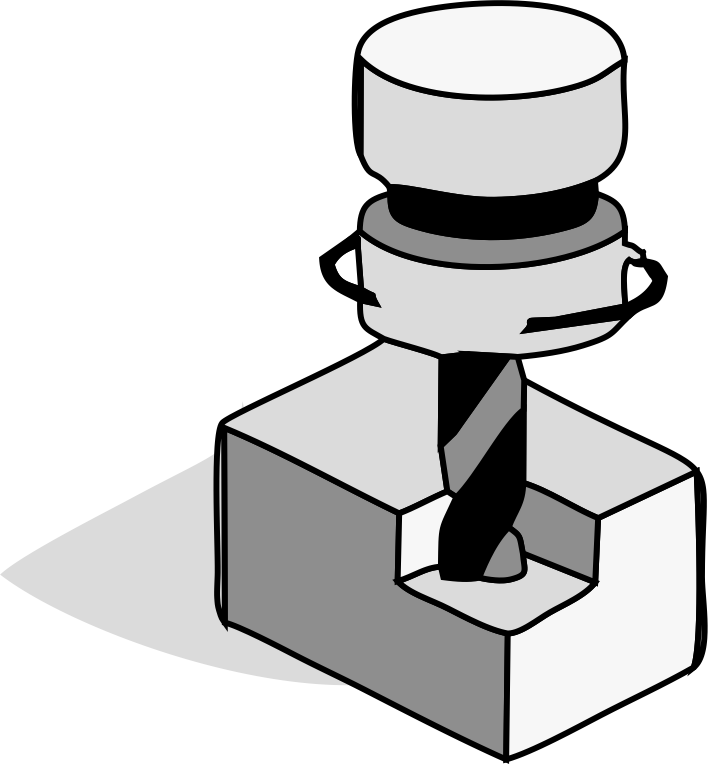
Pocket milling removes material from a closed area to create a cavity. The tool clears the floor and walls in a series of passes. One thing designers regularly miss: internal corners made by an end mill always carry a radius. If a design calls for sharp internal corners, standard milling cannot produce them.

Profile Milling

Profile milling follows the outer boundary of a part to produce a specific shape. The tool moves along two axes simultaneously to trace curved or angled edges. On a 5-axis machine, the tool can also tilt during the cut, which is the only way to cleanly machine complex curved surfaces that a 3-axis setup cannot reach.

Materials for CNC Milling

CNC milling works across a wide range of metals and engineering plastics. The material choice depends on the part’s mechanical requirements, operating environment, and budget.

Metals

  • Aluminum: 6061, 7075, 2024
  • Carbon Steel: 1018, 1045
  • Alloy Steel: 4140, 4340
  • Tool Steel: D2, H13, A2
  • Stainless Steel: 303, 304, 316, 17-4 PH
  • Titanium: Grade 2, Ti-6Al-4V
  • Inconel: 625, 718
  • Brass: C360, C260
  • Copper: C101, C110

Plastics

  • PEEK
  • Delrin (POM / Acetal)
  • PTFE (Teflon)
  • Polycarbonate (PC)
  • Nylon (PA6, PA66)
  • ABS

CNC Milling Applications

CNC milling produces parts across two broad categories: prototypes and production runs. Both rely on the same process, but the requirements are different.

For prototyping: CNC milling is fast and flexible. A design change is a program change, not a tooling change. Engineers can go from CAD file to physical part in days, test the design, and update it without penalty.

For production: the advantage shifts to consistency. Once a program is proven, the machine runs the same path every time. Whether the order is 10 parts or 10,000, the first and the last come out the same.

Across both categories, CNC milling is used in these industries:

Aerospace

Structural brackets, turbine housings, fuel manifolds, and landing gear components. Materials are typically titanium, Inconel, or high-strength aluminum. Most complex aerospace parts require 5-axis machining to reach all features in a single setup.

Automotive

Engine blocks, cylinder heads, transmission housings, brake calipers, and suspension components. EV development has added motor housings, battery enclosures, and inverter components to the list.

Medical

Surgical instruments, orthopedic implants, dental components, and diagnostic equipment parts. Biocompatible materials, tight tolerances, and full quality documentation are standard requirements.

Semiconductors and Electronics

Wafer handling fixtures, vacuum chamber components, and heat sinks. Tight flatness tolerances and clean surfaces are the main requirements in this sector.

Robotics

Joint housings, actuator bodies, and end-effectors. Complex geometry combined with lightweight thin-wall structures, mostly machined from aluminum in a single 5-axis setup.

Advantages and Disadvantages of CNC Milling

Aerospace CNC Machining

Like any manufacturing process, CNC milling has both strengths and limitations. Understanding both helps you decide when it is the right choice for your part.

Advantages

Precision and Consistency

Once a program is proven, the machine hits the same dimensions on every part. Tolerances of ±0.01mm are routine, and variation between the first part and the hundredth is negligible. Manual milling cannot match this level of consistency across a production run.

Complex Geometry

A 3-axis CNC mill produces shapes that manual machines cannot. A 5-axis machine extends this further, reaching features on multiple faces in a single setup. The range of geometries available with CNC milling covers almost everything in modern engineering design.

Speed and Efficiency

CNC mills run at high spindle speeds and feed rates continuously. Once set up, the machine runs without breaks. A job that takes a skilled manual machinist a full day can often be completed in hours.

Scalability

The same program that runs one prototype runs a thousand production parts. No retooling, no additional setup, and no quality difference between the prototype and the production run.

Disadvantages

High Equipment Cost

CNC milling machines, especially 5-axis machining centers, are expensive. The initial investment in equipment, software, and tooling is significant. For low-volume or simple parts, the cost per piece can be harder to justify compared to simpler processes.

Skilled Operators Required

The machine runs automatically, but setting it up, programming it, and troubleshooting problems require trained personnel. A poorly written program or incorrect setup will produce bad parts regardless of how capable the machine is.

Material Waste

CNC milling is a subtractive process. Material removed during cutting cannot be recovered. On expensive materials like titanium or Inconel, this waste adds directly to part cost. Optimized toolpaths help, but some waste is unavoidable.

CNC Milling vs. CNC Turning,What is Difference?

The two most common CNC machining processes are milling and turning. Knowing which one fits your part saves time and money at the quoting stage.

The core difference is straightforward. In milling, the cutting tool rotates while the workpiece stays fixed. In turning, the workpiece rotates while the cutting tool stays fixed.

CNC Milling CNC Turning
Tool movement Rotating tool, fixed workpiece Fixed tool, rotating workpiece
Part geometry Prismatic, complex 3D shapes Cylindrical, symmetrical shapes
Typical parts Brackets, housings, plates, molds Shafts, pins, bushings, threaded components
Axes 3-axis, 4-axis, 5-axis 2-axis, with live tooling options
Surface finish (Ra) 1.6 to 3.2 μm as machined 0.8 to 1.6 μm as machined
Best for Complex geometries, multiple features Round parts, high diameter accuracy

FAQs

It depends on the part size, complexity, material, and required tolerances. A simple aluminum bracket might take 20 to 30 minutes. A complex titanium aerospace component with tight tolerances could take several hours. Setup time, programming, and inspection are additional factors that affect lead time.

Standard CNC milling holds tolerances of ±0.1mm without special process controls. Precision milling routinely achieves ±0.01mm to ±0.025mm. For tighter requirements, secondary operations such as grinding or EDM are used.

Cost depends on material, part complexity, tolerances, and order volume. Simple aluminum parts in reasonable quantities are cost-effective. Complex parts in difficult materials like titanium or Inconel with tight tolerances cost significantly more. The main cost drivers are machining time, tooling, and inspection requirements.

For metals, the practical minimum is around 0.8mm. For plastics, 1.5mm is a safer starting point. Thinner walls are possible but increase the risk of deflection during machining, which affects dimensional accuracy and surface finish.

Common alternatives include 3D printing for prototypes, injection molding for high-volume plastic parts, and laser cutting for simple 2D profiles. The right choice depends on part geometry, volume, and required accuracy.

Related Topics:

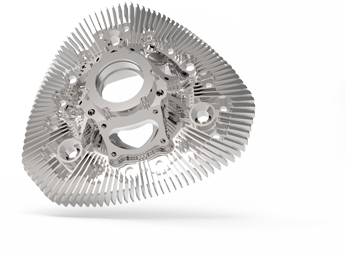
CNC milled aluminum precision part with complex geometry and multiple machining features

Custom Quality Parts By Aria

Contact Us: Sales@madearia.com
Written By
CNC milled aluminum precision part with complex geometry and multiple machining features

Custom Quality Parts By Aria

Send your specs. We’ll get back with a quote in 12 hours.

Scroll to Top