what is Slot Milling:Process, Tools, and Advantages

slot milling

Share:

Table of Content

Table of Content

Slot milling looks simple on a drawing, but the cutting conditions are harder than they appear. In this guide, I cover what slot milling is, how it works, the cutters I use, its pros and cons, and the practices that produce clean slots in real production.

What Is Slot Milling?

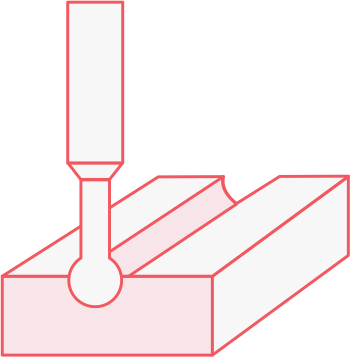
Slot milling is a machining process in which a rotating cutter removes material along a defined path to create a slot, groove, or channel in a workpiece. The width of the slot equals the cutter diameter, and the depth is controlled by the axial depth of cut.

The process is also called groove milling or slot cutting. A slot can be straight, curved, T-shaped, semicircular, open, or fully closed. I cut them in steel, aluminum, stainless steel, titanium, brass, plastics, and sometimes wood.

slot milling

What Is Slot Milling Used For?

Slot milling produces functional features that hold, locate, route, or transmit. The most common uses are keyways for torque transmission, T-slots for workholding, retaining ring grooves for fasteners, oil and coolant channels for fluid routing, cable and wiring channels for assembly, and locating slots for part alignment. Any time a part needs a precise narrow recess that other processes cannot produce, slot milling is the answer.

How dose Slot Milling Work

Slot milling follows a fixed workflow. I clamp the workpiece to the machine table, load the selected cutter into the spindle with minimal overhang, and set the spindle speed and feed rate to match the material. I turn on the coolant, then run the cutter along the programmed toolpath along the centerline of the slot. Shallow slots in soft material take one pass. Deep or narrow slots are cut in multiple axial passes or with a trochoidal toolpath to manage chip evacuation and cutting forces. When the cut is done, I measure the slot, deburr the edges, and move to the next operation.

Types of Slot Milling Cutters

The cutter I choose drives the result. Here is how I think about the main options.

Solid Carbide End Mills

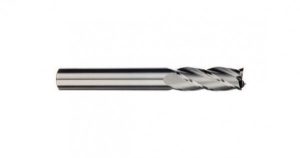
Solid carbide end mills give me the best rigidity and the tightest tolerances. I use them for slot widths up to about 25 mm and for finishing passes where surface quality matters.

Indexable End Mills

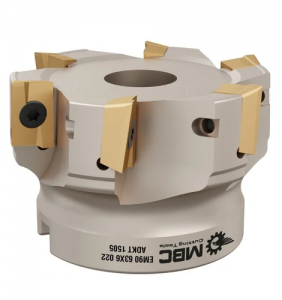
Indexable end mills use replaceable inserts. They are more economical for roughing and for larger slot widths, and I can change a worn insert without replacing the whole tool.

Gang Milling Cutter

Side and Face Cutters

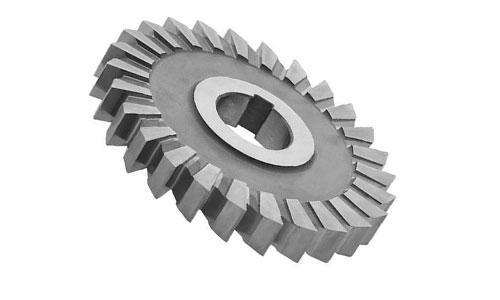
Side and face cutters are disc cutters with cutting edges around the periphery and on the sides. They handle high material removal rates and they are my first choice for long open grooves.

Side Milling Cutter

T-Slot Cutters

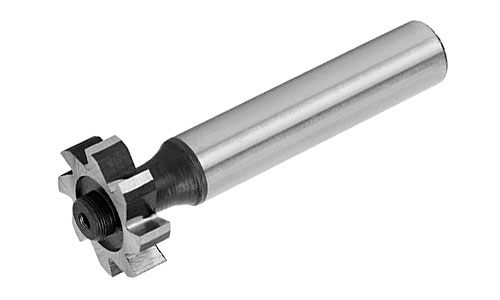
T-slot cutters have a narrow shank with a wider cutting head at the end. The shank passes through the pre-cut slot while the head machines the undercut.

T-Slot Cutter

Slot Milling Discs

Slot milling discs are thin disc cutters, typically 2 to 10 mm thick, with cutting inserts around the rim. They are designed for narrow, deep slots where chip evacuation is the main challenge.

Woodruff Keyseat Cutters

Woodruff keyseat cutters are small disc cutters with a narrow neck. They cut the curved seat in a single plunge.

Advantages of Slot Milling

+Advantages

  • High precision

    holds slot width and depth to ±0.013 mm in keyway work.
  • Geometric flexibility

    handles straight, curved, T-shaped, semicircular, open, and closed slots.
  • Wide material range

    works on metals, plastics, composites, and wood.
  • High material removal rate

    modern toolpaths keep MRR competitive with any milling operation.
  • CNC compatibility

    maps cleanly onto 3-axis, 4-axis, and 5-axis programs.
  • Strong repeatability

    same slot, thousands of times, once the program is dialed in.

Disadvantages of Slot Milling

āˆ’Disadvantages

  • Chip evacuation

    narrow deep slots trap chips and break tools.
  • Tool deflection

    long end mills flex and widen the slot beyond spec.
  • Heat buildup

    full-diameter engagement concentrates heat in a small zone.
  • Vibration and chatter

    long overhangs and heavy cuts ruin finish and edge life.
  • Limited tool choice

    drill bits cannot cut laterally; dedicated cutters required.
  • Setup demands

    T-slot, Woodruff, and gang milling each need their own tooling.

How to Select the Right Slot Milling Cutter

The right cutter depends on six factors. I check each one before starting a job.

  • Match the cutter to the slot width. For tight tolerances, go smaller and finish in multiple passes.
  • Cutting length.Keep the slot depth within three times the cutter diameter. Go deeper with a long-edge cutter, side and face cutter, or slot milling disc.
  • Flute count.2 or 3 flutes for deep slots and soft materials. 4 or more for finishing and hard materials.
  • Substrate and coating.Solid carbide for most jobs. TiAlN or AlTiN for steel, stainless, and titanium. Uncoated carbide for aluminum. Indexable inserts for high-volume work.
  • Shorter is better. Set the stickout to the minimum the slot depth allows.
  • Machine capacity.Confirm the spindle has the power, torque, and rigidity to drive the cutter. Heavy slotting needs an ISO 50 spindle.

Best Practices for Slot Milling

These are the rules I follow on the shop floor once the cutter is selected and loaded.

Use Trochoidal Toolpaths for Deep Slots

A trochoidal toolpath reduces radial engagement, keeps the chips flowing, and lets me run higher spindle speeds without overloading the cutter. For deep slots in steel and titanium it is the difference between finishing the job and breaking the tool.

Control Chip Evacuation

I use high-pressure coolant aimed directly at the cutting zone. When that is not available, I peck mill instead. Pecking means I retract the tool periodically to clear the chips out of the slot.

Use a Two-Tool Strategy for Deep Slots

For slots deeper than three times the tool diameter, I rough with a short, rigid tool and finish with a longer tool. The short tool does the heavy work, and the long tool only cleans up the walls and floor.

Run a Spring Pass on Finishing

After the final cut, I run the tool through the slot once more without changing the depth. This spring pass removes the material left by tool deflection and brings the slot to the correct width.

Climb Mill When You Can

Climb milling produces cleaner walls and a better finish in slots. I switch to conventional milling only when the workpiece is unstable or the machine has backlash in the table drive.

Limit Axial Depth Per Pass

I keep the axial depth within one tool diameter for steel and 1.5 tool diameters for aluminum. Beyond that, the cutting forces spike and the chip load gets unpredictable.

Written By

Coco is a mechanical engineer and content editor at Aria. She partners with process engineers and shop-floor teams across CNC machining, injection molding, sheet metal fabrication, and surface finishing — turning real production know-how into practical, honest guides for the people designing, specifying, and buying parts.

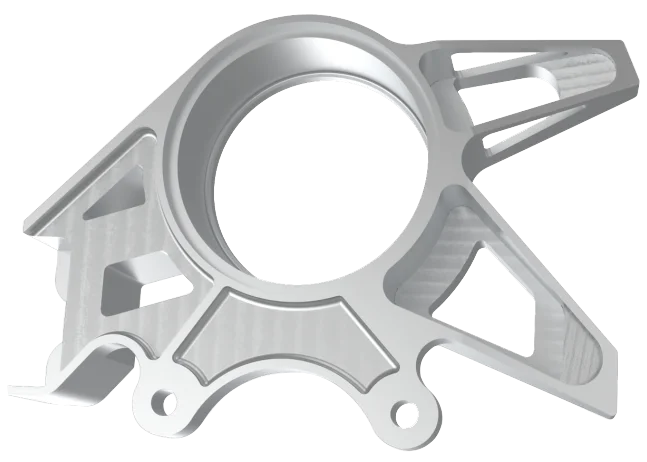
CNC milled aluminum precision part with complex geometry and multiple machining features

Custom Quality Parts By Aria

Send your specs. We’ll get back with a quote in 12 hours.

Scroll to Top