How Much Does CNC Machining Cost?

Aria CNC Machining

Share:

Table of Content

Table of Content

CNC machining costs depend on several factors, including material, part complexity, machining time, tolerances, production volume, and surface finishing. Understanding how these variables affect pricing helps estimate project costs more accurately and identify opportunities to reduce manufacturing expenses. This guide explains the key cost drivers and practical ways to optimize your budget.

CNC Machining Cost Calculator

Before looking into the key factors that influence CNC machining costs, use our cost calculator to get an instant estimate for your custom parts. Upload your CAD file and receive a quote based on your project requirements.

CNC Machining Cost Calculator

Factors That Affect CNC Machining Costs

Material Type

Different materials vary in price, machinability, and tool wear, which influence the total manufacturing cost.

  • Aluminum– Easy to machine, fast cutting speeds, and low tooling costs. Ideal for prototypes, aerospace, and consumer products.
  • Stainless Steel– Strong and corrosion-resistant but requires slower machining speeds and increases tool wear.
  • Carbon Steel– Offers a balance of strength and cost for structural and industrial components.
  • Titanium– Difficult to machine because of its strength and low thermal conductivity, resulting in higher machining costs.
  • Brass– Machines efficiently and produces excellent surface finishes, making it suitable for precision parts and fittings.
  • Engineering Plastics– Materials such as POM, ABS, Nylon, and PEEK have different machining characteristics and are commonly used for lightweight or insulating components.

Select materials based on functional requirements rather than price alone to achieve the best balance between performance and manufacturing cost.

Part Design Complexity and Tolerances

Complex features increase machining time, while tight tolerances require slower cutting speeds and additional inspection.

The following features typically increase manufacturing costs:

  • Deep pockets
  • Thin walls
  • Small internal radii
  • Undercuts
  • Complex surfaces
  • Tight tolerances

Whenever possible, simplify the design and apply tight tolerances only to critical features. Standard tolerances are sufficient for most dimensions and help reduce machining time, inspection effort, and overall production costs.

Production Quantity

Machine setup, programming, and inspection are fixed costs for every production run. These costs are distributed across all parts, so larger orders typically result in a lower unit price.

Higher production volumes also improve manufacturing efficiency. Once machining programs have been verified and production is stable, setup frequency decreases, operator intervention is reduced, and machine utilization increases.

For large production runs, CNC machining may still become less economical than manufacturing processes such as injection molding or die casting because tooling costs can be recovered over a much higher number of parts.

Tooling and Machine Costs

Different machine configurations offer different levels of capability, precision, and production efficiency. More advanced equipment generally requires higher investment, more complex programming, and longer setup times, increasing the overall machining cost.

  • 3-Axis CNC Milling– Best for simple parts and offers the lowest machining cost.
  • 4-Axis CNC Milling– Reduces setups for multi-sided parts, improving efficiency.
  • 5-Axis CNC Milling– Machines complex geometries in fewer setups but has higher equipment and programming costs.
  • CNC Turning– The most cost-effective option for cylindrical parts such as shafts and bushings.

Selecting the appropriate machine depends on the part geometry rather than choosing the most advanced equipment. Matching the manufacturing process to the design often provides the best balance between cost, quality, and lead time.

Post-Processing Costs

Post-processing adds to the total CNC machining cost after the primary machining operation is complete.

Additional machining processes, such as tapping, drilling, welding, assembly, or inserting hardware, require extra machine time and labor. Surface finishing processes, including anodizing, plating, powder coating, polishing, and heat treatment, also increase production time and processing costs.

Only specify secondary operations and surface finishes that are necessary for the part’s functional or appearance requirements. Reducing unnecessary post-processing is an effective way to lower the overall manufacturing cost.

Shipping and Handling Costs

Transportation expenses depend on part size, weight, packaging, shipping method, and destination. Expedited production or express shipping also increases the final project cost.

Planning production in advance and selecting appropriate shipping options help reduce logistics expenses and avoid unnecessary costs.

How to Reduce CNC Machining Costs

Reducing CNC machining costs starts with better design and manufacturing decisions. Optimizing materials, tolerances, production volume, and machining processes helps lower costs without compromising part quality.

Optimize Designs for Manufacturability (DFM)

Simplify part geometry to reduce machining time and setups. Avoid deep pockets, thin walls, and unnecessary features whenever possible. Designing for manufacturability improves efficiency and lowers production costs.

Collaborate with Your Manufacturing Partner

Discuss part requirements before production begins. Early design reviews help identify cost-saving opportunities, improve manufacturability, and reduce unnecessary machining operations.

Choose Standard Materials

Standard materials are easier to source and machine than specialty alloys. Selecting materials that meet performance requirements without over-specification helps reduce both material and machining costs.

Optimize Tolerances

Apply tight tolerances only to critical features. Standard tolerances are suitable for most dimensions and reduce machining time, inspection, and overall manufacturing costs.

Increase Production Volume

Larger production runs spread setup and programming costs across more parts, reducing the unit cost. Producing parts in batches is often more economical than multiple small orders.

Reduce Unnecessary Post-Processing

Secondary machining and surface finishing increase production time and cost. Specify only the post-processing operations required for the part’s function or appearance.

Maintain Manufacturing Efficiency

Regular equipment maintenance and efficient production planning reduce downtime, improve machining consistency, and help control manufacturing costs over the long term.

Written By
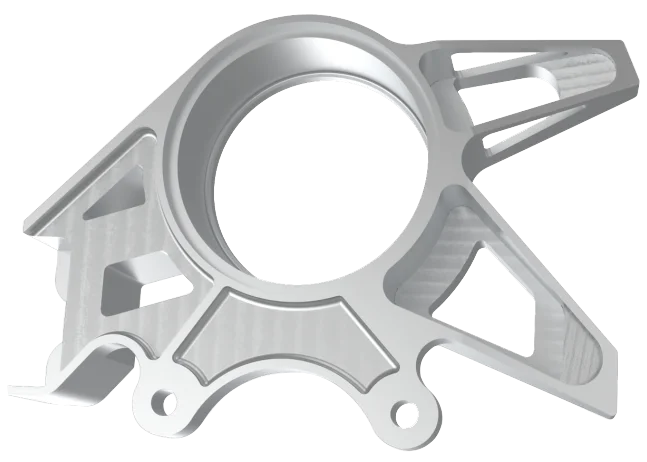
CNC milled aluminum precision part with complex geometry and multiple machining features

Custom Quality Parts By Aria

Send your specs. We’ll get back with a quote in 12 hours.

Scroll to Top