

Anodizing and electroplating are the most common surface treatment processes for metal parts. Both can enhance the mechanical properties of metals.
Anodizing thickens the metal’s natural oxide layer, while electroplating deposits a separate metal layer onto the surface. Anodizing is limited to a few metals like aluminum and titanium. Electroplating works on a much wider range, including stainless steel, zinc alloys, copper, and iron.
What is Anodizing?
Anodizing is an electrochemical process that thickens a metal’s (typically aluminum) natural oxide layer to improve aesthetic, corrosion resistance, wear resistance, and surface hardness.
The three common types are Type I (chromic acid), Type II (sulfuric acid), and Type III (hard anodizing).
What is Electroplating?
Electroplating deposits a thin layer of metal (such as nickel, chrome, zinc, or gold) onto a substrate using electrical current or chemical reactions. It improves corrosion resistance, conductivity, appearance, and wear properties.
This process not only improves the appearance, wear resistance and corrosion resistance of the parts, but also enhances their electrical conductivity by electroplating conductive metals such as copper and silver.
The common electroplating methods include roll plating, bath plating and vacuum electroplating.
What Are Differences Between Anodizing and Electroplating
1. How It Works
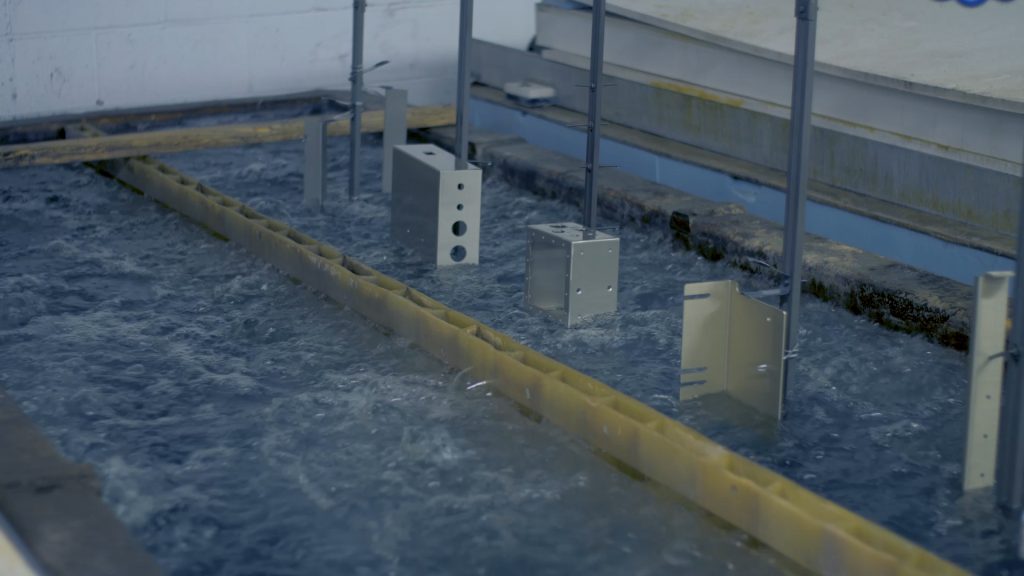
Anodizing turns the metal surface into its own coating. The part goes into an acid bath as the anode. Electric current forces oxygen ions to react with the surface atoms. An oxide layer grows directly from the base metal. Nothing is added from outside.
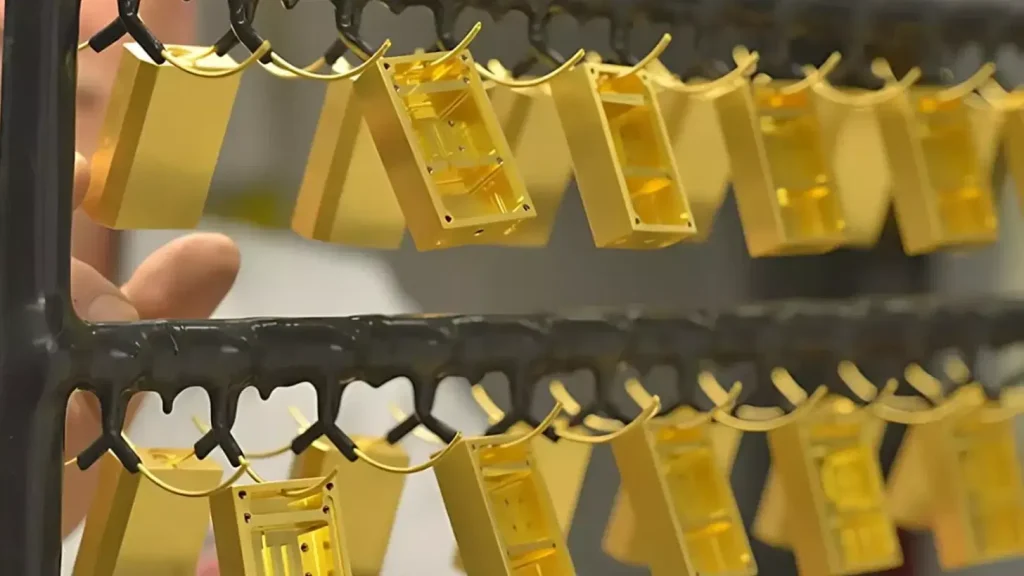
Electroplatingdoes the opposite. The part sits in the bath as the cathode. Metal ions from the solution land on the surface and build up layer by layer. It is a deposit, not a conversion.
2. Purpose
Anodizing is mostly about protection and appearance. It hardens the surface, blocks corrosion, and lets you dye the part in different colors.
Electroplatingsolves a wider set of problems. Need better conductivity? Plate with copper or silver. Need solderability? Use tin. Want a mirror finish? Go with chrome. The coating metal defines the function.
3. Materials Compatibility
Anodizing only works on a handful of metals. Aluminum is the go-to. Titanium, magnesium, and zinc can also be anodized. Steel, iron, and plastics are off the table.
Electroplating is far less picky. Most conductive metals work. With the right surface prep, you can even plate onto plastics and ceramics.
4. Color Diversity
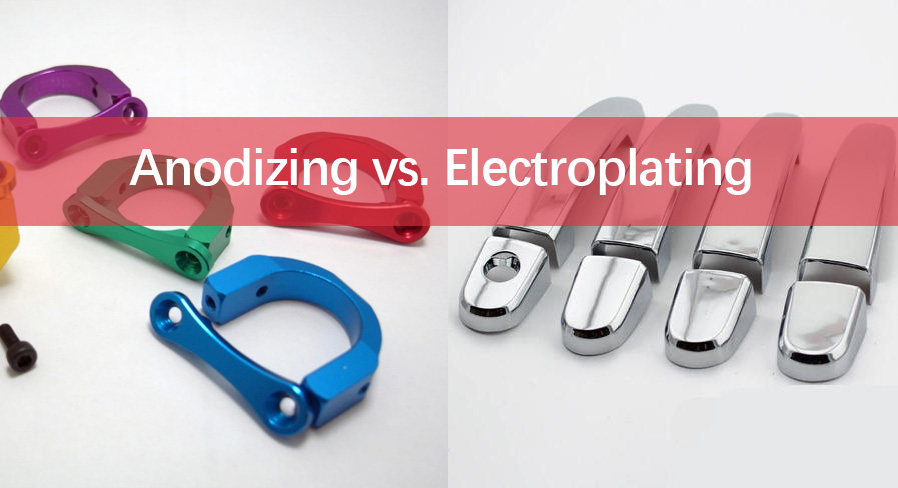
Anodized parts absorb dye into the porous oxide layer. You get a solid range of colors: black, red, blue, gold, green, and more. But anodizing cannot produce the shiny metallic finish that plating offers.
Electroplating color is directly derived from the metal of the coating layer. The final color intensity can be adjusted by controlling the coating time and the concentration of the electrolyte. Common electroplating colors include Nickel, Chrome, Gold, Silver, and Copper.
5. Coating Thickness
Standard anodizing (Type II) produces a 5 to 25 micron layer. Hard anodizing (Type III) pushes that to 50 microns or beyond. One thing to note: the oxide grows both inward and outward, so the actual dimensional change is about half the total coating thickness.
Electroplatingthickness swings wider. Decorative chrome might only be 0.25 microns. Functional hard chrome can stack up to 500 microns. It all depends on the application.
6. Surface Roughness
Anodizing makes the surface slightly rougher. The porous oxide structure gives a matte or satin feel. Hard anodizing is rougher still.
Electroplatingtends to go the other way. Nickel and chrome plating often leave a smoother surface than the original part. If you polish the part before plating, you can get a near-mirror finish.
7. Corrosion Resistance of Coating
A properly sealed anodized layer holds up well against corrosion. It is stable and non-reactive. Outdoor exposure, salt spray, moisture. It handles all of these without breaking down.
Electroplating is more hit or miss. Zinc plating corrodes on purpose to protect the steel underneath. Chrome and nickel act as barriers and do a solid job. But once a plated layer chips or scratches, the base metal is exposed and corrosion starts fast.
8. Coating Wear Resistance
Anodizing significantly improves the wear resistance of aluminium parts. Raw aluminium sits at roughly HV 100. Standard anodizing pushes that to around HV 300. Hard anodizing reaches about HV 500. That means anodizing can boost surface hardness by 3 to 5 times over bare aluminium.
Electroplating wear resistance depends on two factors: the hardness of the plated metal and the coating thickness. Common options like nickel, gold, and silver plating all fall short of anodized aluminium in wear performance. To achieve comparable wear resistance, you either need a thicker plating layer or a harder plating material such as hard chrome.
Additional
Since electroplating has relatively poor wear resistance, electroplating factory typically add a clear protective film over the metal coating. This extra protective film helps prevent scratches, tarnishing, and everyday surface wear.
9. Color Retention Performance
Anodized color holds up over time. The dye is trapped inside the sealed pores, not sitting on the surface. UV fading is minimal, especially with inorganic pigments. Parts look the same years later.
Electroplated surfaces can lose their shine. Chrome stays bright for a long time, but gold and silver plating may tarnish without a clear topcoat. Copper plating turns green if left unprotected.
10. Production Cost
Anodizing is the cheaper option in most cases. The chemicals are common. Energy use is moderate. Waste treatment is relatively straightforward. High-volume aluminum parts benefit the most.
Electroplating cost depends heavily on the metal. Zinc plating is low cost. Chrome plating costs more due to process controls and environmental regulations. Gold and silver plating add serious material expense on top.
11. Applications
Anodized parts show up in phone housings, laptop shells, aerospace brackets, architectural panels, cookware, and bike frames.
Electroplated parts are everywhere too. Automotive trim, bathroom faucets, electrical connectors, PCB pads, bag accessories, jewelry, and industrial rollers all rely on plating.
Can Aluminum Alloy Be Electroplated?
Yes. Aluminum can be electroplated with nickel, chrome, copper, gold, and other metals. However, aluminum forms a natural oxide layer very quickly, which blocks adhesion. A zincate pretreatment is required to remove the oxide and create a bondable surface before plating.
Can Stainless Steel, Copper, and Iron Be Anodized?
No. Anodizing only works on metals that form a stable, adherent oxide layer. Stainless steel, copper, and iron do not meet this requirement. Their oxides are either unstable, non-protective, or flake off. These metals are better suited for electroplating or other surface treatments.