What Is Deep Hole Drilling?

Deep hole Drilling

Share:

Table of Content

Table of Content

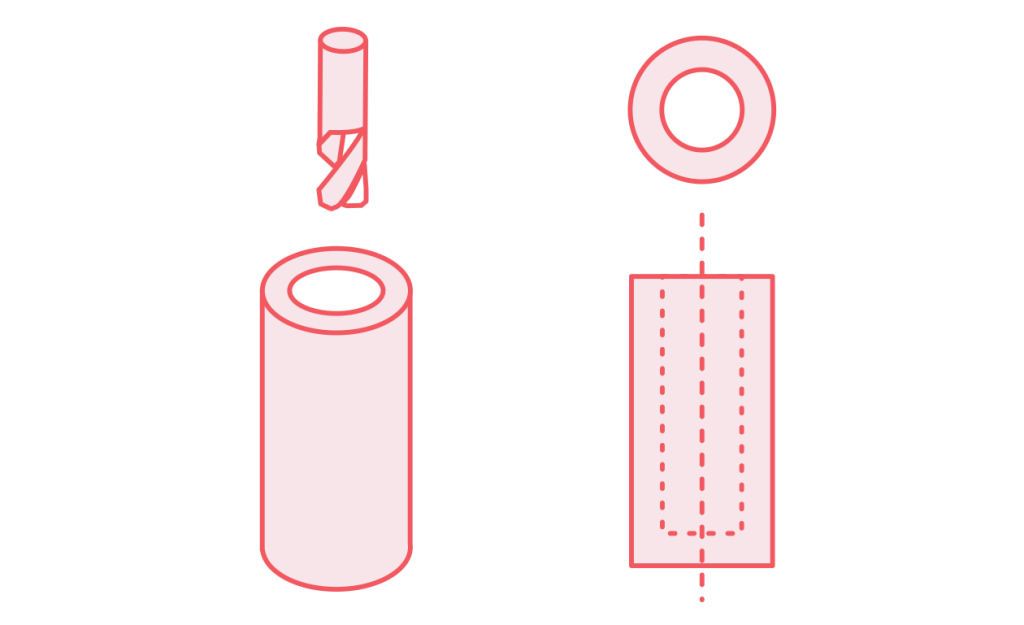
Deep hole drilling is a machining process for holes with a high depth-to-diameter (D:d) ratio. A hole is generally considered “deep” once that ratio exceeds 10:1, and the process can reach 150:1 and beyond. Unlike standard drilling, it relies on high-pressure coolant delivered to the cutting edge, continuous chip evacuation, and guide pads that keep the hole straight over long lengths. The technique originated in gun-barrel manufacturing and now serves a wide range of industries.

Deep hole Drilling

Deep Hole Drilling Processes

Gun Drilling

Gun drilling uses a long, thin tool with a single straight flute and a single internal coolant hole. Coolant is pumped through the tool to the tip, and chips are flushed out along the external V-flute. It typically handles diameters from about 1 mm to 40 mm and excels at small-diameter holes requiring exceptional straightness and tight tolerances.

BTA Drilling (STS / Single Tube System)

BTA drilling, named after the Boring and Trepanning Association and also called STS, uses a cutting head on a long drill tube. High-pressure coolant is introduced around the outside of the tool, and chips are evacuated internally through the tube. With multiple cutting edges, it achieves higher feed rates and material removal, covering diameters from about 20 mm to 200 mm and depth-to-diameter ratios up to 400:1.

Ejector Drilling (DTS / Double Tube System)

Ejector drilling uses a two-tube design that splits the coolant flow between inner and outer tubes. It produces a clean surface finish and is well suited to setups where a self-contained coolant return is preferred over external sealing.

Trepanning

Trepanning cuts an annular groove and leaves a solid core rather than reducing the entire bore to chips. This makes it efficient for very large diameters, reducing power consumption and preserving the removed core as usable material.

Deep Hole Drilling Tools

Deep hole drilling tools share an asymmetric, single-cutting-edge geometry that pushes cutting forces against guide pads instead of relying on a centered point. This self-guiding action is what keeps the hole straight over long depths. The right tool depends on diameter, depth, and material.

Single-Lip Gun Drills

One-piece tools with a single straight flute and an internal coolant hole, brazed to a hardened shank. The off-center cutting edge and a pair of carbide guide pads burnish the bore wall, holding straightness in diameters from roughly 1 mm to 40 mm.

BTA Tool Heads

Cutting heads threaded or mounted onto long drill tubes, using multiple cutting edges to remove material fast. Available as brazed perishable tools for smaller sizes and indexable carbide heads (single or multiple inserts) for larger diameters and resharpening-free changeovers.

Ejector Inner and Outer Tubes

The double-tube DTS set where the outer tube carries coolant in and the inner tube returns coolant and chips, giving a self-contained flow that needs no external bore seal.

Cutting Inserts

Carbide grades and coatings (such as TiN or TiAlN) matched to the workpiece, with edge geometry chosen to break chips into evacuable sizes and resist heat in tough alloys.

Guide and Support Pads

Wear-resistant pads that ride the freshly cut wall, reacting the radial cutting force, controlling final diameter, and improving roundness and surface finish.

Drill Tubes and Bushings

Precision tubes that carry coolant and torque to the head, while a start bushing at the entry point guides the tool and prevents wander when the hole begins.

Coolant Ducts

Internal channels and outlets sized to deliver high-pressure coolant exactly where heat and chips concentrate, often with differing cross-sections to bias flow toward the pads and cutting edge.

Deep Hole Drilling Machines

Deep hole drilling is usually performed on dedicated machines built to optimize straightness and efficiency. Modern CNC machining centers with through-spindle high-pressure coolant can gundrill to a limited depth-to-diameter ratio.

  • Whip guides— support the long drill and workpiece to prevent deflection and whip.
  • High-pressure coolant pumps— supply the volume and pressure needed for cooling and chip evacuation.
  • Dual rotation— rotate both workpiece and tool, often in opposite directions, for straighter holes.
  • Machine types— gun drilling machines, BTA machines, and combination deep hole drilling machines.

Applications and Industries

  • Aerospace— turbine blades, landing-gear components, and structural parts with deep, straight bores.
  • Automotive— engine components, fuel injectors, and crankshaft oil galleries.
  • Oil and gas— drilling tools and downhole components subjected to high stress.
  • Medical— bone drills, implants, and precision instruments needing fine finishes.
  • Hydraulics— cylinders and manifolds requiring long, accurate bores.
  • Mold and die— cooling channels in injection molds and dies.

Need precision deep hole drilling?

Aria delivers straight, accurate bores in aluminum, stainless steel, titanium, and super-alloys.

Written By
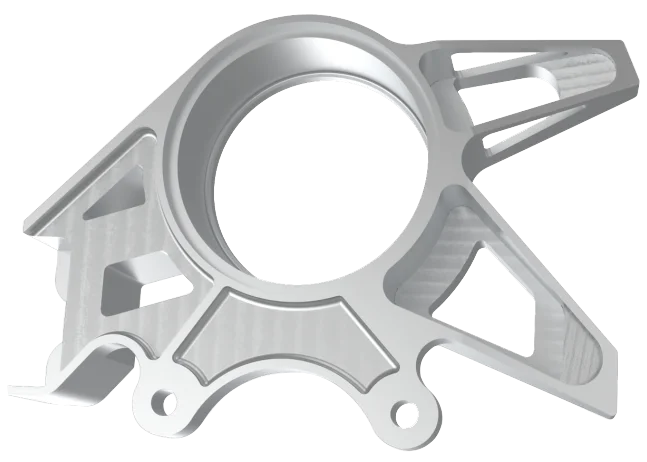
CNC milled aluminum precision part with complex geometry and multiple machining features

Custom Quality Parts By Aria

Send your specs. We’ll get back with a quote in 12 hours.

Scroll to Top