ABS Plastic: Complete Guide to Properties& Uses

What Is ABS Plastic?

ABS stands for Acrylonitrile Butadiene Styrene. It is an amorphous thermoplastic made by polymerizing three monomers, each contributing a specific set of properties to the final material.

Acrylonitrile provides chemical resistance and hardness. Butadiene adds toughness and impact resistance. Styrene contributes rigidity, surface gloss, and processability.

The ratio of these three monomers can be adjusted during manufacturing, which is why many ABS grades exist. A higher butadiene content increases toughness; a higher styrene content improves flow and surface finish. This flexibility makes ABS adaptable to a wide range of applications without changing the base material.

ABS Plastic Materials

Advantages of ABS Plastic

ABS Plastic has become one of the most widely used engineering thermoplastics for good reason. Its balance of mechanical performance, processability, and cost makes it a reliable default choice across many industries. Below are the key strengths that explain why it stays in the running for so many projects.

High impact strength

The butadiene rubber phase absorbs energy on impact, so ABS resists cracking and shattering even at low temperatures. This makes it reliable for housings, protective covers, and parts that see drops or knocks in daily use.

Excellent processability

ABS flows well in injection molding, extrudes cleanly into sheets and pipes, and prints reliably via FDM 3D printing. This versatility lets the same material move smoothly from prototyping into mass production without switching grades.

Smooth surface finish

Straight out of the mold, ABS has a uniform, low-porosity surface that readily accepts paint, primer, silk-screen printing, and even electroplating. This is a major reason it dominates decorative parts in consumer electronics and automotive interiors.

Good dimensional stability

ABS Plastic has low shrinkage (typically 0.4–0.7%) and holds tight tolerances after molding. Parts stay true to their designed dimensions over time, which matters for assemblies with snap fits, threaded inserts, or mating components.

Cost-effective

ABS is significantly cheaper than engineering plastics like polycarbonate, PEEK, or nylon, yet still delivers solid mechanical performance. This makes it the practical choice when the application doesn’t demand extreme thermal or chemical resistance.

Good electrical insulation

ABS has high volume resistivity and low dielectric loss across a wide frequency range, which makes it suitable for electrical enclosures, switch housings, and small appliance bodies. Flame-retardant grades add further safety margin for UL-rated applications.

Easy bonding and post-processing

ABS Plastic is compatible with a wide range of adhesives (cyanoacrylate, epoxy, ABS cement) and can be solvent-welded using

Disadvantages of ABS Plastic

ABS Plastic is a capable material, but it isn’t the right pick for every job. Its limitations tend to show up in harsh environments — outdoors, at elevated temperatures, or in contact with aggressive chemicals. Understanding these weaknesses upfront helps avoid costly redesigns later.

Poor UV resistance

Prolonged sunlight exposure degrades the butadiene phase, causing ABS to yellow, lose gloss, and become brittle over months to years. For outdoor use, switch to ASA or add UV stabilizers and a protective topcoat.

Limited heat resistance

Standard ABS has a heat deflection temperature around 85–100°C and softens during continuous use above 80°C. For hotter environments, look at heat-resistant ABS grades, PC/ABS alloys, or step up to polycarbonate or nylon.

Limited chemical resistance

ABS dissolves or softens in contact with ketones (acetone, MEK), esters, aromatic hydrocarbons, and strong acids. This rules it out for fuel tanks, solvent containers, and many industrial chemical handling parts.

Toxic fumes when burned

Combustion releases hydrogen cyanide, styrene, and carbon monoxide. This requires proper ventilation during 3D printing and hot processing, and rules out ABS for applications with strict fire safety requirements unless a flame-retardant grade is used.

Hygroscopic

ABS absorbs atmospheric moisture, which causes surface defects like splay marks, silver streaks, and bubbles if the resin isn’t dried before molding. Typical drying conditions are 80–90°C for 2–4 hours before processing.

Not food-safe by default

Standard ABS isn’t FDA-approved for direct food contact, and residual monomers or processing additives can migrate into food. For kitchenware, food containers, or medical implants, choose food-grade PP, HDPE, or certified silicone instead.

How Are ABS Parts Made?

ABS Plastic supports a wide range of manufacturing processes, which is a major reason for its widespread adoption. Here are the main methods I see in practice:

01

Injection Molding

The most common ABS process. Molten ABS is injected into a metal mold and cooled to shape. Well suited for high volumes — unit cost drops sharply as volume increases.

Melt 200–240°C · Mold 40–80°C
02

CNC Machining

Used for ABS sheets or rods when producing low-volume prototypes and precision parts. Cuts cleanly, but heat management is important — localized overheating can cause deformation.

Sheet & rod stock · Low volume
03

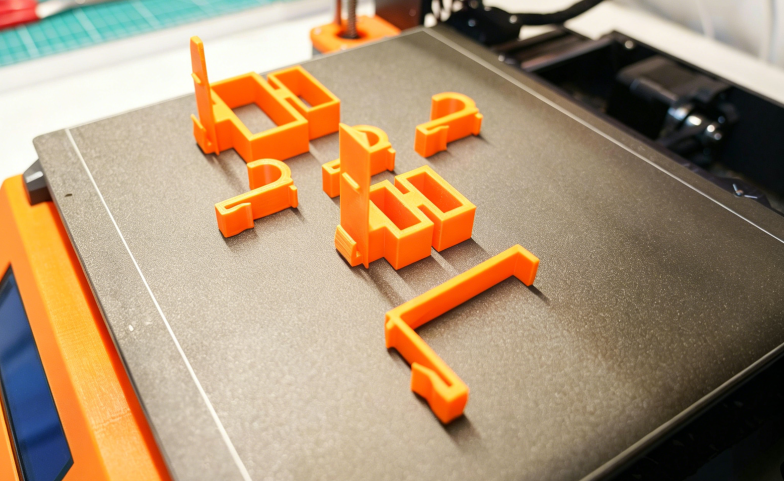
3D Printing (FDM)

Warping is the main challenge with ABS; an enclosed print chamber and heated bed reduce it significantly. Suitable for strong, functional prototypes.

Nozzle 220–250°C · Bed ~100°C
04

Vacuum Thermoforming

ABS sheets are heated and formed over a mold under vacuum. Suits large, thin-walled parts such as luggage shells and automotive interior trim panels.

Large format · Thin-walled parts

How to Choose the Right ABS Grade

Not all ABS is the same. The right grade depends on your application, processing method, and environment.

Standard ABS

The default choice for most indoor enclosures, housings, and consumer parts. Good balance of strength, processability, and cost. Use this when there are no special environmental or regulatory requirements.

High-impact ABS

A higher butadiene content grade for parts that take repeated mechanical stress — tool handles, protective covers, and structural brackets. Slightly lower surface hardness in exchange for better toughness.

Flame-retardant ABS

Required for electrical enclosures, appliances, and any application with UL 94 compliance requirements. FR grades sacrifice some impact strength compared to standard ABS.

Heat-resistant ABS

For parts that operate above 80°C. These grades use modified formulations to push the heat deflection temperature higher. If requirements exceed 100°C, consider upgrading to PC/ABS alloy instead.

Plating-grade ABS

Specifically formulated for electroplating. The surface structure of plating-grade ABS allows metal coatings to bond reliably — important for decorative automotive and consumer electronics parts.

ABS for 3D printing

Filament-grade ABS is formulated for consistent extrusion and layer adhesion. Low-warp ABS fixes this at the material level — by adding minor processing aids to reduce internal stress and adjusting the styrene ratio to lower thermal expansion. The result is more uniform shrinkage across layers and fewer lifted corners.

Plastics Similar to ABS

If ABS does not meet a specific requirement, here are the alternatives I typically consider.

ABS + PC
PC/ABS Alloy

Combines ABS with polycarbonate for higher impact strength and better heat resistance. Use when ABS alone isn’t enough for demanding structural or thermal requirements — e.g. automotive bumpers or phone cases.

HIPS
High Impact Polystyrene

Cheaper and easier to process than ABS. A reasonable substitute for low-stress applications — disposable packaging or display racks — where cost matters more than mechanical performance.

PLA
Polylactic Acid

Bio-based alternative that works well in FDM 3D printing. Warps less than ABS and requires no heated enclosure — the default for consumer-grade prototypes. Lower heat resistance, more brittle under impact.

ASA
Acrylonitrile Styrene Acrylate

Structurally similar to ABS but with significantly better UV and weather resistance. When a part needs to live outdoors, choose ASA over ABS without hesitation.

PP
Polypropylene

The go-to when chemical resistance, food safety, or fatigue resistance matters. Living hinges, food containers, and laboratory equipment are typical use cases.

PA
Nylon

Outperforms ABS in wear resistance and mechanical strength. For gears, bearings, and load-bearing brackets, nylon is the more appropriate choice despite its higher cost and moisture sensitivity.

Applications of ABS Plastic

ABS shows up in almost every area of daily life. Here are the main industrial directions I see it used in:

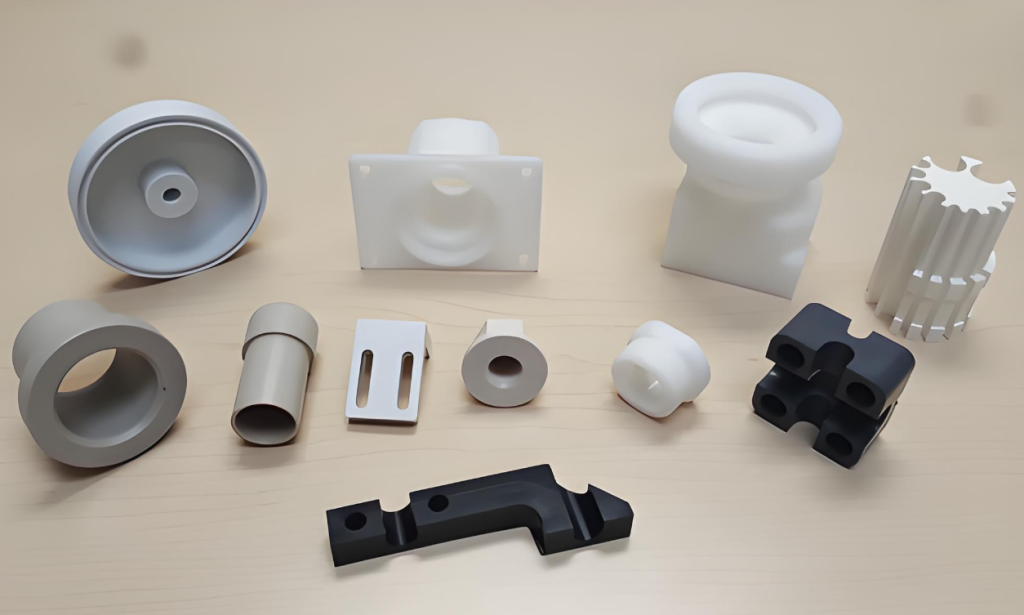
CNC Machining ABS

Consumer Electronics

Computer housings, keyboards, mice, and TV enclosures are the most common examples. ABS handles the mechanical stress of daily use and accepts surface finishes well.

Automotive Parts

Dashboard panels, door liners, and trim pieces are frequently made from ABS or ABS/PC alloy. The material machines cleanly and bonds well to other substrates.

Toys

LEGO bricks are made from ABS — this says a lot about the material’s precision and durability. It holds tight tolerances and survives repeated mechanical stress.

Building Pipe Systems

ABS pipe is widely used in drain, waste, and vent (DWV) systems. In North America, ABS pipe conforms to standards such as ASTM D2661. It is lightweight and easy to cut and join.

Medical Device Housings

Blood pressure monitors, respiratory devices, and diagnostic equipment use ABS for non-contact external parts. It sterilizes well with standard disinfectants.

3D Printing (FDM)

ABS is one of the original FDM filaments. It produces strong, functional parts, and post-processing options like acetone vapor smoothing give it a near-injection-molded surface finish.

â—† How ARIA Can Help

Working with ABS? We’ll match the right grade to your part.

From material selection advice to instant quoting across injection molding, CNC machining, and 3D printing — ARIA provides end-to-end manufacturing support to get your parts into production fast.

Scroll to Top