Electroplating Finish: How it Works, Types, Applications
Written By:
Gavin Leo
Updated By: Gavin Leo
Published:
Updated
Share:
Table of Content
Table of Content
I’ve spent years working on precision metal parts in Aria, and one question I get more often than almost any other is: “What’s the right surface finish for this part?”
It sounds simple. It’s not.
Most of our clients often confuse electroplating with painting, powder coating or anodizing. They are different processes with distinct effects.
In this article, we will provide a detailed explanation of the electroplating process, covering its definition, working principle, types, advantages, and common applications.
What Is Electroplating?
Electroplating is the process of depositing a thin layer of metal onto a conductive surface using an electrical current. The result is a metal-to-metal bond that changes the surface properties of the base material without altering its shape or dimensions significantly.
The purpose is to improve the appearance, corrosion resistance, wear resistance and conductivity of the parts.
The quality of an electroplated finish depends on what happens before the part ever touches the bath. Surface preparation, cleaning, and substrate condition determine about 80% of whether the final finish will hold up.
How the Electroplating Process Works
Electroplating operates on the principle of electrodeposition: a DC power supply drives current in one direction, pulling metal ions out of a conductive electrolyte solution and depositing them onto the part being plated.
Anode (+): The positive electrode (usually the plating metal itself) that dissolves into the solution, continuously supplying metal ions to the bath.
Cathode (−): The negative electrode — the part being plated — where metal ions are attracted and reduced into a solid metal coating on its surface.
Plating Solution: A conductive electrolyte (such as copper sulfate or nickel sulfamate) that carries metal ions between the electrodes and completes the electrical circuit.
Power Source: A DC power supply that drives the current in one direction, forcing ions to migrate from anode to cathode and enabling metal deposition.
Types of Electroplating Methods
Three methods handle the vast majority of commercial electroplating: barrel plating and rack plating. The choice between them affects cost, quality, and which types of parts are suitable.
Barrel Plating
Barrel plating loads small parts into a rotating drum that tumbles them through the plating solution. The parts make electrical contact through the bath and the tumbling action.
It’s designed for high-volume production of small, geometrically simple parts. Fasteners, stampings, small electrical contacts, springs, and similar components are good candidates.
Best for: Screws, bolts, washers, terminals, small brackets, any part where individual racking isn’t economically justified.
Limitations: Tumbling action creates part-to-part contact marks. Not suitable for fragile parts, parts with critical edge or thread tolerances, or parts requiring premium surface quality.
Rack Plating
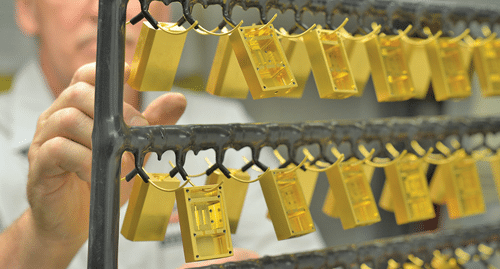
Rack plating mounts individual parts on fixtures (racks) and immerses the whole assembly into the bath. Each part is positioned to optimize solution access and current distribution.
The investment in racking time makes it more expensive per part than barrel plating, but the surface quality and uniformity are significantly better. Complex geometries, large parts, and anything with critical dimensional tolerances should be rack plated.
Best for: Aerospace components, medical devices, automotive structural parts, precision machined components, anything where surface integrity is a spec requirement.
Limitations: Higher cost per part, rack marks at contact points (which need to be in non-critical areas), slower throughput than barrel.
Brush Plating
Brush plating is a portable, selective electroplating technique where the plating solution is applied directly to a specific area of a part using a handheld tool, rather than submerging the whole part in a tank.
It’s slower, operator-dependent, and consistency across a batch is hard to maintain. It’s a precision tool for specific situations, not a substitute for plating at volume.
Electroplating Materials Opations
Different metals give you different properties. Here’s a practical comparison before we go into detail on each one.
Finish
Hardness
Corrosion Resistance
Best Use Case
Cost Level
Appearance
Chrome (Hard)
Very High
Good
Wear & friction
High
Matte/Bright
Chrome (Deco)
Medium
Good
Aesthetics
Medium-High
Mirror bright
Nickel
High
Very Good
Dual-purpose
Medium
Silver-yellow
Zinc
Low
Good (sacrificial)
Corrosion protect
Low
Dull silver
Copper
Low
Poor alone
Undercoat/PCBs
Low-Medium
Warm copper
Gold/Rhodium
Medium
Excellent
Electronics/jewelry
Very High
Gold/white
Chrome Plating
Chrome plating splits into two very different products that share only the element chromium.
Hard Chrome
Hard chrome is a functional coating applied in thicknesses of 25 to 250 microns or more. It’s one of the hardest electroplated surfaces available, with hardness reaching 850 to 1000 HV. That’s harder than most tool steels.
The main applications are hydraulic cylinder rods, industrial rollers, injection molds, pump shafts, and any component where metal-to-metal contact, abrasion, or sliding wear is a factor. Hard chrome reduces friction, resists galling, and can rebuild worn dimensions on expensive parts.
Decorative Chrome
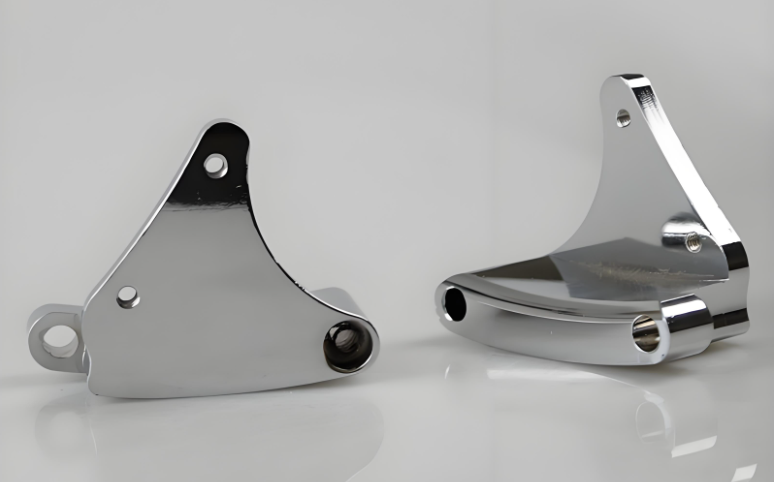
Decorative chrome is a completely different application. The chromium layer is typically only 0.05 to 0.5 microns thick, applied over a nickel undercoat (and often a copper layer before that). The nickel does the heavy lifting for corrosion protection. The thin chrome gives the bright, bluish-white reflective finish people recognize from automotive trim and appliances.
If you want the chrome look, you’re actually specifying a multi-layer system: copper strike (optional), bright nickel, then decorative chrome.
Nickel Plating
Bright nickel produces a reflective, slightly warm silver finish. Electroless nickel (deposited without current, through chemical reaction) gives exceptional uniformity on complex geometries and is popular in aerospace and valve manufacturing.
Typical thickness: 5 to 25 microns for decorative/protective applications. Up to 250+ microns for dimensional buildup.
Watch out for: Nickel is a known allergen. For consumer products with skin contact (jewelry, watch clasps, eyeglass frames), check your regional regulations on nickel release rates.
Zinc Plating
Zinc is the budget workhorse of electroplating. It’s not the hardest, not the most attractive, but it punches above its weight on corrosion protection because of how it works: zinc is electrochemically more active than steel. When the coating is scratched, zinc sacrifices itself to protect the steel underneath.
Most zinc-plated parts also receive a chromate conversion coating after plating. This adds a thin passivation layer that significantly extends salt spray resistance. You’ll see this as the slightly yellow, clear, or rainbow-iridescent appearance on zinc-plated fasteners.
Standard specs: ASTM B633 covers zinc plating for iron and steel. Service condition (SC) classifications range from SC1 (mild indoor) to SC4 (severe outdoor exposure).
Copper Plating
Copper rarely gets used as a final finish because it oxidizes quickly and the surface is soft. But as an intermediate layer, copper is indispensable.
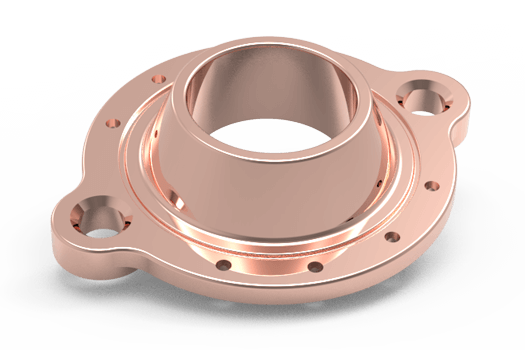
In decorative multi-layer plating, a copper strike is often the first layer applied to improve adhesion and cover substrate defects before nickel and chrome are added. In electronics, copper electroplating builds up the circuit traces on PCBs and fills vias between board layers.
Gold Plating
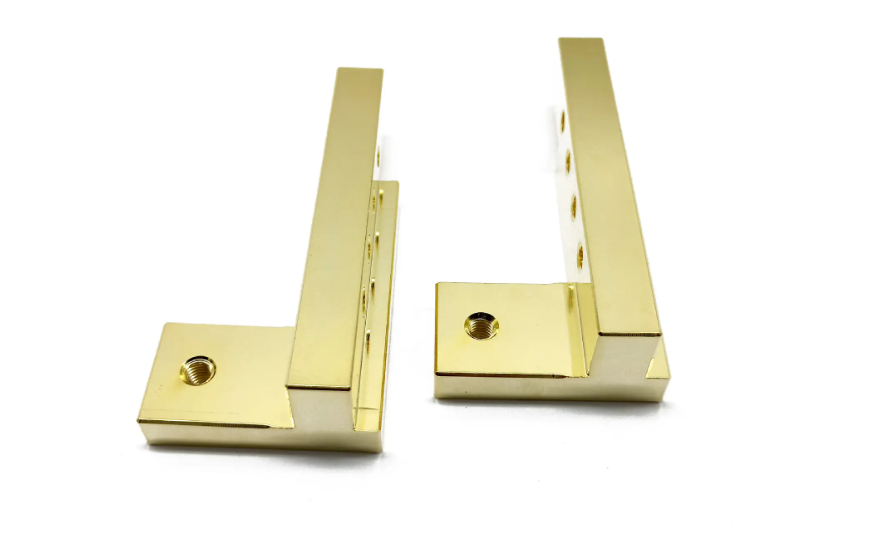
Gold plating is the standard for electrical contact surfaces in precision electronics. Gold doesn’t oxidize, has excellent conductivity, and maintains consistent contact resistance over the life of the connector. In RF connectors, aerospace switches, and medical device contacts, gold is frequently the only finish that meets reliability requirements.
Thickness matters a lot with gold. For wear applications like card-edge connectors, you need at least 0.75 to 1.25 microns. For contacts that rarely cycle, flash gold (0.05 to 0.1 microns) may be sufficient. Specifying the wrong thickness either wastes money or creates field failures.
Rhodium Plating
Rhodium is harder than gold and even more resistant to tarnish. It’s commonly used in jewelry to give white gold and silver pieces a bright, durable surface. In industrial applications, rhodium appears in optical instruments and precision contacts where its extreme hardness and reflectivity justify the cost.
Benefits of Electroplating
Here’s what electroplating actually delivers when it’s done right:
Corrosion protection
Zinc, nickel, and chrome provide barriers that significantly extend part life in corrosive environments. Zinc even protects steel sacrificially.
Wear and hardness
Hard chrome and nickel increase surface hardness and reduce wear. This extends component life and reduces replacement frequency.
Electrical performance
Gold, silver, and copper plating improve conductivity and reduce contact resistance in electrical applications.
Dimensional control
Electroplating can rebuild worn dimensions on machined components. This is cost-effective for repairing expensive tooling or shafts.
Aesthetics
Decorative chrome, bright nickel, and gold give parts the appearance customers expect, whether for consumer products or high-end machinery.
Solderability
Tin and silver platings improve the solderability of electronic components and connectors.
Limitations of Electroplating
Electroplating has real limitations that affect design decisions. Understanding these helps you avoid specifying something that will create problems down the line.
Color inconsistency
An imbalance in the components of the electroplating solution, unstable current and voltage, insufficient or excessive electroplating time can all lead to variations in the color shade.
Thickness uniformity
Complex geometries plate unevenly. Low-current areas (inside holes, deep recesses, re-entrant angles) receive less deposit. High-current areas (outside corners, edges) plate thicker. This matters when you have tight dimensional tolerances.
Substrate limitations
Not every material can be plated directly. Plastics, ceramics, and poorly conductive alloys need pre-treatment or alternative processes.
Environmental compliance
Hexavalent chromium, cadmium, and cyanide-based plating baths face increasing regulatory restrictions in the EU, US, and China. If you’re selling products into regulated markets, verify that your plating chemistry is compliant.
Common Applications by Industry
Electroplating finishes show up everywhere in manufactured products. Here’s where each finish typically lands:
Automotive
Decorative chrome on trim and bumpers; nickel and zinc on underbody fasteners; hard chrome on shock absorber rods and steering components; zinc-nickel on brake calipers and suspension parts.
Electronics & Semiconductor
Gold on connector pins and RF contacts; copper on PCB traces and vias; tin on component leads for solderability; nickel as a diffusion barrier; palladium-nickel on high-cycle connectors.
Aerospace & Defense
Hard chrome on landing gear and hydraulic actuators; cadmium and zinc-nickel on fasteners and structural hardware; gold on avionics contacts and connectors.
Medical Devices
Electroless nickel on surgical instruments for corrosion resistance and sterilization compatibility; gold on implantable device contacts; hard chrome on orthopedic tooling.
Industrial Machinery
Hard chrome on hydraulic rods, pumps, and mold cavities; nickel on valve bodies; zinc on standard fasteners; copper on heat transfer components.
What Affects Electroplating Cost?
Electroplating quotes can vary significantly for what looks like the same job. Here are the five factors that actually drive the price.
1. Materials Selection
The plating metal is usually the biggest cost variable. Zinc and nickel are affordable commodity metals with stable pricing. Gold, rhodium, and palladium trade against live precious metal markets and can shift significantly week to week.
2. Plating Thickness
Thicker deposit means more metal and more time in the bath. For standard metals this is a minor variable. For gold or rhodium, a 0.5-micron difference in specified thickness adds up fast at production volumes.
3. Plating Method
The plating method affects both cost and surface quality. Barrel plating is affordable but parts tumble against each other, resulting in rougher, less uniform surfaces with contact marks. Rack plating fixtures each part individually, producing smoother, more consistent results , but at several times the cost.
4. Part Size
Larger parts require larger tanks, more solution volume, longer processing time, and often custom racking fixtures. Fixture tooling is typically a one-time cost amortized across the production run, but it adds to first-order pricing.
5. Production Volume
Racking, bath preparation, process monitoring, and inspection are largely the same whether you’re running 50 parts or 5,000. At low volumes, those fixed costs dominate the per-part price. At high volumes, they spread out and the unit cost drops substantially.
Electroplating vs. Electroforming
In electroplating, the deposited metal adheres to and remains bonded to the substrate. The substrate is the final part, and the plating enhances its surface.
In electroforming, the deposit IS the final part. Metal is deposited onto a mandrel (often a precisely machined form or even a wax pattern), built up to the required thickness, and then the mandrel is removed. The resulting metal shell is the product.
Electroforming produces parts with exceptional dimensional accuracy and internal surface finish that copies the mandrel exactly. It’s used for waveguide components, optical elements, and precision nozzles where machining can’t achieve the required geometry.
If you need a hollow metal structure with internal surface accuracy better than 0.1 microns, electroforming is often the answer. For anything else, you’re looking at electroplating.
Gavin Leo is a content editor at Aria Manufacturing with hands-on experience in CNC machining, Injection molding, materials selection, and part design. Outside of work, he enjoys hiking and collecting mechanical watches.
Custom Quality Parts By Aria
Send your specs. We’ll get back with a quote in 12 hours.


 EU
EU