Copper Vs Brass Vs Bronze, What is difference and Their use?

Author:

Page Published:

copper bs brass vs bronze

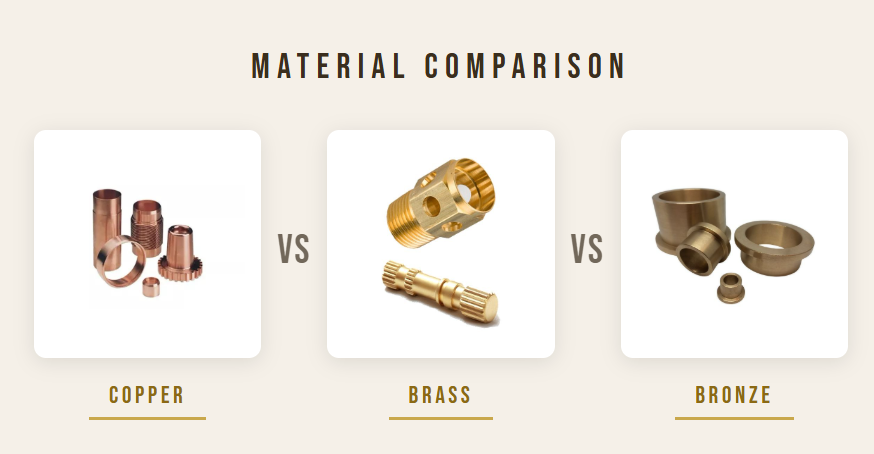
Copper, brass, and bronze:three metals that look similar, share a common base element, and confuse engineers and procurement teams on a daily basis. They are all “red metals,” but their compositions, mechanical behaviors, and ideal use cases are fundamentally different.

This guide breaks down what each material actually is, how they compare across critical engineering properties, and how to pick the right one for your CNC machining project.

What Is Copper?

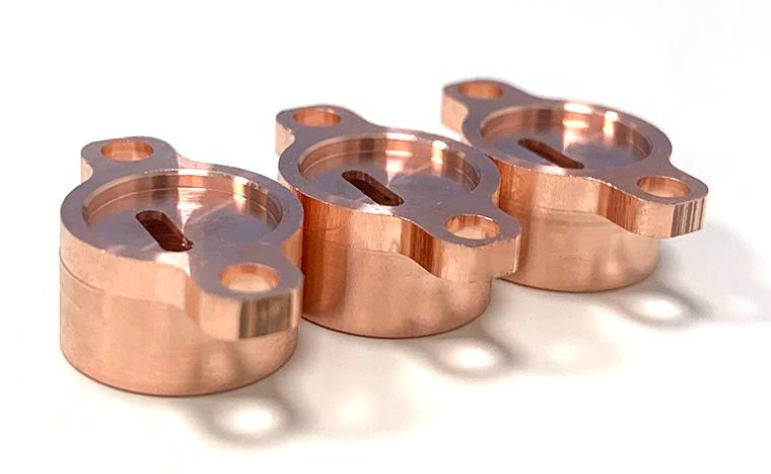
Copper Plating

Copper (Cu) is a pure, naturally occurring element — not an alloy. It is the base metal from which both brass and bronze are derived.

Composition: 99.9%+ copper (with trace amounts of oxygen or phosphorus depending on grade).

Key Properties:

  • Electrical conductivity: 100% IACS (International Annealed Copper Standard) the benchmark all other metals are measured against [1]
  • Thermal conductivity: ~223 BTU/hr-ft²-°F.】
  • Melting point: 1,085°C (1,984°F).
  • Tensile strength: 210–360 MPa (depending on temper).
  • Color: Reddish-orange. Develops a green patina (copper carbonate) over time when exposed to moisture and air — the Statue of Liberty is the most famous example.

Advantages:

  • Highest electrical and thermal conductivity among common engineering metals (second only to silver globally). [1]
  • Excellent corrosion resistance.
  • 100% recyclable without property degradation.
  • Natural antimicrobial properties (EPA-registered).[2]

Disadvantages:

  • Soft and ductile — tends to stick to cutting tools during CNC machining, producing long, stringy chips.
  • Higher cost than brass.
  • Oxidizes over time without protective treatment.

Common Copper Grades for CNC Machining:

#C110 (Electrolytic Tough Pitch, ETP):

101% IACS conductivity. The most widely used copper for electrical applications — wiring, busbars, terminals.

#C101 (Oxygen-Free Copper, OFC):

101% IACS. Used in high-vacuum electronics, semiconductor equipment, and aerospace connectors where oxygen content must be minimized.

Typical Applications:

Electrical wiring, heat sinks, heat exchangers, busbars, plumbing, roofing, and any application where maximum conductivity is the primary requirement.

What Is Brass?

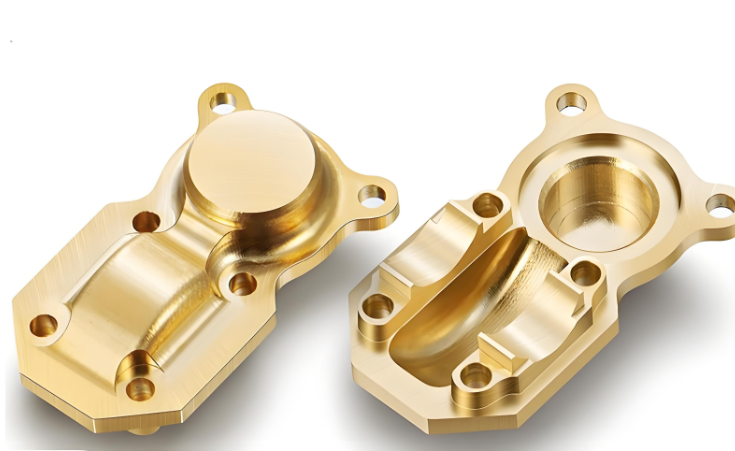
Brass is a copper-zinc alloy. The ratio of copper to zinc determines its color, strength, and machinability. Typical brass contains 55–95% copper and 5–45% zinc.

Key Properties:

  • Electrical conductivity: ~28% IACS — significantly lower than pure copper. [3]
  • Melting point: ~900°C (1,652°F).
  • Tensile strength: 340–470 MPa (varies by alloy).
  • Color: Golden-yellow. Higher zinc content produces a brighter, more yellow tone; higher copper content shifts toward reddish-gold.
  • Not ferromagnetic — easier to separate during recycling.

Advantages:

  • Excellent machinability — C360 Free-Cutting Brass is rated at 100% machinability, the industry benchmark. It produces clean, short chips and allows high-speed machining with minimal tool wear.
  • Good corrosion resistance (though not as strong as bronze in saltwater).
  • Attractive golden appearance — suitable for decorative and architectural applications without additional finishing.
  • Lower cost than bronze for most grades.

Disadvantages:

  • Susceptible to stress cracking, particularly when exposed to ammonia.
  • Susceptible to dezincification in certain corrosive environments (zinc leaches out of the alloy).
  • Electrical conductivity far below pure copper — not suitable for high-performance power transmission.

Common Brass Grades for CNC Machining:

C360 (Free-Cutting Brass):

61% Cu, 35% Zn, 3% Pb. The default choice for high-volume CNC turning — valves, fittings, fasteners, electrical connectors. The lead content acts as an internal lubricant and chip breaker, enabling extremely fast machining speeds.

C260 (Cartridge Brass):

70% Cu, 30% Zn. Excellent ductility and cold-working properties. Used for stamped components, ammunition casings, radiator cores, and hardware. Machinability is significantly lower (~30% of C360) due to absence of lead.

C464 (Naval Brass):

60% Cu, 39.2% Zn, 0.8% Sn. The tin addition provides exceptional resistance to dezincification in seawater. Essential for marine valves, propellers, and heat exchangers.

Note on lead content: C360 contains ~3% lead, which makes it non-compliant for potable water applications under modern regulations (e.g., US Safe Drinking Water Act). For lead-free alternatives, C69300 (ECO BRASS) uses silicon to replicate C360’s machinability without lead.

Typical Applications:

60% Cu, 39.2% Zn, 0.8% Sn. The tin addition provides exceptional resistance to dezincification in seawater. Essential for marine valves, propellers, and heat exchangers.

What Is Bronze?

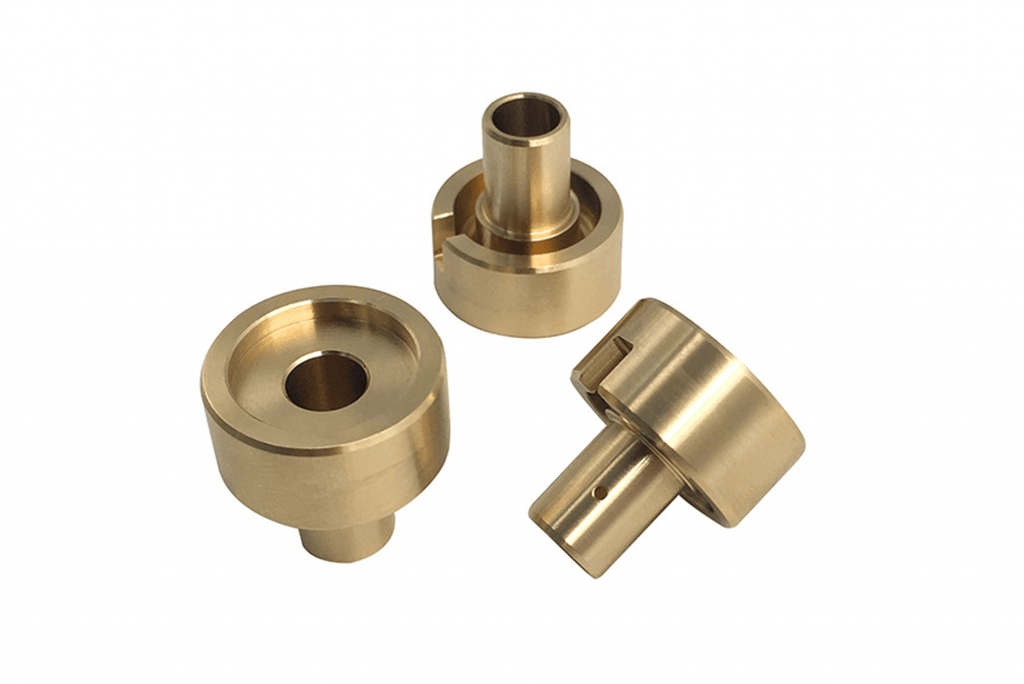
Bronze CNC machining parts

Bronze is a copper-tin alloy, though modern bronze formulations frequently include aluminum, phosphorus, manganese, silicon, or nickel in place of or alongside tin. Bronze is the oldest deliberately created alloy in human history, dating to approximately 3500 BC. [4]

Key Properties:

  • Electrical conductivity: 12–20% IACS — the lowest of the three.
  • Melting point: ~950°C (1,742°F), slightly higher than brass.
  • Tensile strength: 240–740 MPa (varies widely by alloy — aluminum bronze reaches the high end).
  • Hardness: 65–210 Brinell (significantly harder than brass).
  • Color: Reddish-brown. Oxidizes to a distinctive greenish-blue patina over time.

Advantages:

  • Superior strength and hardness compared to both brass and copper.
  • Excellent wear resistance and low friction coefficient — ideal for bearings and bushings.
  • Outstanding corrosion resistance, especially in saltwater environments — significantly better than brass.
  • Good resistance to metal fatigue.

Disadvantages:

  •  Harder and more brittle than brass — CNC machining requires more cutting force, generates higher tool wear, and chip control is more difficult.
  • Higher material cost than brass (due to tin and other alloying elements).
  • Lower machinability means higher per-part machining cost.

Common Bronze Grades for CNC Machining:

C932 (SAE 660, Bearing Bronze):

~83% Cu, 7% Sn, 7% Pb, 3% Zn. The standard bearing bronze — excellent self-lubricating properties due to lead content. Used for bushings, thrust washers, pump impellers, and non-pressure components.

C954 (Aluminum Bronze):

~88% Cu, 10–11% Al, 4% Fe. Superior strength (tensile strength up to 620 MPa) and outstanding seawater corrosion resistance. Used for marine hardware, heavy-duty gears, and landing gear bushings.

C510 (Phosphor Bronze):

~95% Cu, 5% Sn, 0.2% P. Excellent spring properties and fatigue resistance. Used for electrical connectors, springs, bellows, and lock washers.

Typical Applications:

Bearings, bushings, marine fittings, ship propellers, pump components, heavy industrial machinery, bells and cymbals, sculptures.

Brass vs Copper vs Bronze: Property Comparison

Property Copper Brass Bronze
Composition Pure element (Cu) Cu + Zn Cu + Sn (+ Al, P, Si, etc.)
Electrical Conductivity (IACS) 100% ~28% 12–20%
Thermal Conductivity ~223 BTU/hr-ft²-°F ~64 BTU/hr-ft²-°F Varies (up to 229 BTU/hr-ft²-°F for some alloys)
Melting Point 1,085°C ~900°C ~950°C
Tensile Strength 210–360 MPa 340–470 MPa 240–740 MPa
Hardness (Brinell) 35–90 55–150 65–210
CNC Machinability Difficult (sticky, long chips) Excellent (C360 = 100% benchmark) Moderate to difficult (high cutting force)
Corrosion Resistance Good Good (poor in saltwater) Excellent (especially saltwater)
Color Reddish-orange Golden-yellow Reddish-brown
Relative Cost Medium-high Lowest Highest

A note on conductivity data: Electrical conductivity ratings use the IACS standard established by the International Electrotechnical Commission, where annealed copper = 100%. Due to modern refining improvements, commercially pure copper now tests at 101% IACS. The small percentages of alloying elements in brass and bronze degrade conductivity far more than their compositional percentage would suggest — a key point that catches many engineers off guard. [1]

How to Tell Copper, Brass, and Bronze Apart

In a CNC shop or warehouse, identifying unmarked stock matters. Here are practical identification methods, ranked by reliability:

1. Color (quick but not definitive)

Copper has a distinct reddish-orange surface. Brass is yellow-gold. Bronze is reddish-brown, often darker than copper. However, oxidation and surface treatment can make color unreliable on aged or processed stock.

2. Magnet Test

None of the three are magnetic. However, some bronze alloys containing iron may exhibit weak magnetic attraction — if a “copper-looking” metal sticks weakly to a magnet, it is likely a bronze alloy, not pure copper.

3. Weight / Density

Bronze is generally denser than brass. Two identically sized pieces: the heavier one is more likely bronze.

5. XRF Analysis (definitive)

Handheld X-ray Fluorescence (XRF) analyzers determine the exact chemical composition in seconds. This is the only method that gives you a definitive alloy identification and grade classification. Critical for high-value or safety-critical parts.

Surface Finishing & Processing for CNC Parts

All three metals accept a wide range of surface treatments. The right finish depends on functional requirements and operating environment.

As-Machined

Brass (especially C360) often delivers a visually clean surface directly off the CNC machine, with surface roughness as low as Ra 8–16 µin with optimized parameters. Copper and bronze typically require secondary finishing for cosmetic applications.

Polishing

Mechanical polishing removes machining marks and produces a mirror-like surface. Multi-stage polishing on brass can reduce surface roughness from Ra 32 to Ra 8. Commonly used for decorative components, valve bodies, and architectural hardware.

Electroplating

A thin layer of another metal (nickel, chrome, tin, gold) is deposited onto the surface via electrolytic process. Nickel plating provides a silvery finish and improved hardness. Chrome plating adds a highly reflective, wear-resistant surface. Tin plating is common for electrical components to improve solderability.

Passivation / Clear Coating

Copper and bronze oxidize over time. A clear lacquer or passivation treatment prevents tarnishing while preserving the natural metal color. Essential for exposed architectural components.

Powder Coating

A dry powder is electrostatically applied and heat-cured to form a durable protective layer. Improves corrosion and wear resistance. Suitable for brass and bronze parts in outdoor or high-wear environments.

Sandblasting / Bead Blasting

Creates a uniform matte texture. Used to remove surface imperfections, prepare surfaces for secondary coatings, or achieve a non-reflective aesthetic finish.

How to Choose the Right Material for Your Project

Material selection starts with your application requirements, not personal preference. Use this decision framework:

Choose Copper when:

Electrical or thermal conductivity is the primary performance requirement.

Your application involves power transmission, heat sinks, heat exchangers, or electrical contacts.

You need antimicrobial properties (medical, food processing).

Choose Brass when:

You need excellent machinability and are producing high-volume CNC parts (valves, fittings, connectors).
Cost efficiency matters — brass is the most affordable of the three and generates the lowest per-part machining cost.
The part serves a decorative or architectural function.
The operating environment does not involve prolonged saltwater exposure.

Choose Bronze when:

The part operates under high load, friction, or sliding contact (bearings, bushings, gears).

Saltwater or marine corrosion resistance is required.

You need maximum wear resistance and fatigue life.
Strength and durability outweigh machinability and cost concerns.

Which Is Better: Brass or Copper?

Neither is universally better — they solve different problems. Copper wins on conductivity (100% vs 28% IACS). Brass wins on machinability, cost, and mechanical strength. For electrical wiring, copper is non-negotiable. For a CNC-machined valve body, brass is the clear choice.

What's More Expensive: Copper or Brass?

Pure copper typically costs more per pound than brass. In the scrap metal market, clean copper wire commands $2.40–$3.70/lb, while yellow brass ranges from $1.25–$2.20/lb. However, brass’s superior machinability means lower CNC machining costs per part, which can offset material price differences in production runs.

Does Brass Rust?

No. Brass does not contain iron, so it cannot rust (iron oxide formation). It can tarnish — developing a dull, darker surface layer over time — and it can undergo dezincification in corrosive environments, but this is not rust.

What Two Metals Should Not Be Used Together?

Metals with widely different positions on the galvanic series should not be in direct contact in the presence of an electrolyte (moisture). Copper alloys paired with aluminum or zinc in a wet environment will cause galvanic corrosion, where the more anodic metal (aluminum/zinc) corrodes preferentially. When assembling multi-metal systems, use insulating gaskets or compatible alloys.

Sustainability & Recycling

Copper, brass, and bronze are all fully recyclable without loss of mechanical or chemical properties. This is a critical differentiator from many engineering plastics and composites.

According to the U.S. Geological Survey, recycled scrap accounts for up to 60% of copper feedstock for U.S. copper and brass mills (excluding wire rod). Research from MIT, cited by the World Resources Institute, projects that with improved recycling technologies, approximately two-thirds of end-of-life copper scrap could be recovered and recycled by 2040.

Brass is non-ferromagnetic, which simplifies automated sorting in recycling facilities. Bronze, with its higher copper content (80–95%), commands a slightly higher scrap value than standard yellow brass.

From a CNC machining perspective, all chips and turnings from copper, brass, and bronze operations are commercially recyclable. Proper shop-floor separation — keeping copper chips separate from brass and bronze — maximizes scrap value and prevents downgrades during recycling.

Get a Quote for Copper, Brass, or Bronze CNC Machining

We machine all three materials — copper (C110, C101), brass (C360, C260, C464), and bronze (C932, C954, C510) — with full surface finishing capabilities including polishing, electroplating, passivation, powder coating, and bead blasting.

Whether you need a single prototype or a production run of 10,000+ parts, [contact us for a free quote](/contact) and let our engineering team help you select the right material and finish for your project.

References

[1] International Electrotechnical Commission. IEC 60028. webstore.iec.ch

[2] U.S. Environmental Protection Agency. Antimicrobial Copper Alloy Products. epa.gov

[3] Copper Development Association. Electrical and Thermal Conductivity. copper.org

[4] Wikipedia contributors. Bronze Age. en.wikipedia.org

[5] Copper Development Association / USGS. Copper: The World's Most Reusable Resource. copper.org

Share This Post

We are a CNC Machining, Injection Molding, Sheet Metal Fabrication and 3D Printing Manufacturers...

Scroll to Top