
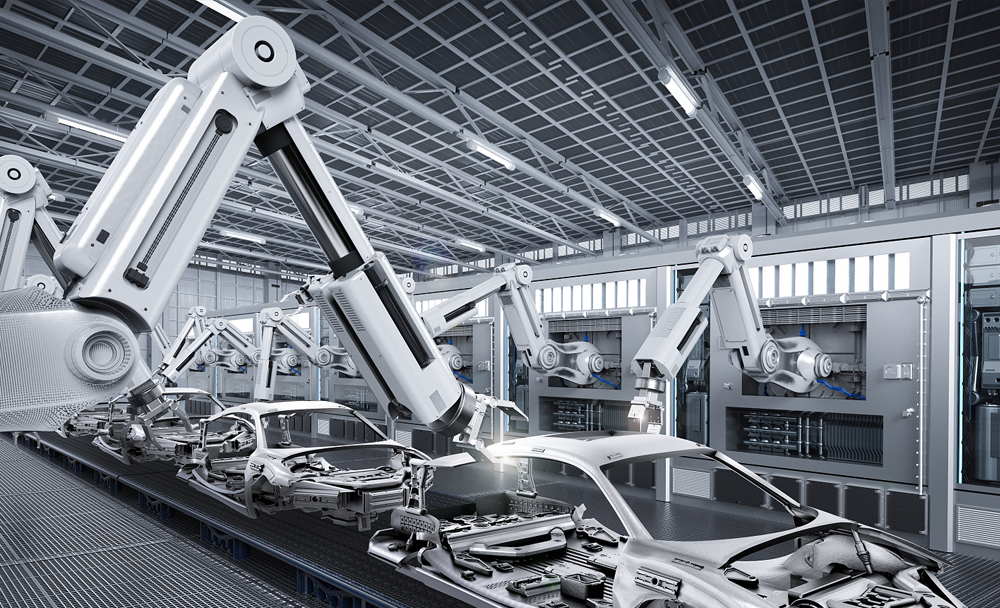
Automotive CNC Machining Explained

CNC Machining Applications in Auto

From the first hand-made engines to the current computer-operated factories, automotive manufacturing has continued to progress with superior tools. With increasingly sophisticated vehicles and stricter tolerances, CNC automotive machining became a necessity, and it provided the manufacturers with the accuracy, reliability, and speed of cars today.

Key Takeaways

1. The core characteristics of CNC machining are high precision, high flexibility, and high repeatability.

2. The application process of automotive CNC machining is divided into two main stages: Prototyping and mass production.

3. The application scenarios of automotive CNC machining is covering core vehicle components and custom modification parts

What is CNC Machining?

Computer numerical control machining or CNC machining is a technology employed in the automotive industry in which software controls the cutting/processing/completion of components. The automotive CNC machining requirement for high accuracy is critical in that any deviation in accuracy may affect performance, safety, or fit.

The type of operations that these machines are known to handle include:

  • Machining and roughing of complex parts.

  • Tapping, drilling, reaming precise holes and threads.

  • Produce high-quality finishes

  • Processing both metal and plastic materials together.

Due to its high precision, flexibility, and repeatability, it is only natural that CNC machining is a central component of the automotive industry.

Custom Quality Parts By Aria

Why Choose CNC Machining for the Automotive Industry?

The automotive sector has never had a stagnant period, but the demands that come with manufacturers today are on a whole new level altogether. The vehicles are more complex, the time for manufacturing is shorter, and the tolerance for defects is minimal. This is where the role of CNC machining comes into play. It offers car manufacturers an opportunity to produce complex and high-performance components quickly and confidently.

High Precision

Precision is linked in direct correlation to vehicle performance and its ability in the automotive industry CNC machining world. These parts, for example, engine blocks, cylinder heads, and suspension components, have to fit together perfectly in order to deal with stress, temperature, and loads. CNC machines follow digital paths accurately, ensuring that every dimension is perfect. The result is reduced maintenance, increased production, and a vehicle that performs exactly as intended. 

Production Efficiency

When a CNC program is dialed in, production becomes predictable, thereby being stress-free. Machines can run for long hours with low maintenance, hence remain stable even during high demand. For automotive manufacturers, this translates to fewer delays, shorter turnaround time, and manufacturing of cars within a tight schedule while maintaining high quality. 

Flexibility

Modern cars are made from an extensive material range. The CNC machines work with aluminum, steel, specialty plastics, and metal CNC machining with equal accuracy. It is flexible to allow manufacturers to produce structural frames down to detailed housings and functional parts in the same process.

Cost Savings

CNC machining assists in conserving funds in realistic, quantifiable directions. Accuracy in cuts results in savings of advanced materials, automation reduces labor costs, and fewer mistakes result in reduced re-work. Over time, this allows manufacturers to optimize machining processes and maintain profitability while still meeting strict quality standards.

Consistency

Consistency is also paramount when it comes to manufacturing car components on a mass scale. CNC machining will ensure that all components are similar to the original one, individual as well as one in a thousand. This will ensure that assembly lines keep running without hiccups when it comes to fitting components.

Customization Capabilities

Designs are part of the innovations that occur in the development of cars. CNC machining allows for easy redesign and customization of the part by simply modifying computer programs rather than redesigning machining tools.

Automation

Every process is interlocked by automation. CNC makes error-simplification easy, increases safety, and allows the manufacturing process to be performed around the clock. This consistency is a principal reason for the automotive parts CNC machining services market reaching USD 8,009 million in 2025 and further expanding at a CAGR of 4.1 percent by 2033; most of this is attributed to the demand for electric vehicles, which demand highly accurate battery and motor parts.

Difference between High Precision and consistency

Precision: Focuses on the accuracy of the dimensions and parameters of individual parts, ensuring they meet design standards and avoiding deviations.
Consistency: Emphasis is placed on ensuring that all parts produced in batches have highly uniform dimensions and parameters, maintaining consistency with the original design.

How to Use CNC Automotive Machining for Parts Manufacturing

The manufacturing process of automotive parts already gives CNC machining a natural fit. Not only is it a production tool, but it is also a problem-solving process that facilitates creativity, testing and scale. From its initial idea to its final form of production, CNC machining provides teams with a sure method of progressing without any guesses or expensive shocks.

Prototyping

Prototyping is the first stage of design which can establish whether an idea is practical in practice. Under CNC machining, and prototypes are created using actual materials including real materials and to real tolerances, the feedback is much more meaningful. Engineers can machine complex shapes, precise interfaces and critical features using techniques such as CNC milling to exactly the same appearance as they would in the final part.

The step enables the teams to pace the right way down and important questions to be asked. Does the part fit as expected? Is it heat and load and vibration-capable? Are there difficult or expensive to machine features? CNC prototypes would assist in answering them at the initial stages when modification would be easy and cheap.

The other key advantage is speed. By using a digital design, engineers are able to modify and remit the new file to the machine and get another version in no time. This rapid design-test-refine cycle can be used to assure teams that before they commit to production they have confidence in the team. 

Mass Production

CNC machining can easily be transferred to mass production once a design is completed. The machining programs developed in the prototyping phase are optimized to enhance the cycle time, tool efficiency and consistency. Out of there, the production is a predictable and controlled process.

CNC machining can be used in a production environment to enable:

  • Extended production cycles under little control.

  • Uniform dimensions and finishes of surfaces of thousands of parts.

  • Consistent interconnectivity with automated assembly lines.

Since all components are based on the same electronic code, the quality of the component will be consistent throughout production. This consistency minimizes the rework, assembly problems and assists the manufacturers to be certain of meeting the delivery schedules. It is this flexibility and reliability that has made CNC machining a so-trusted method of making automotive parts.

Applications of CNC Machining in Automotive Manufacturing

CNC machining was not an arrival. It gradually infiltrated factories since it addressed actual issues. It removed guesswork. It reduced rework. It allowed creating vehicles, which will behave in the same manner today, tomorrow, or years later. It is that silent shift that ultimately revolutionized automotive manufacturing.

Fundamentally, CNC machining has to do with control. Through the computer numerical control, the machines repeat the instructions with unparalleled precision. That uniformity brought a new shape to the whole manufacturing process, particularly when it comes to an industry in which millions of parts have to be made to fit together without melodrama.

Engine Components

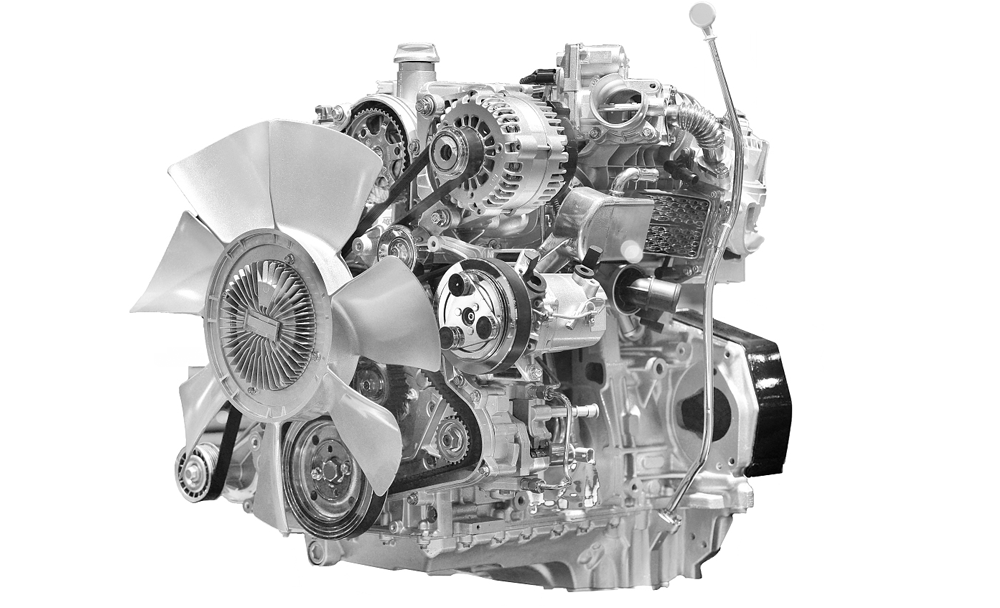
Mistakes prove costly in the engine. Engine components are exposed to extreme temperature and pressure as well as motion. When something is out even to the slightest, the performance decreases or the failure occurs.

CNC machining allows manufacturers to cut and shape metal so parts match exact specifications again and again. The fact that it is not cosmetic. It influences airflow, combustion and overall fuel efficiency. With exceptional precision machining, the surfaces are smoother, the edges are cleaner and the dimensions are dependable.

A lot of engine components are complex parts that have internal fissures, oil flows, and rounded surfaces. These concealed structures create complex geometries that cannot be made in a consistent manner by hand. Engines become inefficient when there is a drift in tolerance. Under conditions of remaining within tight tolerances, vehicle performance stays predictable and strong.

CNC Machining Auto parts

Transmission Components

The transmission is silent, yet it has to do much heavy work. Each of the gears changes is a process that requires parts to work together with load. Gears, shafts, and clutch components are produced through CNC machining and should be able to act in unison.

Here, consistency is what counts. Well-managed machining processes guarantee clean surfaces and even wear over a period of time. That minimizes noise, vibration and untimely breakdown.

Due to the connection of many vehicle systems by the transmission, minor errors can lead to enormous effects. CNC machining prevents that and ensures that all the parts are aligned and balanced at the beginning.

Suspension and Steering Parts

Suspension components, steering components, etc. can withstand all such daily tortures. How? They can absorb all such while maintaining stability.

The CNC machining process ensures that the mounting points are not only dimensionally correct but also strong. The mounting points that are misaligned could result in difficulties when handling the system. It becomes smooth as a result of the correct points.

This is more important because components of suspension are also safety components. Car drivers might never be aware of such components but they feel the difference every time they turn their steering wheels.

Brake System Parts

Braking systems do not have any second chances. CNC machining is utilized to make mounts, brackets, and brake calipers that are expected to react immediately when they come under pressure.

Accuracy in this instance is not a matter of comfort. It is a matter of trust. The pieces have to work in unity in order to allow equal braking force. CNC machining offers this uniformity in this step, as a result of which the braking parts are able to function while on the road and in emergency situations.

This is precisely what the braking power is dependent on.

Chassis and Body Components

The chassis keeps everything else in place. If one thing is not in line, then neither is the body. The CNC machining services create brackets, supports, and mounting points that keep structures aligned during automotive production.

The exterior features also get a boost. For instance, when it comes to body panels, they end up being cleaner, more consistent, and easy to assemble.

Good match in the above also contributes to the suppression of noise as well as vibrations in the latter, which can affect the stiffness of transmission as well.

Custom Modified Parts

Customization was an expensive and slow process. With the advent of the CNC, all that changed. Today, auto parts can be fabricated even when there is no need to modify the entire process.

The flexibility and resulting digital modifications enhance the ability to manage manufacturing costs. It also provides automotive designers with the flexibility needed to improvise or perfect and design the vehicles within the context of large tooling modifications.

It is in this combination of creativity and control that one of the major strong points of CNC machining lies.

Body and Interior

Inside the vehicle, CNC machining supports consistent quality you can feel. Supports, frames, and housings are created with a close fit, featuring smooth edges.

Such elements might not be visible all of the time, but they affect the closing of solid doors, the positions of dashes, or aging processes in vehicle interiors. Small discrepancies add up. CNC machining can avoid that.

Behind all of this are skilled CNC operators, machines with automated tool changers, and growing use of machine learning to improve consistency and efficiency. Together, they reduce waste and support sustainable manufacturing practices, without sacrificing quality or reliability.

Why Choose Aria For Your CNC Machining Automotive Project

In 2025, the best industrial robots in the world are more than just fast machines. These robots are able to adapt, learn, and respond to what is happening in real-time, causing manufacturing plants to function in ways that are more accurate and efficient than ever. This creates an impact on CNC auto parts manufacturing.

Aria is founded on this more intelligent way of production. Online CNC machining shop for customized metal and plastic parts – quotes in minutes, shipment in days. Whether it’s 3 axis, 4 axis, or 5 axis CNC machining with advanced multi-axis capabilities, we provide on-demand CNC machining services for prototyping to large production quantities with tight tolerances of ±.0004 inches or 0.01 mm to get your parts just as you ordered.

Custom Quality Parts By Aria

casibom casibom
滚动至顶部