CNC Engraving:Advantages, Tools, and Applications

CNC Engraving

Share:

Table of Content

Table of Content

CNC engraving is used in manufacturing, signage, jewelry, and industrial part marking. In this guide, I cover how the process works, the main machine types, tools, compatible materials, and what to watch for when setting up a job.

What Is CNC Engraving?

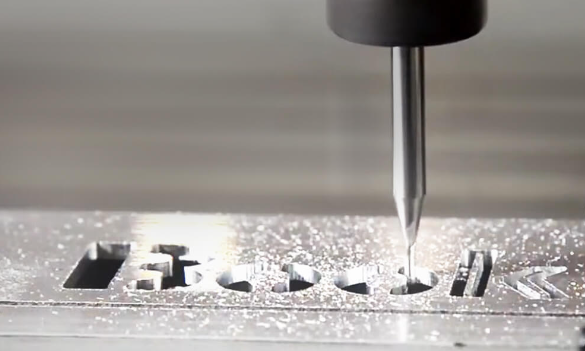
CNC engraving is a subtractive process in which a computer-controlled machine removes material from a workpiece surface to produce text, patterns, logos, or functional markings. The machine follows G-code instructions generated from a CAD/CAM workflow, which means the output is repeatable and does not depend on operator skill during the cutting stage.

It differs from etching in one fundamental way: engraving is mechanical, producing tactile depth by cutting; etching is chemical, removing material through corrosion. The distinction matters for applications where surface integrity or depth control is a specification requirement.

CNC engraving

Advantages of CNC Engraving

CNC engraving offers several practical advantages over manual or pantograph-based methods:

  • Industrial-grade machines hold tolerances as tight as 0.00005 inches. Desktop units routinely achieve 0.001-inch accuracy, which is sufficient for most text and logo work.
  • Once a program is set, every part comes out identical. This is critical in batch production where consistency is a requirement.
  • CNC spindles run at up to 20,000 RPM. Combined with optimized tool paths, cycle times are significantly shorter than manual engraving at comparable quality.
  • Material compatibility.The same machine can process metal, plastic, wood, and composites by changing tools and adjusting parameters.
  • Low direct labor.The machine runs the program. The operator’s role shifts to setup, monitoring, and inspection rather than continuous manual input.
  • Design flexibility.Any geometry that can be drawn in CAD can be engraved, including 3D relief work not feasible by hand at production volumes.

CNC Engraving Machine Types

Desktop CNC Engravers

Compact units for low-volume work, typically with a small spindle or laser. Used for nameplates, signs, and custom jewelry. Work area is usually under 400 × 400 mm.

CNC Milling Machines

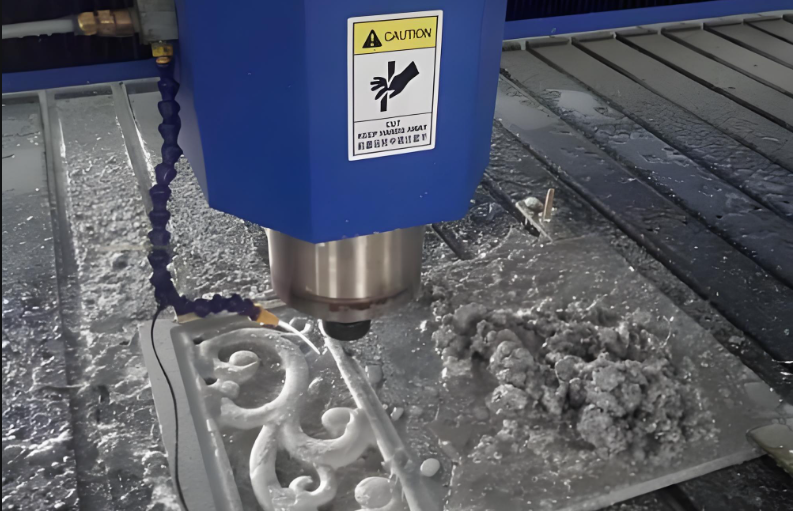
Rigid multi-axis machines that handle deep metal engraving, 3D relief, and mold textures. In contract manufacturing, the same machine that mills a part can engrave it in the same setup.

CNC Routers

Large-bed machines for wood, acrylic, foam, and soft plastics. Common in sign shops and furniture work. Not rigid enough for hard metals.

Laser Engravers

Non-contact systems using a focused beam to vaporize or discolor the surface. Suited for glass, leather, and anodized aluminum. Fast on shallow markings, limited on depth.

CNC Diamond Drag Engraving

CNC Engraving Tools

Tool selection determines line quality, achievable depth, and which materials can be processed.

V-Bit (V-Groove Cutter)

The most common engraving tool. Tip angle typically ranges from 30° to 90°. A narrower angle produces finer lines; a wider angle produces broader cuts with a beveled profile. V-bits are used for text, logos, decorative V-carving, and line art.

Ball-Nose End Mill

The hemispherical tip allows smooth transitions in 3D surface work. Ball-nose mills are the standard for relief carving and mold texture engraving.

Flat End Mill (Square End Mill)

Flat-bottomed cutting tool used where a square-profile channel is needed. In engraving, flat end mills are used to clear the floor of a V-carved pocket or to produce channel lettering with flat bases. Not suited for fine detail work due to the square corner geometry.

Diamond Drag Bit

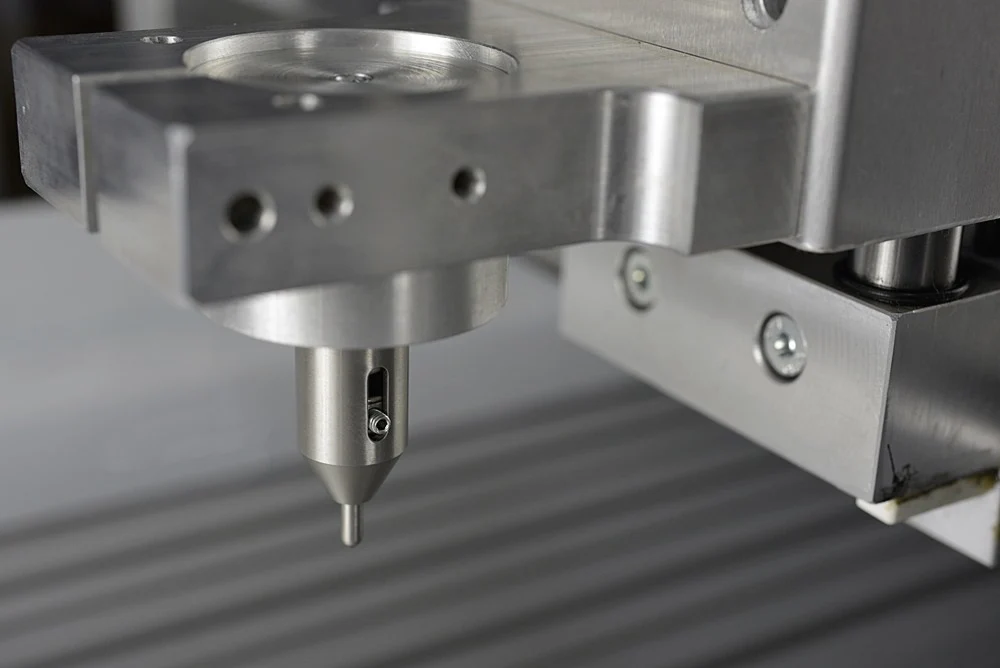
A non-rotating tool with a diamond tip on a spring-loaded shank. The tip is dragged across the surface under controlled pressure, displacing material rather than cutting it. The result is a bright, polished scratch mark. Commonly used for serial numbers, barcodes, and trophy engraving. Because the tool does not rotate, there is no spindle speed to set. It works on most metals and glass but is not suitable for soft materials that deform under the tip.

Straight Engraving Bit

Single-flute or double-flute bits for linear engraving on plastics and soft metals. Single-flute geometry improves chip evacuation, which is important on acrylic and PVC that can melt and re-weld if chips accumulate. Double-flute geometry provides better cutting balance on softer metals.

Tapered Ball-Nose Bit

A tapered body with a ball-nose tip. The taper adds rigidity while the rounded tip handles fine 3D detail in deep or narrow cavities where a standard ball-nose mill would deflect. Used in jewelry, fine art engraving, and precision mold work.

Compatible Materials

Metals

Aluminum, brass, copper, stainless steel, and titanium are all machinable. Aluminum and brass engrave easily at high speeds with standard carbide tooling. Stainless steel and titanium require slower feed rates and heat management.

Plastics

ABS, acrylic, polycarbonate, Delrin, and PEEK are common. They machine quickly but are prone to burr formation and heat-induced softening if spindle speeds are not matched to the material.

Wood

Compatible with both rotary and laser engraving. Wood is anisotropic: cutting across the grain produces cleaner edges than cutting along it. It is the lowest-cost material for entry-level CNC engraving work.

Glass and Ceramics

Brittle materials that require controlled cutting forces. Laser engraving is generally preferred for glass. Mechanical engraving requires diamond drag or diamond-coated rotary tools.

Composites

Carbon fiber, G10/FR4, and fiberglass laminates are abrasive and will wear standard carbide tooling quickly. Diamond-coated tools are required to maintain acceptable tool life.

Applications

CNC engraving is used across a range of industries:

  • Industrial part marking: serial numbers, part numbers, barcodes, and compliance marks such as UDI on medical components.
  • Mold and die work: texture engraving on injection mold cavities to produce specific surface finishes on molded parts.
  • Signage and awards: nameplates, plaques, directional signs, and trophies.
  • Jewelry and watchmaking: decorative engraving on precious metals and watch cases.
  • Electronics: panel labeling and enclosure marking.
  • Aerospace and defense: permanent identification on components where adhesive labels are not permitted.

Best Practices

Match parameters to the material.

Generic speed and feed settings are the most common cause of poor results. The correct setting produces clean chips—not dust (too slow) and not tool deflection (too fast).

Split deep cuts into multiple passes.

2–3 lighter passes outperform a single deep one. Reserve the last pass as a light finishing cut.

Pick the right stepover.

 For ball-nose 3D work, use 5–10% of tool diameter on visible surfaces and 15–20% on surfaces that will be polished or coated.

Default to climb milling.

 It produces a cleaner surface and fewer burrs in most engraving jobs, unless the machine has significant backlash.

Design with the tool in mind.

Use sans-serif fonts. Keep minimum line widths above 1.5× the tool tip diameter. Avoid internal corners smaller than the tool radius.

Solve chip evacuation up front.

Compressed air on metals, single-flute tools on plastics, dust extraction on wood.

Minimize tool stickout.

The highest-impact change for surface quality. Pair with a runout check—replace the collet if runout exceeds 0.01 mm.

Always run a test cut.

 Five minutes on an offcut prevents an hour of rework. Use the same material and same program.

Written By
CNC milled aluminum precision part with complex geometry and multiple machining features

Custom Quality Parts By Aria

Send your specs. We’ll get back with a quote in 12 hours.

Scroll to Top