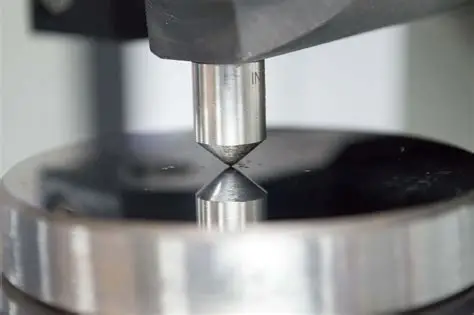
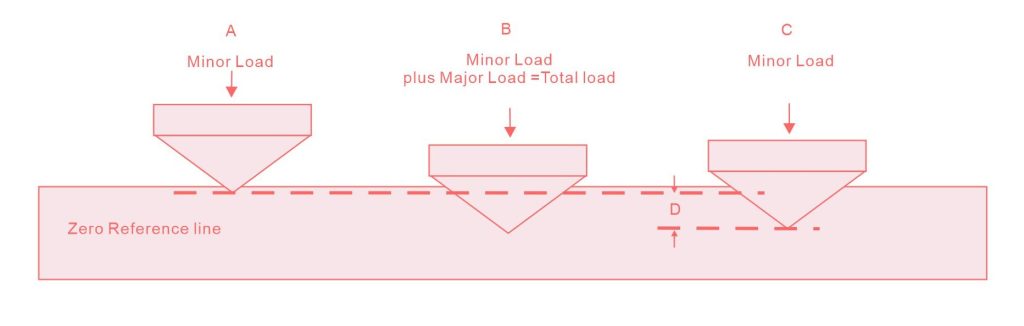
By definition, it is any material’s ability to resist deformation, indentation or scratches. Here, deformation means permanent deformation, also known as plastic deformation. A material does not return back to its original shape in plastic deformation when a force is applied.
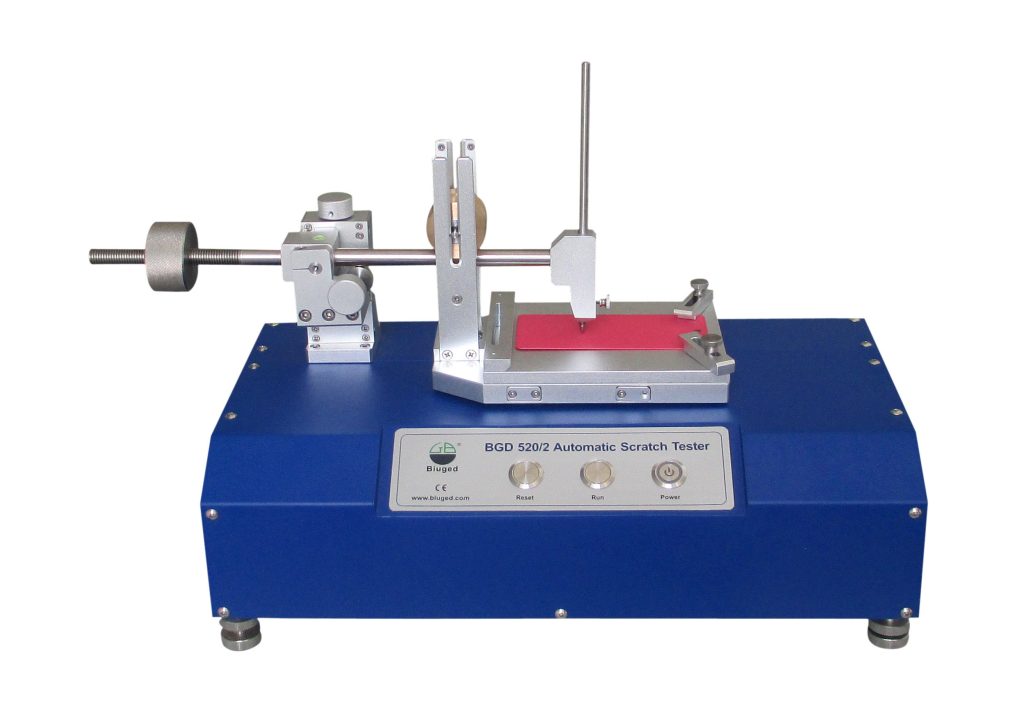
You can also refer to it as hardness value of a material. Also, measuring each type of hardness, i.e, scratch, rebound and indentation requires different set of tools.
Hardness is essential for the structure of the material because it impacts wear resistance, durability and performance. Hard materials have a range of materials including diamond, quartz or concrete. Materials can be naturally hard, like tungsten which is used in tool steels.
For instance, hardened steel components in machining and tooling maintain their shape and effectiveness longer than softer materials like polymers, colloids or surfactants.
Or, they can be soft metals. Like pure gold, you can bend or scratch it easily. However, surface hardening can be improved by adding silver or copper to create an alloy. Mixing soft metals together improves their hardness value.
You can also improve hardness value with heat, which works with thermosets. harden cnc metal materials. To enhance material hardness and wear resistance, the metal part is heated in processes like carburising, nitriding, carbonitriding, induction hardening.
In today’s age, modern digital networks offer carburising solutions that integrate real-time hardness data for better process optimization.
Hardness and wear resistance are key considerations in selecting materials for tools, machine parts, and protective coatings.


 EU
EU