
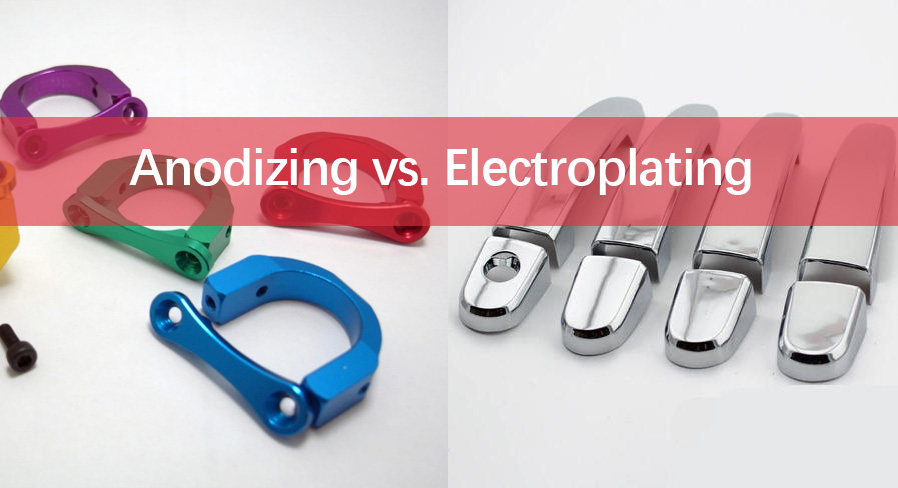

Anodizing vs Electroplating: What’s the Difference and How to Choose

Anodizing vs Electroplating

Both anodizing and electroplating are electrochemical surface finishing processes,they both use an electric current, an electrolyte bath, and improve a metal’s corrosion resistance, durability, and appearance. That’s where the similarity ends.

Anodizing is an electrochemical conversion process that grows a protective oxide layer from the metal surface itself (typically aluminum), while electroplating is an additive process that deposits a different metal (such as nickel, chrome, or gold) onto the substrate. The key difference: anodizing converts the surface; electroplating coats it. One grows from within. The other builds from outside.

That single distinction drives every practical difference between them — in hardness, adhesion, dimensional impact, material compatibility, cost, and application.

Here’s the complete side-by-side:

Property Anodizing Electroplating
Process type Conversion coating — grows from base metal Deposition coating — adds foreign metal layer
Electrode role Part = Anode (+) Part = Cathode (−)
Compatible materials Aluminum, titanium, magnesium (non-ferrous only) Most metals, plastics (with prep)
Coating origin Converted from base metal (Al₂O₃) Deposited metal (Ni, Cr, Zn, Au, etc.)
Typical thickness Type II: 5–25 μm / Type III: 25–100 μm 1–50 μm (up to 250 μm for some)
Hardness Type III: 60–70 HRC (comparable to tool steel) Varies; hard chrome: ~70 HRC
Adhesion Metallurgical bond — cannot peel Physical bond — can delaminate if poorly prepped
Dimensional change ~50% inward / 50% outward 100% outward buildup
Electrical conductivity Insulating Conductive
Color options Wide range via dye (Type II); limited for Type III Limited to metallic color of plating metal
Environmental impact Lower — no heavy metals Higher — heavy metals, strict waste handling
Relative cost Lower for aluminum, especially at volume Higher; precious metal plating significantly more
Can steel be treated? No Yes
Peeling risk None — integral to base metal Possible if surface prep is poor
← drag to scroll →

The Key Differences Bewteen Anodizing and Electroplating

Before we go deeper into each process, let me walk through the differences that matter most in practice.

1. How the coating is formed

This is the most important distinction. In anodizing, the aluminum surface is converted — aluminum atoms at the surface react with oxygen to form aluminum oxide (Al₂O₃). The coating doesn’t sit on top of the metal; it is the metal, transformed. Because roughly 50% of the oxide layer penetrates into the surface and 50% grows outward, there is no interface where the coating can lift or peel.

In electroplating, metal ions from the anode dissolve into the electrolyte and deposit onto the part (cathode). The coating is a physically bonded layer of a different material entirely. This works extremely well with proper surface preparation — but if that prep is inadequate, or if the coating is scratched through, delamination and corrosion can follow.

2. Hardness and wear resistance

Type III hard anodizing produces a surface hardness of 60–70 HRC (350–500 HV) — comparable to case-hardened steel. Wear resistance can be up to 100 times better than untreated aluminum under Taber Abrasion testing. Hard chrome electroplating reaches similar hardness (~70 HRC), but the adhesion mechanism is fundamentally different, and hexavalent chromium (Cr(VI)) use is increasingly restricted under RoHS and REACH regulations.

3. Dimensional precision

For engineers working with tight tolerances, this difference is critical. Anodizing follows the 50/50 rule: half the coating thickness penetrates inward, half builds outward. A 25 μm anodized coating adds approximately 12.5 μm to each surface dimension — predictable and consistent.1 Electroplating adds 100% outward, which simplifies the calculation but means more total dimensional impact for the same coating thickness.

4. Electrical conductivity

Anodized coatings are electrically insulating — Type III hard anodizing provides breakdown voltage resistance up to 2000V. This makes it ideal for electronics housings requiring EMI shielding separation or thermal management. Electroplating produces conductive coatings — essential for electrical connectors, battery contacts, and RF components where gold or silver plating is specified for signal integrity.

5. Material compatibility

Anodizing works only on non-ferrous metals that form stable oxide layers — primarily aluminum, titanium, and magnesium. You cannot anodize steel. Electroplating is far more versatile: steel, copper, brass, zinc die castings, and even plastics (with conductive pre-treatment) can be electroplated.

6. Environmental footprint

Anodizing is the more environmentally favorable process. The electrolyte is typically sulfuric acid, and wastewater is relatively straightforward to treat. Electroplating with chrome, cadmium, or cyanide-based baths requires significantly more rigorous waste handling, and hexavalent chromium is subject to EU RoHS restrictions.

Bottom line:

For aluminum parts — especially where hardness, wear resistance, and dimensional stability matter — anodizing is almost always the right answer. For steel, brass, plastics, or applications requiring conductivity and reflective metallic finishes, electroplating is your process
What Is Anodizing?

I’ve worked with anodized parts for years, and the thing that still impresses me most about this process is how elegant it is. You’re not adding anything foreign to the metal. You’re transforming what’s already there.

How It Works

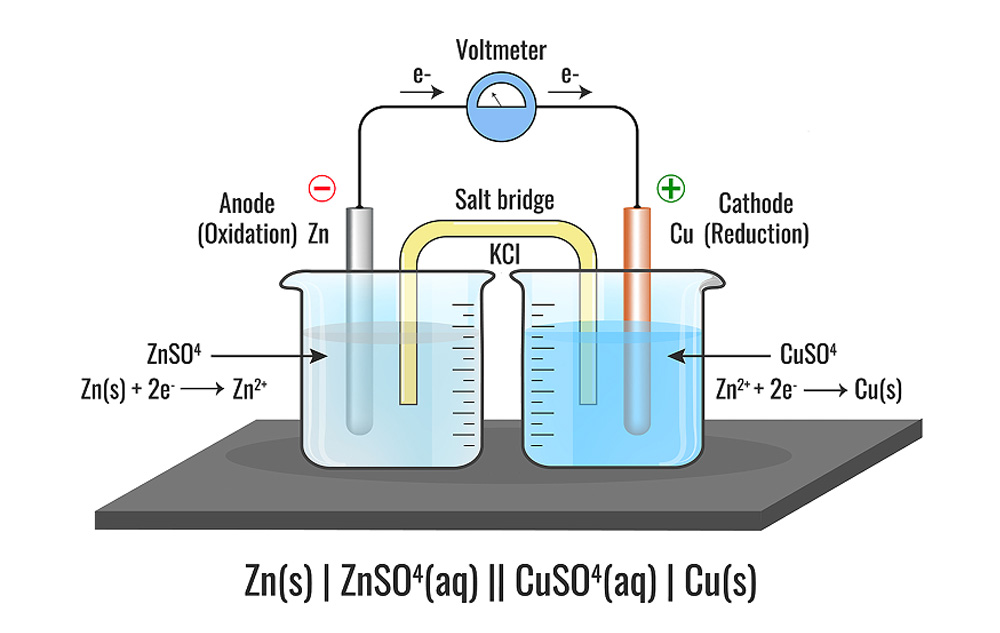
Diagram illustrating the anodizing electrochemical process with anode, cathode, and electrolyte bath

Anodizing is an electrochemical process in which the metal part serves as the anode (positive electrode) in an electrolytic bath — typically sulfuric acid for aluminum. When DC current passes through the cell, oxygen ions released from the electrolyte react with aluminum atoms at the surface, converting them into a dense, porous aluminum oxide (Al₂O₃) layer.

The result is a coating that is chemically bonded to — and physically grown from — the base metal. It cannot chip or peel because it is the metal, just in a different chemical form.

Natural aluminum oxide is only 2–3 nanometers thick. Anodizing thickens this layer by hundreds to thousands of times, depending on the type.

The Anodizing Process: Step by Step

  1. Cleaning— Remove oils, grease, and surface contaminants using alkaline cleaners
  2. Etching (optional)— Alkaline etch to create a matte finish or remove minor surface defects
  3. Anodizing— Immerse in acid bath; apply DC current to grow oxide layer to specified thickness
  4. Coloring (optional)— Immerse in dye solution while pores are still open; dye locks into the porous oxide structure
  5. Sealing— Close pores with hot deionized water or nickel acetate to enhance corrosion resistance and lock in color

Types of Anodizing

Type I — Chromic Acid Anodizing

Thinnest coating (~2.5 μm), minimal dimensional change. Ideal for tight-tolerance aerospace parts and structural bonding prep. Increasingly replaced by BSAA due to environmental concerns.

Type II — Sulfuric Acid Anodizing

Most common type. Coating: 5–25 μm. Porous structure accepts organic dyes for a full color range. Standard for consumer electronics, architectural, and decorative aluminum parts.

Type III — Hard Coat Anodizing

For demanding applications. Coating: 25–100 μm, hardness 60–70 HRC — comparable to case-hardened steel. Standard per MIL-PRF-8625 for aerospace, defense, and industrial wear. Color is naturally dark gray to black.

Anodizing Colors

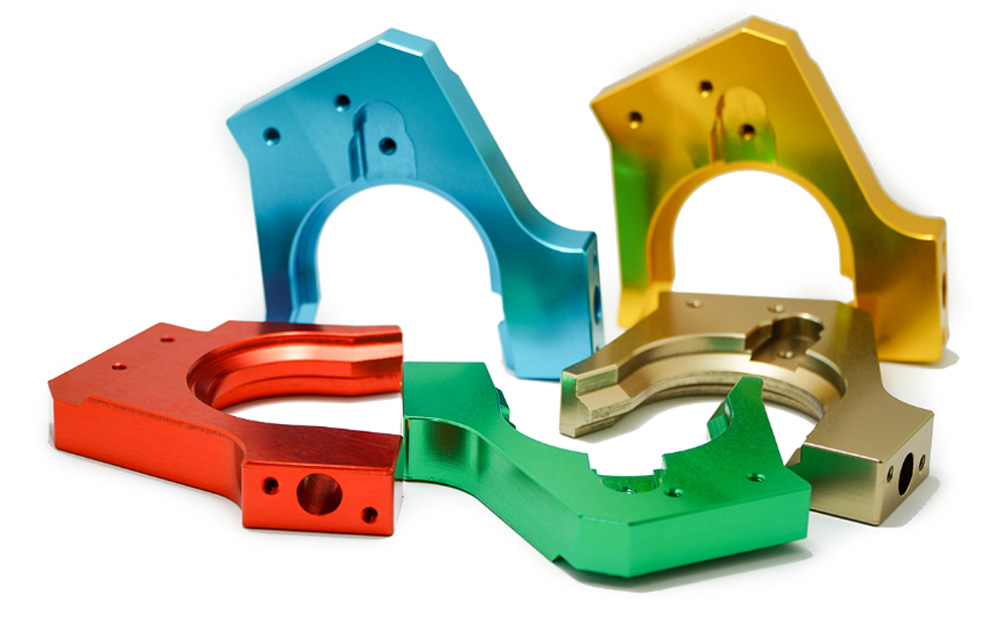
Colorful anodized aluminum parts in red, yellow, green, and blue finishes

One of anodizing’s major advantages over electroplating for aluminum is color flexibility. Type II supports virtually any color via organic dye immersion:

  • Clear / silver (natural aluminum appearance)
  • Black (most popular; ~30% cost premium over clear)
  • Red, blue, green, gold, bronze
  • Champagne, grey, purple, and custom colors

Titanium anodizing produces colors through optical interference without any dye — voltage controls oxide thickness, which determines the visible color. This is how titanium medical implants are color-coded without biocompatibility concerns.

Pros and Cons of Anodizing

Advantages:

  • Integral coating — cannot chip, peel, or flake under normal conditions
  • Excellent hardness and wear resistance (especially Type III)
  • Full color range available (Type II)
  • Electrically insulating — ideal for electronics housings and EMI applications
  • Predictable 50/50 dimensional growth — precision-friendly
  • More environmentally friendly than electroplating with heavy metals
  • Lower lifecycle cost for aluminum — fewer field failures and re-finishing requirements

Limitations:

  • Aluminum, titanium, and magnesium only — cannot be applied to steel or iron
  • Cannot achieve a shiny, reflective metallic finish (chrome look)
  • Electrically insulating is a limitation where conductivity is required
  • Type III slightly reduces fatigue strength in high-cycle applications
  • Color consistency can vary between batches depending on alloy composition
  • Sharp edges and thin walls can develop uneven coating thickness

What Is Electroplating

Rose gold and silver electroplated metal disc components with shiny reflective surface finish

Electroplating is one of the oldest industrial surface finishing processes — and it’s still indispensable. When you need conductivity, a bright metallic finish, or you’re working with steel or zinc die castings, it’s often the only practical option.

How It Works

What is electroplating

In electroplating, the part to be coated is connected as the cathode (negative electrode) in an electrolytic cell. The plating metal — nickel, chromium, gold, zinc, copper, etc. — is the anode. When DC current flows through the metal-ion electrolyte, ions from the anode dissolve into solution and deposit onto the cathode surface as a thin, coherent metal layer.

Key engineering point: 100% of the coating builds up on the outside of the part. The base metal is not consumed or altered — a foreign metal is added on top. This means dimensional calculations are straightforward, but surface preparation before plating is absolutely critical. Poor adhesion is the number one cause of electroplating field failures.

The Electroplating Process: Step by Step

  1. Surface preparation— Thorough cleaning, degreasing, and acid activation to ensure maximum adhesion
  2. Pre-treatment (for aluminum)— Zincate treatment required: replaces aluminum’s native oxide with a thin zinc film that accepts subsequent plating
  3. Plating— Immerse in electrolyte bath; apply DC current to deposit metal layer to specified thickness
  4. Post-treatment— Passivation, polishing, or clear lacquer depending on application and corrosion requirements

Common Electroplating Types

Nickel Plating 
The most widely used electroplating process. Provides good corrosion resistance, moderate wear resistance, and a semi-bright to bright appearance. Used extensively in automotive, consumer electronics, and industrial components. Often applied as an undercoat before chrome for improved adhesion and corrosion resistance.

Hard Chrome Plating 
Hardness ~70 HRC. Excellent wear resistance and low friction. Used in hydraulic cylinders, industrial rollers, molds, and precision tooling. Traditionally uses hexavalent chromium (Cr(VI)), which is subject to increasing regulatory restrictions under EU RoHS and REACH. Trivalent chrome (Cr(III)) alternatives are gaining adoption.

Zinc Plating (Electrogalvanizing) 
The most economical corrosion protection for steel. Zinc acts as a sacrificial anode — it corrodes preferentially to protect the steel underneath, even if the coating is scratched. Standard for fasteners, brackets, and automotive underbody components. Available in clear, yellow, black, and olive drab passivation finishes.

Gold and Silver Plating 
Precious metal plating for electrical applications. Gold provides superior conductivity, solderability, and corrosion resistance in harsh environments. Standard for aerospace connectors, RF components, printed circuit boards, and medical device contacts. Silver plating offers the highest electrical conductivity of any metal and is used in high-current bus bars and RF waveguides.

Copper Plating 
Excellent conductivity and good adhesion to most substrates. Often used as an intermediate layer between the substrate and top plating (nickel or chrome) to improve adhesion and fill surface defects. Also used for EMI shielding, printed circuit board traces, and decorative applications.

Pros and Cons of Electroplating

Advantages:

  • Works on nearly any substrate — steel, copper, brass, zinc die castings, plastics
  • Produces conductive coatings — essential for electronics and electrical components
  • Achieves bright, reflective metallic finishes (chrome, gold) that anodizing cannot
  • Very thin, precision coatings possible (1–5 μm for electronics)
  • Adds functional properties: conductivity, solderability, lubricity
  • Well-established and cost-effective for high-volume zinc die cast components

Limitations:

  • Can peel or delaminate if surface preparation is inadequate
  • 100% outward buildup requires tolerance compensation in part design
  • Heavy metals (Cr(VI), cadmium) raise environmental and regulatory concerns
  • Electroplating aluminum requires multi-step zincate pre-treatment, increasing cost
  • Limited color options — determined by the plating metal’s inherent appearance
  • Uneven deposition can occur at edges, recesses, and complex geometries

How to Choose the Right Process for Your Project

This is the question I get asked most frequently. My honest answer: run through these five questions in order, and the right process usually becomes clear.

Step 1: What material is your part made from?

This is the deciding question for roughly half the projects I see.

  • Aluminum, titanium, or magnesium?→ Anodizing is on the table
  • Steel, stainless steel, brass, copper, zinc die casting, or plastic?→ Electroplating is your process; anodizing cannot be applied

Step 2: Does the part need to conduct electricity?

  • Yes(connectors, terminals, battery contacts, grounding surfaces, RF components) → Electroplating with gold, silver, or nickel
  • No, or you need electrical insulation→ Anodizing (Type III insulation up to 2000V breakdown)

Step 3: What kind of finish and appearance do you need?

  • Matte, satin, or dyed color on aluminum→ Type II anodizing
  • Maximum hardness and wear resistance on aluminum→ Type III hard anodizing
  • Bright chrome, reflective gold, or decorative metallic→ Electroplating
  • Functional coating on steel with corrosion protection→ Zinc or nickel electroplating

Step 4: How critical are dimensional tolerances?

  • Very tight tolerances on aluminum→ Type III hard anodizing is preferred; 50% inward growth is predictable and consistent; less total outward buildup than full electroplating
  • Tight tolerances on non-aluminum substrates→ Electroplating (fully outward, easier to compensate in design)

According to MIL-PRF-8625F standards, for a typical 0.002″ Type III coating, plan for 0.001″ dimensional change per surface — half the coating thickness.

Step 5: What are your environmental and regulatory requirements?

  • RoHS / REACH compliance, no heavy metals→ Anodizing
  • Chrome plating→ Ensure Cr(III) process is specified; Cr(VI) is banned or restricted in many industries and regions
  • Standard industrial use with no regulatory constraints→ Either process may work; evaluate on technical and cost merits

Application Selection Guide

Industry / Application Recommended Process Reason
Aerospace aluminum components Anodizing (Type II or III) Corrosion resistance, weight, integral adhesion
Automotive steel underbody parts Zinc or nickel electroplating Steel compatibility; sacrificial protection
Consumer electronics housings (aluminum) Anodizing (Type II, colored) Color range, scratch resistance, no peel risk
Electrical connectors / terminals Gold or silver electroplating Conductivity and solderability required
Medical implants (titanium) Titanium anodizing Biocompatibility, color-coding without dyes
Hydraulic cylinders / pistons Hard anodizing (Type III) Wear resistance, lubricant retention in pores
Decorative jewelry / fashion hardware Gold or chrome electroplating Bright reflective metallic finish required
Military and defense components Type III anodizing or Zn-Ni plating Durability; shifting away from Cr(VI)
Zinc die-cast parts Nickel or chrome electroplating Cannot anodize zinc; plating is mature and cost-effective
Plastic parts with metallic finish Electroplating (with conductive pre-treatment) Anodizing cannot be applied to non-metals
← drag to scroll →

FAQs

Yes, but it requires extra preparation. Aluminum’s surface reactivity makes direct plating adhesion poor. A zincate pretreatment must first replace the native oxide layer with a thin zinc film, which then accepts copper, nickel, or chrome plating. This multi-step process increases cost and complexity — which is one reason anodizing is usually preferred for aluminum parts.

Anodizing works on non-ferrous metals that form stable oxide layers — primarily aluminum, titanium, and magnesium. Zinc, niobium, and tantalum can also be anodized in specialized applications. Steel and iron cannot be anodized because iron oxide (rust) is not a stable, protective layer — it flakes and fails rather than forming a coherent barrier.

For aluminum, Type III hard anodizing reaches 60–70 HRC and 350–500 HV — comparable to case-hardened steel — with a metallurgical bond that makes it highly resistant to delamination under impact.Hard chrome electroplating achieves similar hardness (~70 HRC) but relies on physical adhesion. For non-aluminum substrates, hard chrome plating can be the harder option. The right answer depends on the substrate and the failure mode you’re designing against.

For aluminum parts, anodizing is generally less expensive — especially at volume. Electroplating aluminum requires a zincate pre-treatment step that adds cost and reduces yield. For zinc die castings or steel, electroplating is typically more cost-effective since anodizing cannot be applied. Always consider total lifecycle cost: anodizing’s integral bond typically means fewer field failures and less re-finishing over time.

Type II sulfuric acid anodizing supports virtually any color through organic dye immersion — including clear/silver, black, red, blue, gold, green, and bronze. Black anodizing costs approximately 30% more than standard clear anodizing due to the special dyes and process controls required. Type III hardcoat produces dark gray to black naturally and does not accept most dyes (black dye is the exception). Titanium anodizing produces colors through optical interference at different voltages — no dye is required.

Anodizing converts the metal surface into an oxide layer that cannot peel or chip. Powder coating applies a polymer film on top, offering more color variety but can chip if damaged. Choose anodizing for hardness and tight tolerances; choose powder coating for color range and impact resistance.

Final Thoughts

After years of working with both processes at Aria Manufacturing, my advice is straightforward: stop thinking about which process sounds more impressive, and start with the material and the performance requirement.

Aluminum that needs to be hard, corrosion-resistant, and precisely dimensioned? Anodize it. Steel that needs to be conductive and protected? Plate it. Zinc die casting that needs a chrome finish? Plate it. Titanium medical device that needs color-coding without biocompatibility risk? Anodize it.

The process should serve the part — not the other way around.

If you’re working on a project that involves surface finishing decisions for precision components, the engineering team at Aria Manufacturing is here to help. We work through exactly this kind of specification analysis every day across automotive, aerospace, medical, and industrial applications.

Scroll to Top