What is CNC Precision Machining? Processes, Materials and Applications

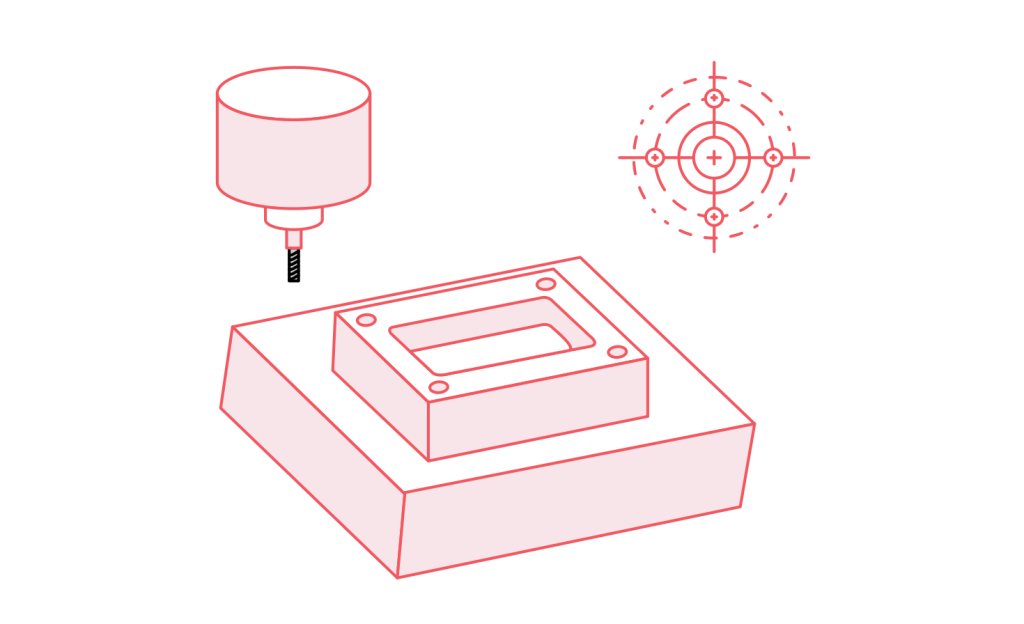
CNC Precision Machining

Share:

Table of Content

Table of Content

A machining accuracy in the range of 0.01mm to 0.05mm is generally considered precision machining.

Every time a customer sends us a drawing, the first thing we look at is the tolerance callouts.Because that column determines two things: what machine we use to make the part, and what it’s going to cost.

±0.1 and ±0.01 look like they’re only one digit apart. But behind that difference could be entirely different processes, different equipment, and a price gap of several times over. Most customers don’t realize this. When they see a quote and think it’s expensive, the cost isn’t coming from the machining itself. It’s coming from that tolerance number they wrote down without thinking too hard about it.

That’s the most fundamental difference between CNC Precision Machining and standard machining. Let’s break down exactly what it is, how it works, and the details you actually need to know.

What is CNC Precision Machining?

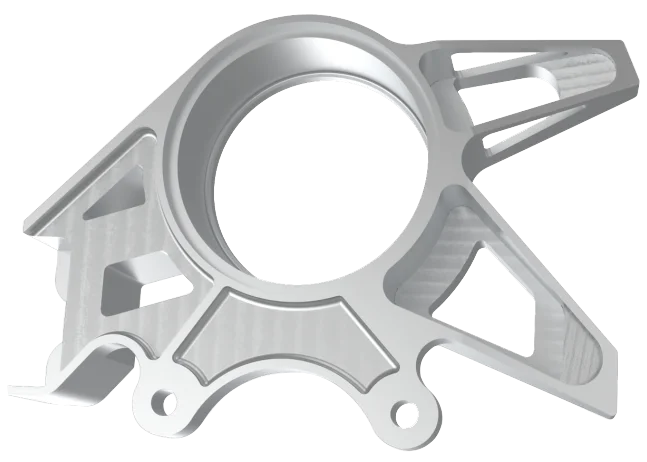
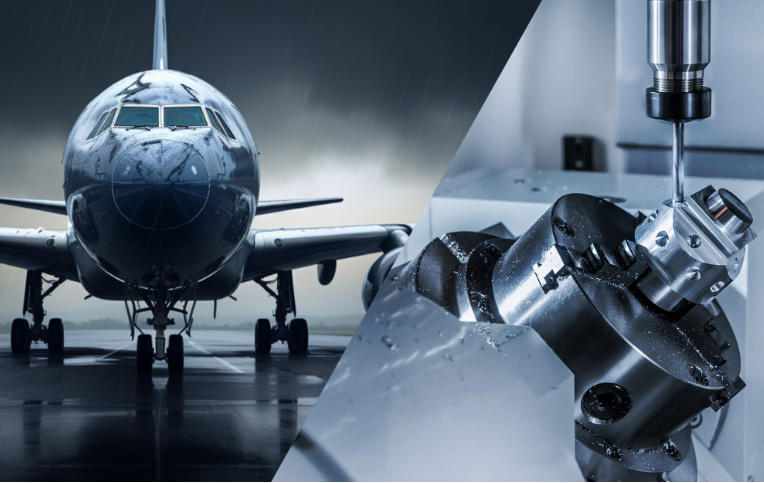
CNC milled aluminum precision part with complex geometry and multiple machining features

CNC Precision Machining is a computer-controlled subtractive manufacturing process that uses programmed software to direct specialized machine tools, removing material from a workpiece to produce parts with extremely tight tolerances, typically between ±0.01mm and ±0.005mm (±0.0005″ to ±0.0002″).

The word “precision” is not merely a marketing term. It is a measurable standard that refers to the allowable deviation between the finished part and the design specification.In theory, the smaller the tolerance, the higher the precision. In practice, however, the achievable precision is influenced by factors such as the machine, tooling, and material.

At Aria Manufacturing, all CNC machining tolerances strictly adhere to ISO 2768 standards. The table below outlines the three levels of machining precision.

Feature Standard Machining Fine Machining Precision Machining
Typical tolerance ±0.1mm or looser ±0.05mm to ±0.02mm ±0.01mm to ±0.005mm
Machine General CNC machine 3-axis CNC milling machine, CNC lathe 5-axis CNC milling machine, EDM machine, CNC grinder
Tooling Standard cutting tools Carbide cutting tools Premium carbide or CBN tools with tight runout control
Material Steel, basic aluminum 6061 aluminum, brass, 303 stainless steel 7075 aluminum, titanium (Ti-6AL-4V), Inconel 718, PEEK
Surface finish (Ra) 3.2 μm to 1.6 μm 1.6 μm to 0.8 μm 0.8 μm or better
Best for General structural parts Commercial components Aerospace, medical, semiconductors

How Does CNC Precision Machining Work?

CNC precision machining follows a structured process from design to finished part.

Step 1: CAD Design and Programming

CAD Drawing

Everything starts with a 3D CAD model that defines every dimension, tolerance, and surface finish requirement. The CAD file is then converted into G-code through CAM software, which tells the machine exactly how to move, what tools to use, and at what speed.

Step 2: Machine Setup

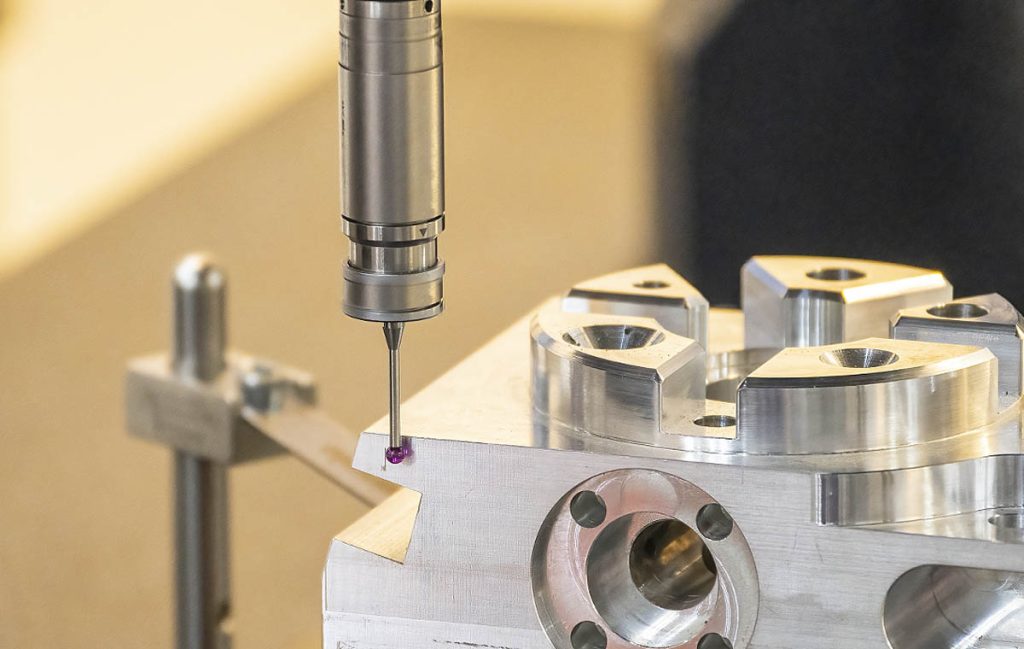
The workpiece is secured using fixtures and workholding systems. At Aria Manufacturing, we use probing systems to verify positioning before the first cut is made. A poorly set up part cannot be saved by even the best machine.

Step 3: Machining

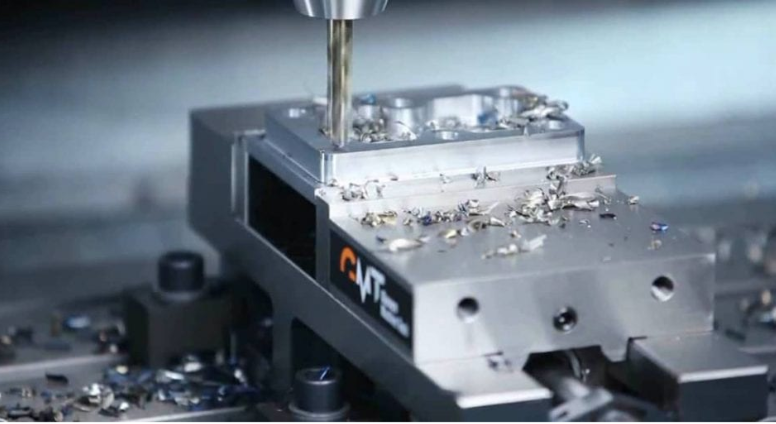
The CNC machine executes the program, removing material through milling, turning, drilling, or grinding depending on the part geometry. Spindle load, temperature, and tool wear are monitored throughout the process.

Step 4: Inspection and Finishing

Aluminum Machining inspection

Every precision part is dimensionally inspected using CMMs, laser scanners, and surface roughness testers. If required, secondary finishing operations such as anodizing, plating, or heat treatment are applied, all factored into the machining plan from the start.

Types of CNC Precision Machining Equipment

CNC Milling Machine

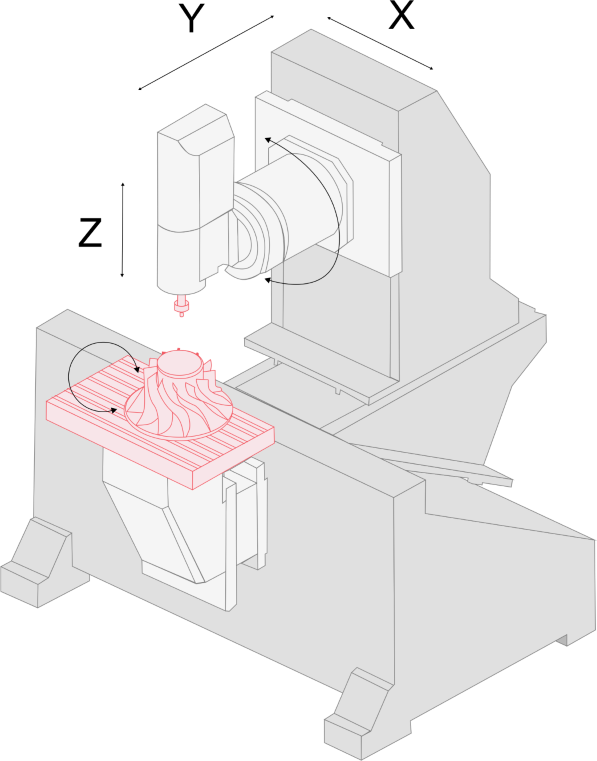
5-Axis Milling Machines

A rotating cutting tool moves along multiple axes to remove material from a stationary workpiece.

Standard 3-axis CNC milling holds tolerances of ±0.005mm to ±0.025mm, suitable for flat surfaces, pockets, slots, and contours. For complex multi-face geometries, 5-axis CNC milling completes the part in a single setup, achieving tolerances as tight as ±0.005mm while eliminating accumulated setup errors.

If your part has features on multiple faces, 5-axis is almost always the right call.

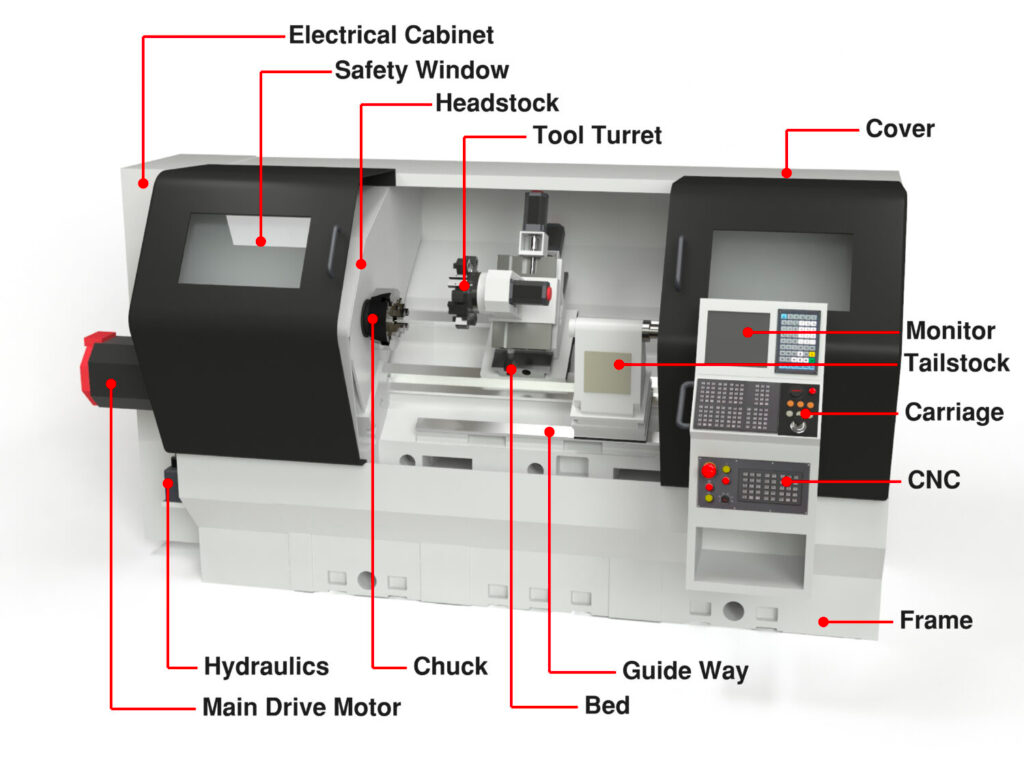
CNC Lathe

CNC turning machine

The workpiece rotates while a stationary cutting tool removes material along the outer or inner diameter.

Precision CNC turning holds diameter tolerances of ±0.005mm to ±0.01mm with concentricity within 0.005mm TIR. Swiss-type CNC lathes support the workpiece very close to the cutting zone, achieving tolerances as tight as ±0.005mm to ±0.025mm on long, slender parts.

For anything cylindrical, a CNC lathe will outperform a milling machine every time.

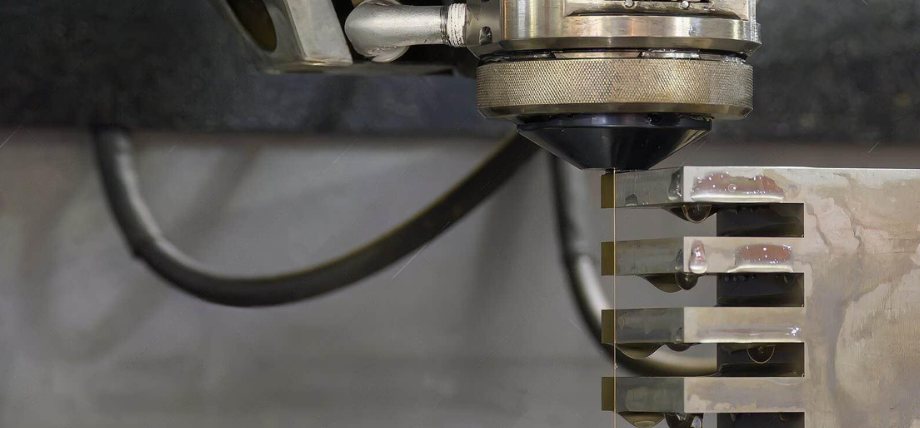
EDM Machine

Application of Wire EDM

Material is removed by controlled electrical sparks between an electrode and the workpiece, with no cutting contact.

Wire EDM achieves tolerances of ±0.0025mm (±0.0001″) for 2D profiles. Sinker EDM holds ±0.005mm to ±0.01mm for 3D cavities. Both processes work on any electrically conductive material regardless of hardness.

When a feature is too small, too hard, or too complex for conventional tooling, EDM is usually the answer.

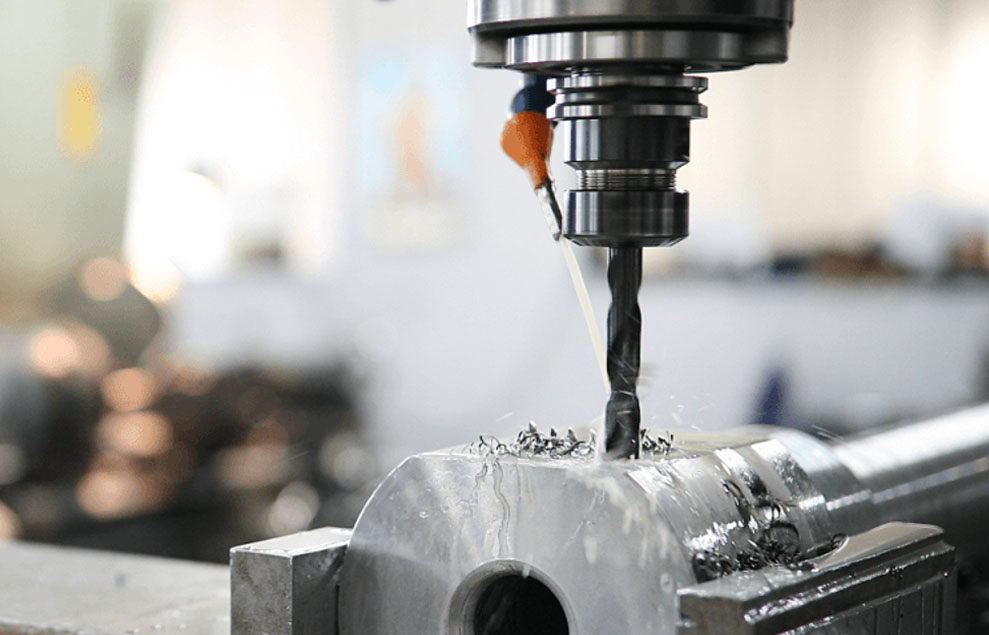
CNC Drilling Machine

CNC Drilling

Holes are produced to positional tolerances of ±0.01mm to ±0.05mm.

For critical applications requiring tighter diameter control and better surface finish, drilling is followed by reaming or boring.

A mislocated hole is one of the most common reasons a precision assembly fails. This is where positional accuracy matters most.

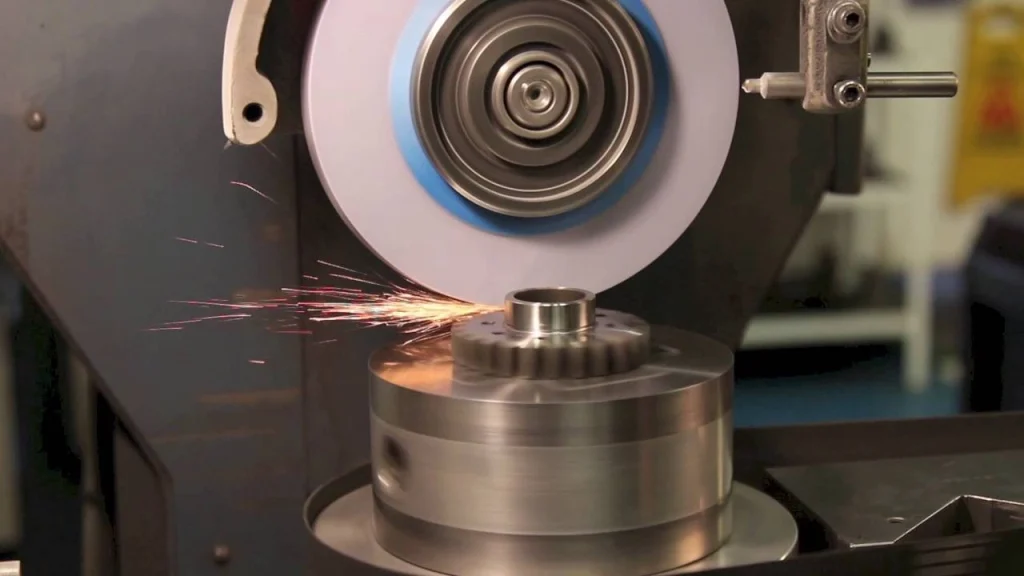
CNC Grinder

What is CNC Grinding

An abrasive wheel removes very small amounts of material from the workpiece surface.

Grinding achieves tolerances of ±0.0025mm to ±0.005mm and surface finishes as fine as Ra 0.1µm. It is typically a finishing operation, applied after milling or turning has brought the part close to final dimensions.

If your drawing calls for a bearing fit or a sealing surface, grinding is usually the last step that makes or breaks the part.

Material Selection for CNC Precision Machining

Material choice directly affects what tolerances are achievable, what machines are required, and what the part will cost.

cnc machining materials

Metals

The hardness and thermal properties of metals require carbide or CBN tooling, efficient cooling, and careful cutting parameter control to maintain dimensional accuracy.

Common metals used in CNC precision machining:

  • Aluminum: 6061, 7075, 2024
  • Carbon Steel: 1018, 1045
  • Alloy Steel: 4140, 4340
  • Tool Steel: D2, H13, A2
  • Stainless Steel: 303, 304, 316, 17-4 PH
  • Titanium: Grade 2, Ti-6Al-4V
  • Inconel: 625, 718
  • Brass: C360, C260
  • Copper: C101, C110

Plastics

Plastics are sensitive to heat and moisture, which can affect dimensional stability. Production speeds are slower than metals, but precision CNC machining still achieves tight tolerances and smooth as-machined finishes.

Common plastics used in CNC precision machining:

  • ABS
  • PEEK
  • Delrin (POM / Acetal)
  • PTFE (Teflon)
  • Polycarbonate (PC)
  • Nylon (PA6, PA66)
  • PEI

CNC Precision Machining Applications

Aerospace

cnc machining for Aerospace

No industry pushes precision machining harder than aerospace. Turbine blades, hydraulic manifolds, structural brackets, and landing gear components all require tolerances within ±0.005mm, full material traceability, and compliance with AS9100 standards.

At Aria Manufacturing, we machine these components from titanium, Inconel, and 7075 aluminum with in-process inspection at every critical stage.

Automotive

cnc machining for Automotive

Modern vehicles contain hundreds of precision-machined parts, and the tolerance requirements are getting tighter as electrification advances.

We produce engine components, transmission shafts, brake calipers, and EV motor housings for both prototype development and high-volume production runs, with IATF 16949 documentation available on request.

Medical

cnc machining for Medical

A surgical instrument or implant that does not meet spec does not ship. Medical CNC precision machining requires biocompatible materials, micron-level dimensional accuracy, and ISO 13485-compliant quality records.

We machine orthopedic implants, dental components, and surgical instruments from titanium, 316L stainless steel, and PEEK.

Semiconductors and Electronics

Semiconductor fabrication equipment leaves no room for contamination or dimensional variation. Wafer handling fixtures, vacuum chamber components, and precision test sockets demand tight flatness tolerances and controlled surface finishes.

We machine these components from 6061 aluminum and engineering plastics under strict cleanliness protocols.

Robotics

Robot joints, actuator housings, and end-effectors need tight dimensional tolerances to ensure accurate motion and repeatable assembly. The combination of complex geometry and lightweight thin-wall structures makes 5-axis CNC machining the preferred process for most robotic components we produce.

Advantages of High Precision CNC Machining

Precision and Accuracy

Every critical dimension gets verified before a part ships. Tolerances between ±0.005mm and ±0.01mm are achievable not just because of the machine, but because the entire process, from tooling selection to fixture design and in-process measurement, is built around hitting that number every time.

High Repeatability

Most buyers don’t think about this until they’ve had a bad experience. Once a CNC program is validated, the first part and the thousandth part are dimensionally identical. Consistency across a production run isn’t luck. It’s process control.

Speed and Efficiency

A 5-axis CNC machine completes features on multiple faces in a single setup. What used to require five separate repositioning steps now runs in one continuous program. Once programmed, CNC machines can run 24/7 with minimal supervision, significantly reducing lead times on both prototype and production orders.

Material Versatility

Aluminum, titanium, Inconel, stainless steel, PEEK. CNC precision machining works across all of them. You choose the material the application demands, not the material that’s easiest to cut. That flexibility matters when your design requirements leave no room for material compromise.

Reduced Waste

Optimized toolpaths and validated processes mean fewer rejected parts. When you’re machining titanium bar stock at $15 to $30 per kilogram, even a small drop in scrap rate has a direct impact on cost per part. Precision isn’t just about quality. It’s about economics.

FAQs

Not always. Tighter tolerances require more time, better tooling, and more inspection steps, all of which increase cost. Specify the tolerance your part needs to function correctly. Over-tolerancing is one of the most common ways to drive up part cost without any real performance benefit.

Moving from ±0.1mm to ±0.01mm can increase machining cost by 30% to 100% or more. The main cost drivers are material, part complexity, required surface finish, and inspection requirements. The tighter the tolerance, the slower the cutting speed and the more inspection time each part requires.

Precision parts are verified using CMMs, optical comparators, laser scanners, and surface roughness testers. Inspection is performed at a controlled temperature of 20°C, as thermal expansion affects dimensional readings on tight-tolerance parts.

Check for ISO 9001, AS9100 for aerospace, or ISO 13485 for medical device certifications. Ask to see their CMM reports and first article inspection process. If a supplier cannot show you actual inspection data, keep looking.

Yes. Anodizing adds 0.005mm to 0.025mm per surface. Electroless nickel plating adds 0.005mm to 0.015mm. Always confirm surface treatment requirements before machining begins so pre-treatment dimensions are correctly accounted for.

Related Topics:

Written By
CNC milled aluminum precision part with complex geometry and multiple machining features

Custom Quality Parts By Aria

Send your specs. We’ll get back with a quote in 12 hours.

Scroll to Top