What is CNC Machining: Process, Materials, Tolerances and Benefits

What is CNC Machining

Share:

Table of Content

Table of Content

CNC Machining process is a crucial part of modern manufacturing. It enables unparalleled precision, repeatability and material diversity, allowing various industries such as aerospace and medical equipment to continuously and on a large scale produce complex and high-quality components.

In this guide, I will take you through all the things that I wished someone had told me when I first started working in precision manufacturing. These include the process, types of machines, material selection and tolerances standard.

What is CNC Machining Process?

Aria CNC Machining

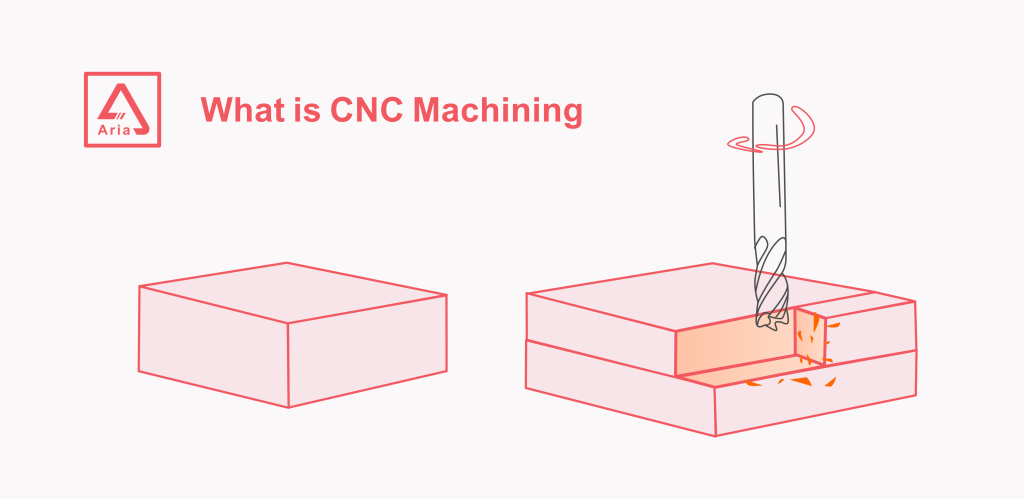
CNC machining is a subtractive manufacturing process. The process involves removing excess material from a complete piece of material to create precise parts.

Its working principle is to convert the design drawings of the parts into a series of computer instructions. Then, it cuts, drills, mills or turns the material along the preset path, thereby processing the material into the exact shape you need.

A Brief History Of CNC Machining

CNC technology traces back to 1949, when John T. Parsons developed the first Numerical Control machine for the US Air Force, using punched cards to guide cutting tools. By 1952, MIT had built the first CNC milling machine prototype.

For decades, the technology remained exclusive to well-funded aerospace and defense manufacturers. That changed as computing costs fell and CAD/CAM software matured, making CNC accessible to manufacturers of every size.

Today, a machine shop anywhere in the world can run 5-axis equipment that would have cost millions twenty years ago. That democratization is why CNC is now the backbone of modern manufacturing, from aerospace giants down to startups building their very first prototype.

How Dose CNC Machining Works?

There are five stages to every CNC job. Understanding these will make you a much better client and a better engineer.

Step 1: CAD Design

CAD Drawing

Everything starts with a 3D digital model built in CAD software such as AutoCAD, SolidWorks or Pro/ENGINEER. This model defines every dimension, feature, and tolerance of the part you want to produce.

This is where most problems begin. A poorly thought-out design leads to expensive machining, excessive scrap, and missed tolerances. Design for manufacturability from day one, not after the fact.

Step 2: CAM Programming

CAM Programming

The CAD file goes into CAM software, which translates your 3D model into G-code, the language CNC machines understand. CAM calculates every tool path, feed rate, spindle speed, and cutting depth.

An experienced programmer can shave 30% off your cycle time without touching the design.

Step 3: Machine Setup

Aria CNC Machining Works

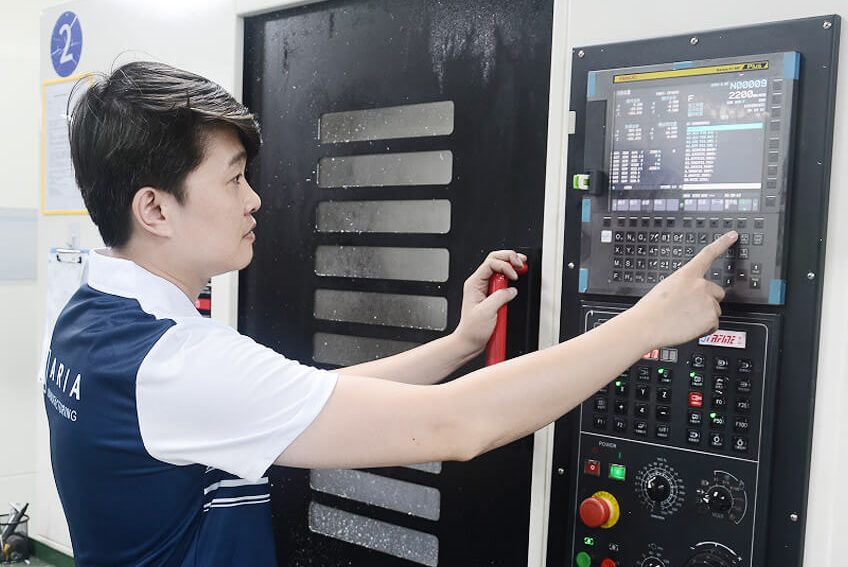
A machinist mounts the correct cutting tools, clamps the raw material securely, and runs a pre-job verification check. Setup time is often where costs hide. Complex parts requiring multiple setups drive up both time and cost. Smart design reduces setups.

Step 4: Machining

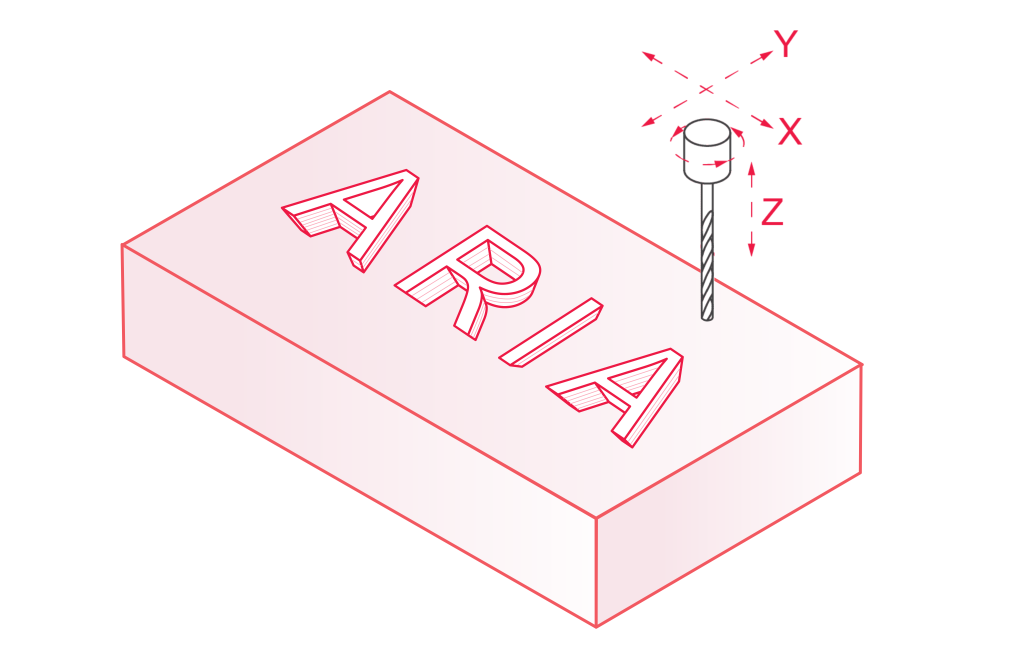
The CNC machine reads the G-code and executes it across 3, 4, or 5 simultaneous axes. Cutting tools typically spin between 3,000 and 30,000 RPM depending on the material and machine type, while coolant manages heat and evacuates chips. The machine removes material continuously until the finished part emerges.

Step 5: Inspection and Post-Processing

The part is measured against original CAD tolerances using calipers, micrometers, or CMM machines. Then post-processing begins: deburring, polishing, anodizing, powder coating, or heat treatment, depending on the application.

Common Types of CNC Machines

Not all CNC machines are the same. Choosing the right machine type for your application is one of the most important decisions you’ll make in a project.

CNC Lathes

CNC turning machine

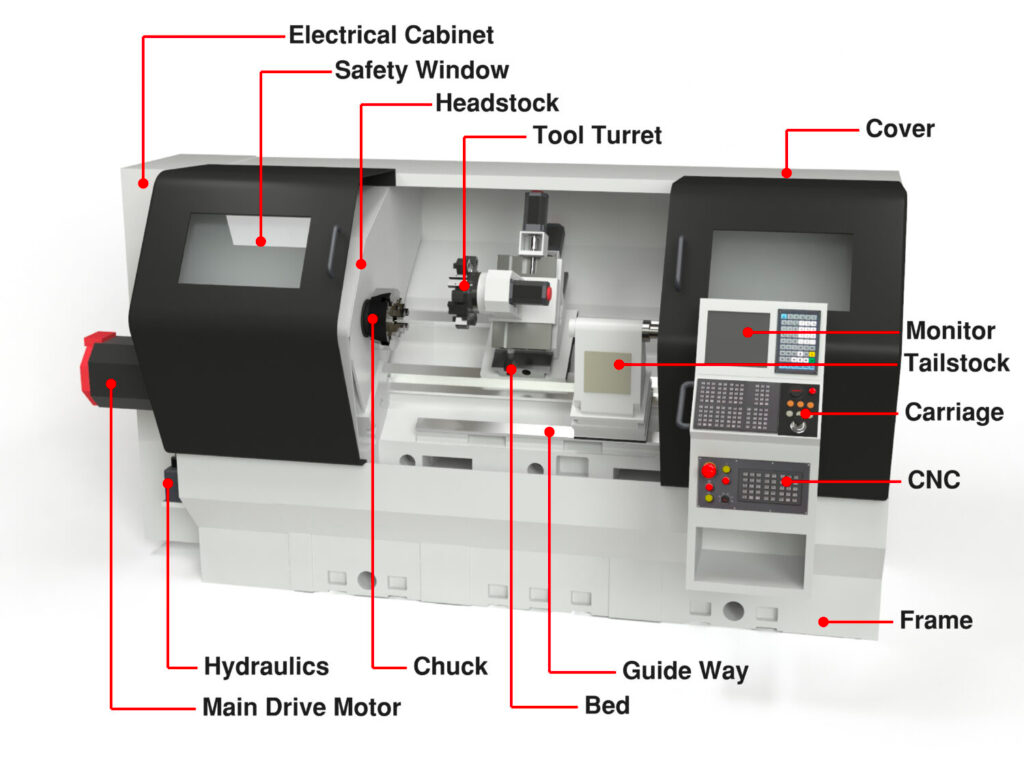
A CNC lathe fixes the tool and rotates the workpiece at high speed. Using cutting tools, it processes the workpiece into cylindrical shapes or parts with rotational symmetry.

Use for: Shafts, bolts, pins, threaded components, hydraulic fittings

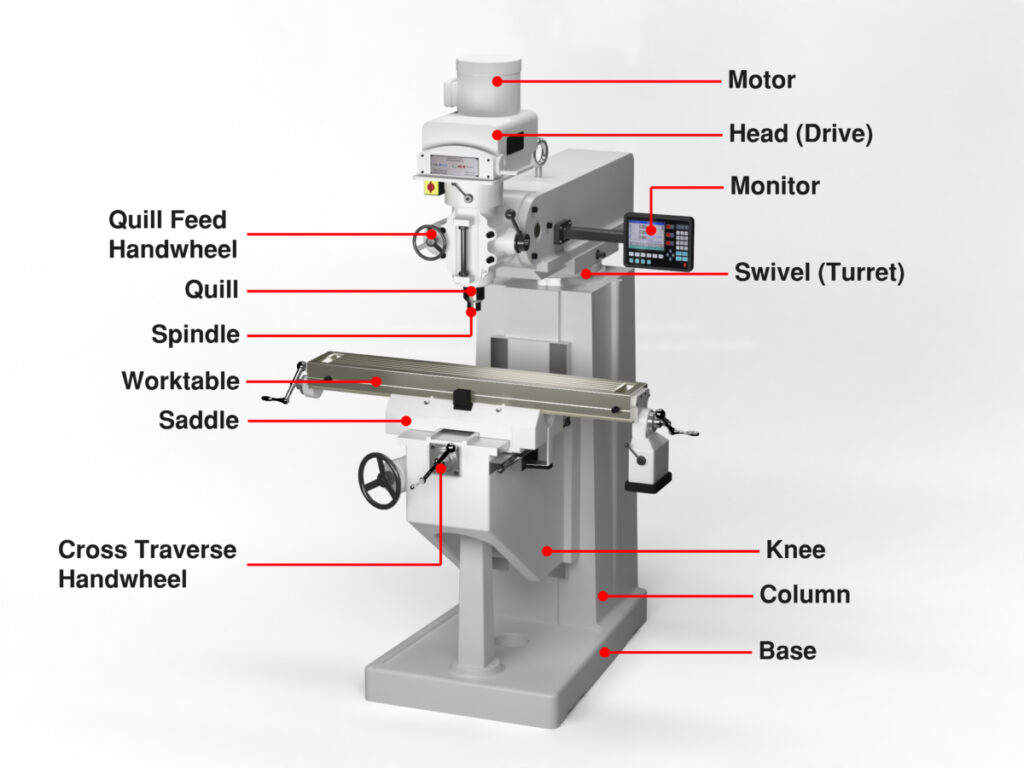
CNC Mills

CNC Milling Machines

A CNC milling machine operates by moving a rotating cutting tool along a fixed workpiece, thereby creating planes, grooves, holes, recesses, and complex three-dimensional geometries.

The difference between CNC mills and CNC lathes is that CNC lathes fix the tool and rotate the material, while CNC mills fix the material and rotate the tool.

Use for: Complex housings, mold components, aerospace structures, medical implants

Types Of CNC Mills:
Machine Type Axes of Motion Best For
3-Axis Mill X, Y, Z Flat parts, simple profiles, brackets
4-Axis Mill X, Y, Z + rotation (A) Parts needing features on multiple sides
5-Axis Mill X, Y, Z + two rotations Complex curved surfaces, undercuts, aerospace components

CNC Routers

CNC Routers

CNC routers are the high-speed machines for lighter materials: wood, MDF, plastics, foam, composites, and aluminum sheet. They use a gantry-style frame and can cover large surface areas quickly.

Use for: Wood, plastics, composite panels, signage, prototypes

CNC Plasma Cutters

Plasma cutting works by superheating a jet of ionized gas to extreme temperatures, melting through electrically conductive materials like steel, stainless steel, and aluminum with speed that few processes can match.

That speed comes with a trade-off. The heat-affected zone left along the cut edge and the inherent surface roughness make plasma cutting better suited for structural fabrication than precision work.

If your part needs tight tolerances and clean edges, this isn’t the right tool. But for cutting thick steel plate fast, nothing beats it.

Use for: Structural steel, sheet metal blanks, heavy plate fabrication

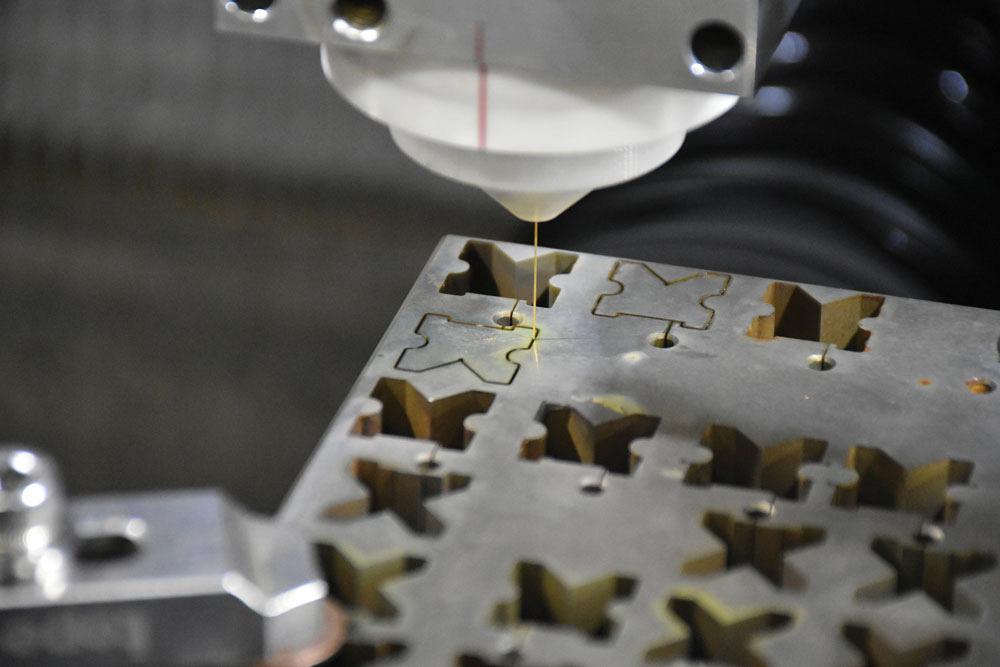
Electric Discharge Machine

An EDM (Electric Discharge Machine) uses controlled electrical sparks to erode material from a workpiece, making it ideal for machining hardened metals and complex geometries that conventional cutting tools cannot achieve.

The advantage of EDM machine is high precision, while its drawback is that the processing speed is extremely slow and it is not suitable for mass production.

There are two types:

  • Wire EDM: A slender electrode wire cuts out shapes in the material like a saw, making it ideal for creating complex two-dimensional contours, gears, and stamping dies.
  • Sinker EDM: A specific-shaped electrode is “immersed” into the material, used for mold cavities and complex three-dimensional recesses.

Use for: Hardened tool steel, complex mold cavities, tight-tolerance profiles, intricate 2D shapes

Common CNC Machining Materials & Surface Finish

Based on my 6 year work experience at Aria Manufacturing, the surface treatment options available for parts depend on two factors: the processing method and the type of material.

Here’s a combined table mapping each material to its compatible surface finishes:

Metals:

Material Key Properties Common Applications Compatible Surface Finishes
Aluminum Lightweight, excellent machinability, corrosion-resistant Enclosures, brackets, aerospace structures, prototypes Anodizing, Alodine, Sandblasting, Polishing, Powder Coating, Electroplating
Stainless Steel High tensile strength, corrosion and temperature resistant Medical devices, marine hardware, food-grade components Polishing, Sandblasting, Electroplating, Black Oxide, Powder Coating
Titanium Exceptional strength-to-weight ratio, biocompatible, corrosion-resistant Aerospace structures, medical implants, high-performance components Anodizing, Polishing, Sandblasting
Brass Outstanding machinability, good conductivity, corrosion-resistant Fittings, valves, electrical connectors Electroplating, Polishing, Sandblasting, Black Oxide
Bronze High hardness, abrasion-resistant, shock-resistant Bearings, bushings, cutting tools Polishing, Electroplating, Sandblasting
Copper Superior electrical and thermal conductivity Heat sinks, busbars, electrical components Electroplating, Polishing, Sandblasting

Plastics

Material Key Properties Common Applications Compatible Surface Finishes
ABS Tough, impact-resistant, lightweight Consumer housings, prototype parts Painting, Sandblasting, Electroplating
Nylon (PA) Wear-resistant, low friction, strong Gears, bearings, structural components Painting, Sandblasting
Polycarbonate (PC) High impact strength, transparent Optical covers, sight glasses Painting, Polishing
Delrin (POM) Excellent dimensional stability, low friction Precision gears, sliding mechanical parts Painting, Sandblasting
PEEK Extreme heat and chemical resistance Medical, aerospace, high-temperature environments Painting, Sandblasting

CNC Machining Tolerances

A tolerance defines how much a part’s actual dimension can deviate from the nominal (designed) value without affecting its function.

General Tolerance Standard in CNC Machining

Process Standard Tolerance Precision Tolerance
CNC Milling (3-axis) ±0.13 mm (±0.005″) ±0.025 mm (±0.001″)
CNC Milling (5-axis) ±0.13 mm (±0.005″) ±0.013 mm (±0.0005″)
CNC Turning ±0.05 mm (±0.002″) ±0.013 mm (±0.0005″)
Grinding ±0.013 mm (±0.0005″) ±0.005 mm (±0.0002″)

Linear Tolerances in CNC Machining

Tolerance Class Deviations in mm for nominal dimensions of:
0.5 - 3.0 3.0 - 6.0 6.0 - 30.0 30.0 - 120.0 120.0 - 400.0 400.0 - 1000.0 1000 - 2000 2000 - 4000
f (fine) ± 0.05 ± 0.05 ± 0.1 ± 0.15 ± 0.2 ± 0.3 ± 0.5 -
m (medium) ± 0.1 ± 0.1 ± 0.2 ± 0.3 ± 0.5 ± 0.8 ± 1.2 ± 2
c (coarse) ± 0.2 ± 0.3 ± 0.5 ± 0.8 ± 1.2 ± 2 ± 3 ± 4
v (very coarse) - ± 0.5 ± 1 ± 1.5 ± 2.5 ± 4 ± 6 ± 8

Angle Tolerances in CNC Machining

Tolerance Class Deviations in degrees and minutes for nominal dimensions (short angle leg) of:
- 10 10 - 50 50 - 120 120 - 400 400
f (fine) ± 1° ± 0° 30′ ± 0° 20′ ± 0° 10′ ± 0° 5′
m (medium) ± 1° ± 0° 30′ ± 0° 20′ ± 0° 10′ ± 0° 5′
c (coarse) ± 1° 30′ ± 1° ± 0° 30′ ± 0° 15′ ± 0° 10′
v (very coarse) ± 3° ± 2° ± 1° ± 0° 30′ ± 0° 20′

Benefits & Limitations of CNC Machining

I want to be honest here. CNC machining is exceptional, but it’s not always the right answer.

Pros

Precision and repeatability

CNC holds tolerances that manual machining simply cannot achieve consistently. Whether you’re making one part or 10,000, every piece matches the design.

Works with almost any material

Metals, plastics, composites, wood, ceramics. If it’s solid and machinable, there’s a CNC process for it. Very few manufacturing processes come close to that material range.

No dedicated tooling required

CNC needs no molds or dies. That keeps upfront costs low and makes it ideal for prototypes, low volumes, and design iterations.

Complex geometry

5-axis machines can produce undercuts, compound angles, and curved surfaces that would require multiple setups by any other method.

Fast turnaround

A first article can be in your hands within days of receiving a design file. For product teams under deadline pressure, that matters enormously.

Cons

High Cost

CNC is a processing method based on cycle time. The machine processing time required for each product is roughly the same and is independent of the production volume. When the production volume exceeds 100,000 units, compared with other manufacturing processes, the production cost of a single part will be higher.

Material Waste

CNC is subtractive. You start with a solid block and remove everything that isn’t your part. On expensive materials like titanium or PEEK, those chips on the floor represent real money. For complex parts, material utilization can drop as low as 20%.

Size Constraints

Each CNC machine has a fixed processing range. If your part exceeds the travel limit of the machine, it needs to be sent to a factory with larger equipment for processing.

Design Constraints

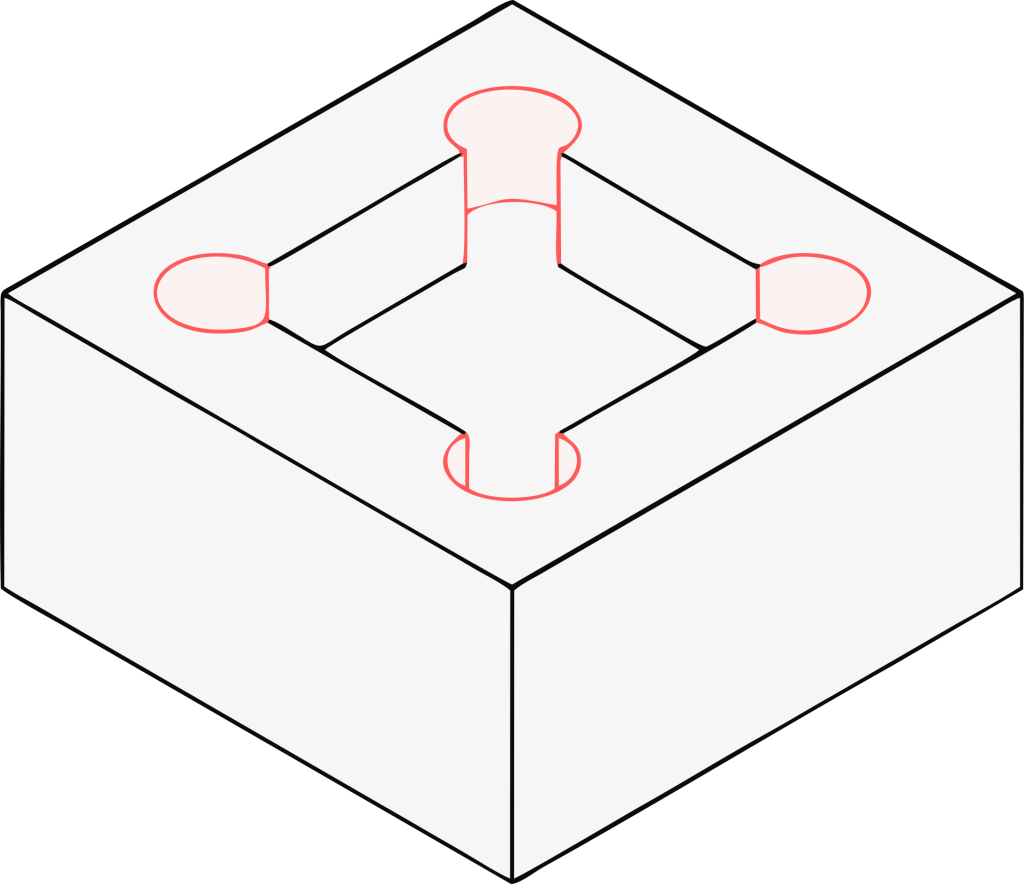
Every cut requires tool access. Sharp internal corners, fully enclosed cavities, and deep narrow features are difficult or impossible to machine. The geometry has to be physically reachable by a cutting tool moving through space.

Requires skilled operators

The machine is only as good as the programmer and machinist behind it. A poorly written tool path, a worn cutter nobody caught, a fixturing mistake, any of these turns a good design into scrap. Skill and experience matter enormously in CNC, and not every shop has enough of it.

Design Considerations for CNC Machining

Here are the design rules I share with every client before they finalize a drawing. Apply these from the start and you’ll save time, money, and frustration.

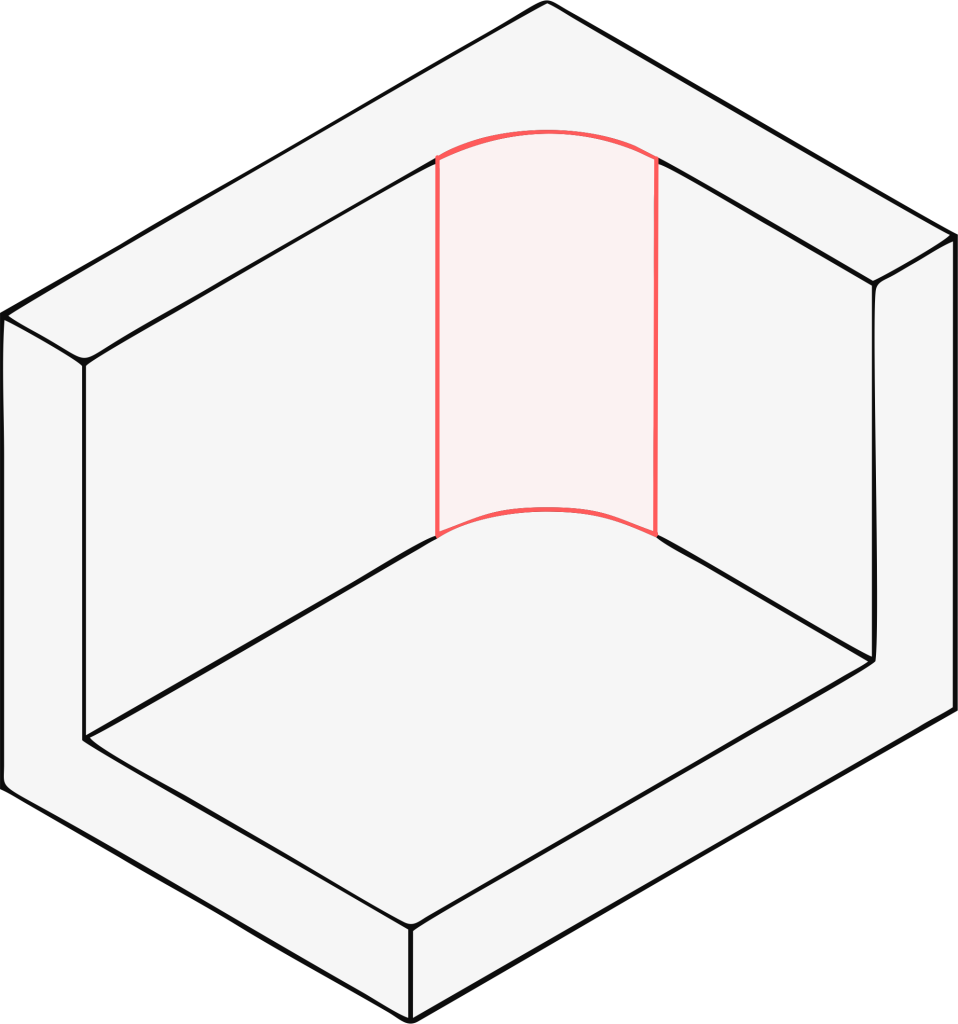
Internal Corner Radii

CNC Machining Design guide Radii

A milling cutter is round, so sharp internal corners are physically impossible to produce. Always add a radius to internal corners, at minimum equal to the radius of the cutting tool being used.

As a rule: internal corner radius ≥ 1/3 of cavity depth.

Cavity Depth

Cavities and Pockets

Deep, narrow pockets are expensive. The deeper you go relative to the tool diameter, the more the tool deflects, the more passes you need, and the more likely you are to get chatter and poor surface finish.

Keep cavity depth below 4× the tool diameter wherever possible. If you genuinely need a deep feature, discuss it with your manufacturer before finalizing the design.

Wall Thickness

CNC Machining Design guide Wall thickness

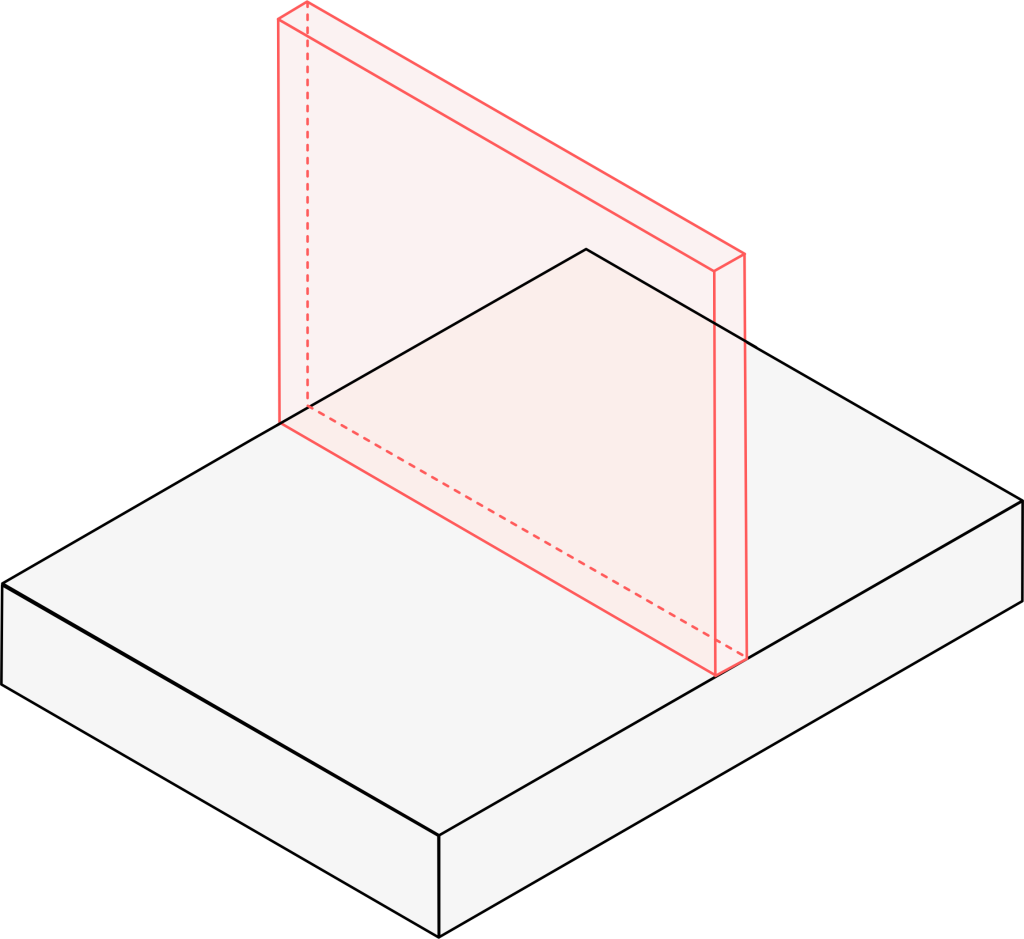
Thin walls flex and vibrate during machining. This causes chatter, dimensional inaccuracy, and surface defects.

Minimum wall thickness recommendations:

  • Metals:8 mm (ideally ≥ 1.5 mm)
  • Plastics:5 mm (ideally ≥ 2.5 mm)

Hole Sizes & Thread Depths

CNC Machining Design guide holes

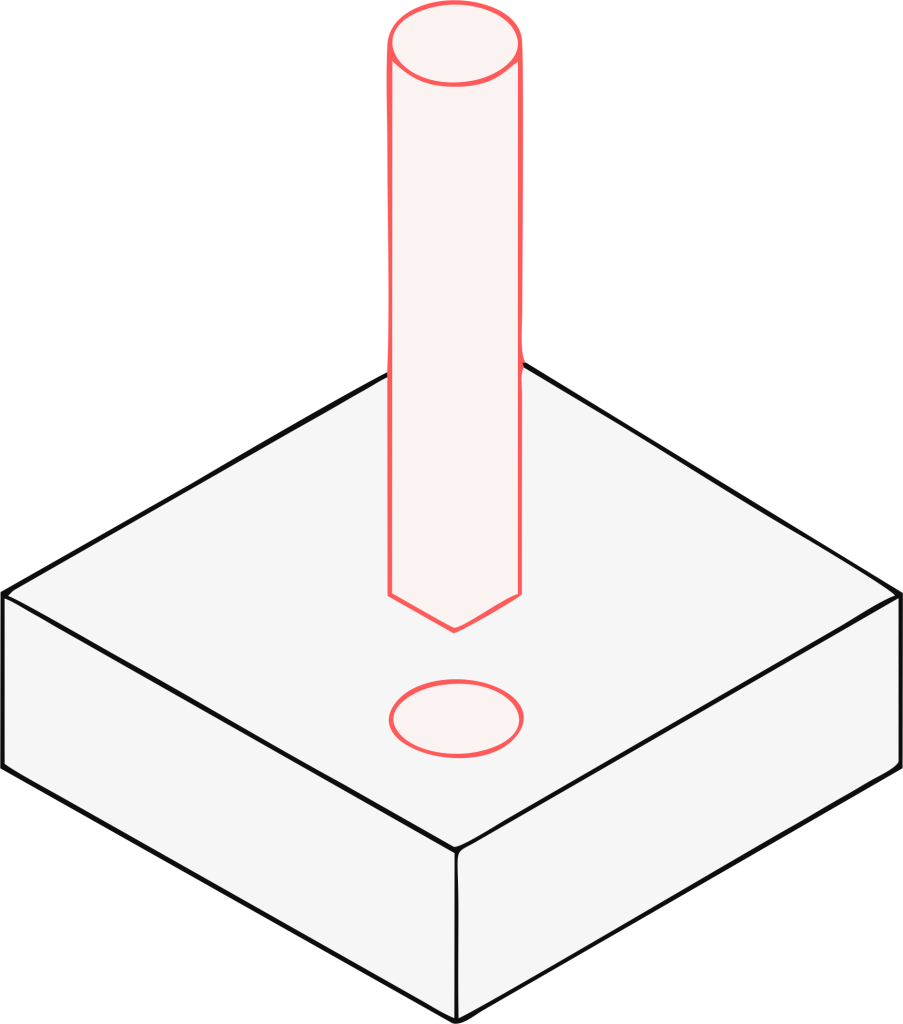
Try to use standard holes and threads. For non-standard sizes, special tools are required, and using special specifications means higher costs and longer delivery times.

The ratio of the diameter to the depth of the threaded hole is also an important consideration factor. If the design is improper, the screws are likely to come loose.

A thread depth of 1.5× the diameter is sufficient for most load applications. Threads deeper than 3× the diameter add cost without proportional strength benefit.

Undercuts

Design your undercuts in whole millimeter increments or standard inch fractions. Anything outside these dimensions requires a custom tool, which adds cost and lead time.

Recommended width: 3 mm (1/8’’) to 40 mm (1 ½’’)

Max. Depth: 2x width

Tolerances

I know I already covered this, but it’s worth repeating: only specify tight tolerances where function demands it. Every tight callout adds cost.

If your part just needs to fit in a housing without sealing pressure, ±0.1 mm is fine. Save your precision budget for the features that actually matter.

Conclusion

CNC machining has been around for over 70 years. It has survived every so-called “revolution” that was supposed to replace it, because no other process comes close to matching its material range, precision, and design flexibility all at once.

But the machine is only part of the equation. A bad tool path, an unnoticed worn cutter, a skipped inspection step, any one of these can turn a solid design into scrap.

Three things to remember: bring your manufacturer in early, design with machinability in mind, and only call out tight tolerances where they actually matter. Get those three right and you will get better parts at lower cost, every time.

Have a project to discuss? Aria’s team is always happy to take a look.

Written By

Gavin is a manufacturing specialist and content editor at Aria Manufacturing. With years of experience in CNC machining and mechanical design, he helps global clients choose the right manufacturing solutions and improve part performance while reducing costs.

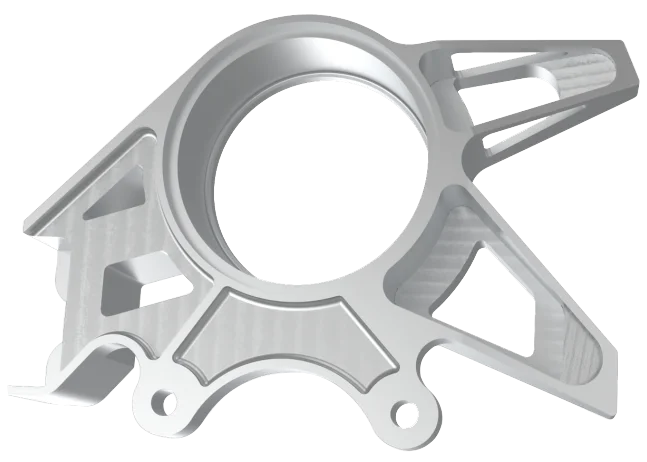
CNC milled aluminum precision part with complex geometry and multiple machining features

Custom Quality Parts By Aria

Send your specs. We’ll get back with a quote in 12 hours.

Scroll to Top